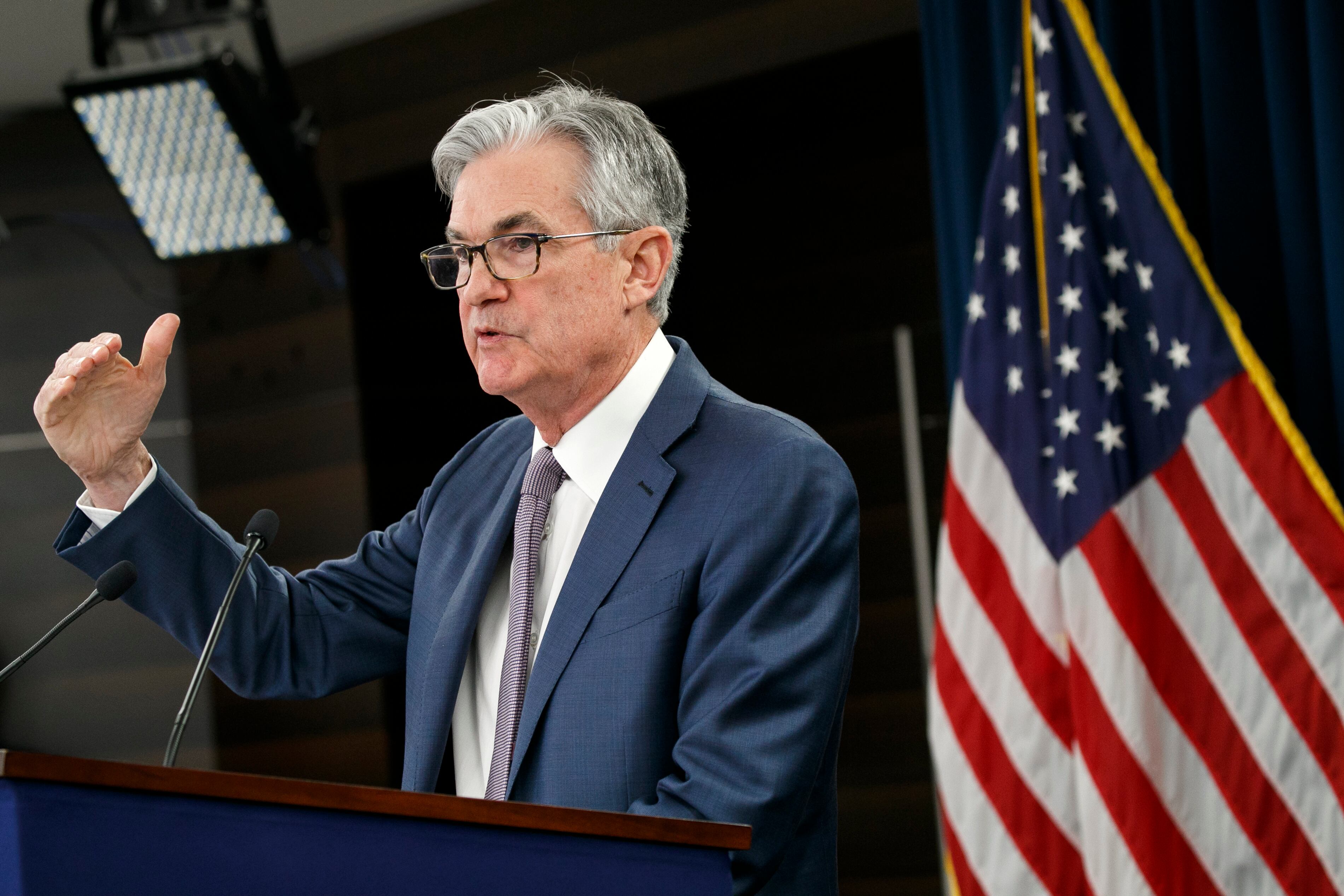
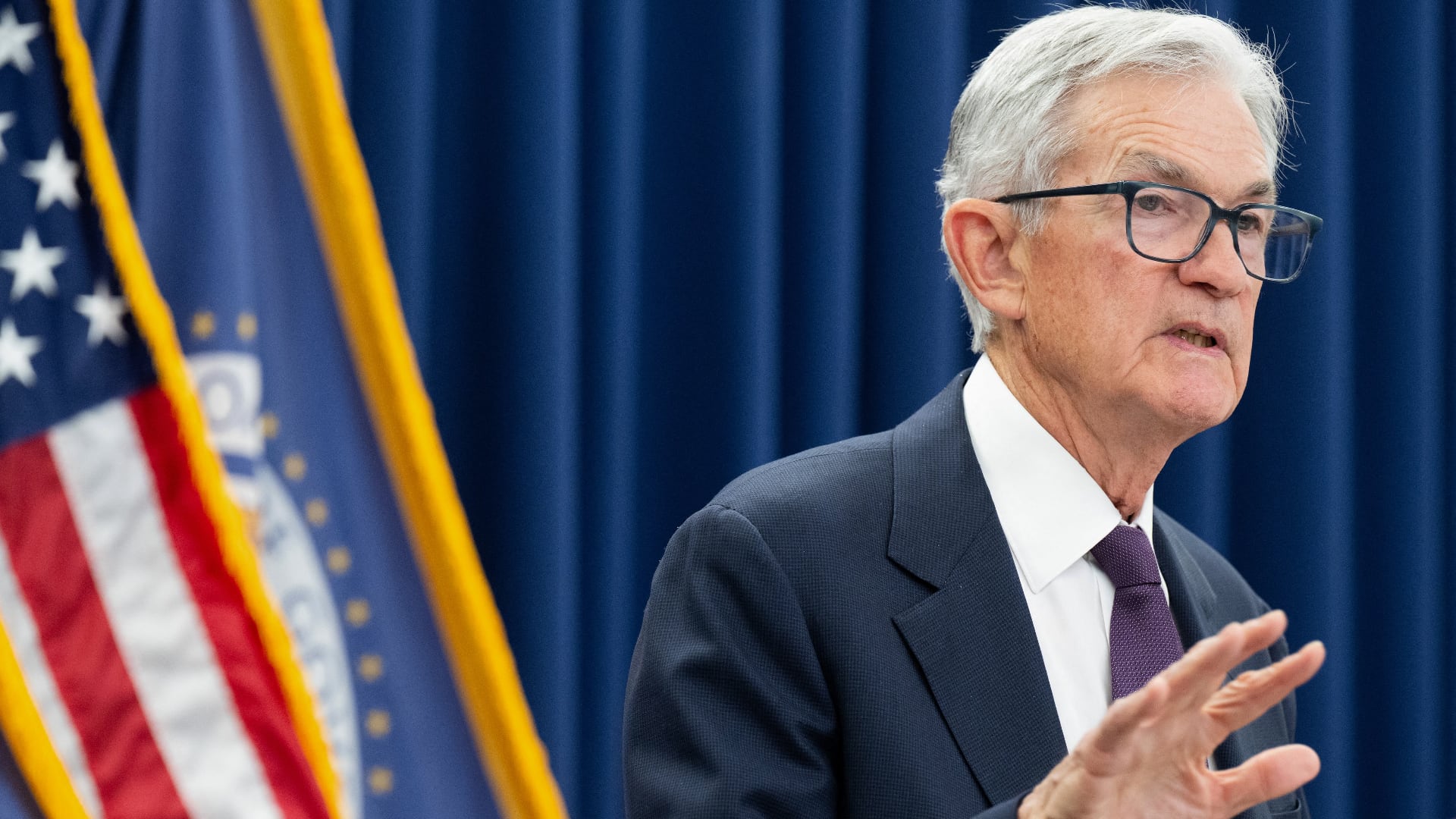
In this March 3, 2020 file photo, Federal Reserve Chair Jerome Powell speaks during a news conference to discuss an announcement from the Federal Open Market Committee, in Washington. (AP Photo/Jacquelyn Martin, File)
By Martin Crutsinger
The Federal Reserve announced a significant change Thursday in how it manages interest rates by saying it plans to keep rates near zero even after inflation has exceeded the Fed’s 2% target level.
The change signifies that the Fed is prepared to tolerate a higher level of inflation than it generally has in the past. And it means that borrowing rates for households and businesses — for everything from auto loans and home mortgages to corporate expansion — will likely remain ultra-low for years to come.
The new goal says that “following periods when inflation has been running persistently below 2%, appropriate monetary policy will likely aim to achieve inflation moderately above 2% for some time.”
The new Fed policy sought to underscore its belief that a low jobless rate was good for the economy by saying it would seek to assess the “shortfalls” in employment from the maximum level.
In a speech detailing the changes, Chairman Jerome Powell made clear that the policy change reflects the reality that high inflation — once the biggest threat to the economy — no longer appears to pose a serious danger, even when unemployment is low and the economy is growing strongly. Rather, Powell said, the economy has evolved in a way that allows the Fed to keep rates much lower than it otherwise would without igniting price pressures.
“The economy is always evolving,” Powell said. “Our revised statement reflects our appreciation for the benefits of a strong labor market, particularly for many in low- and moderate-income communities and that a robust job market can be sustained without causing an unwelcome increase in inflation."
In his speech, Powell said that the Fed's decision to allow unemployment to fall to a 50-year low before the pandemic had played an important role in lifting the fortunes of low-income workers.
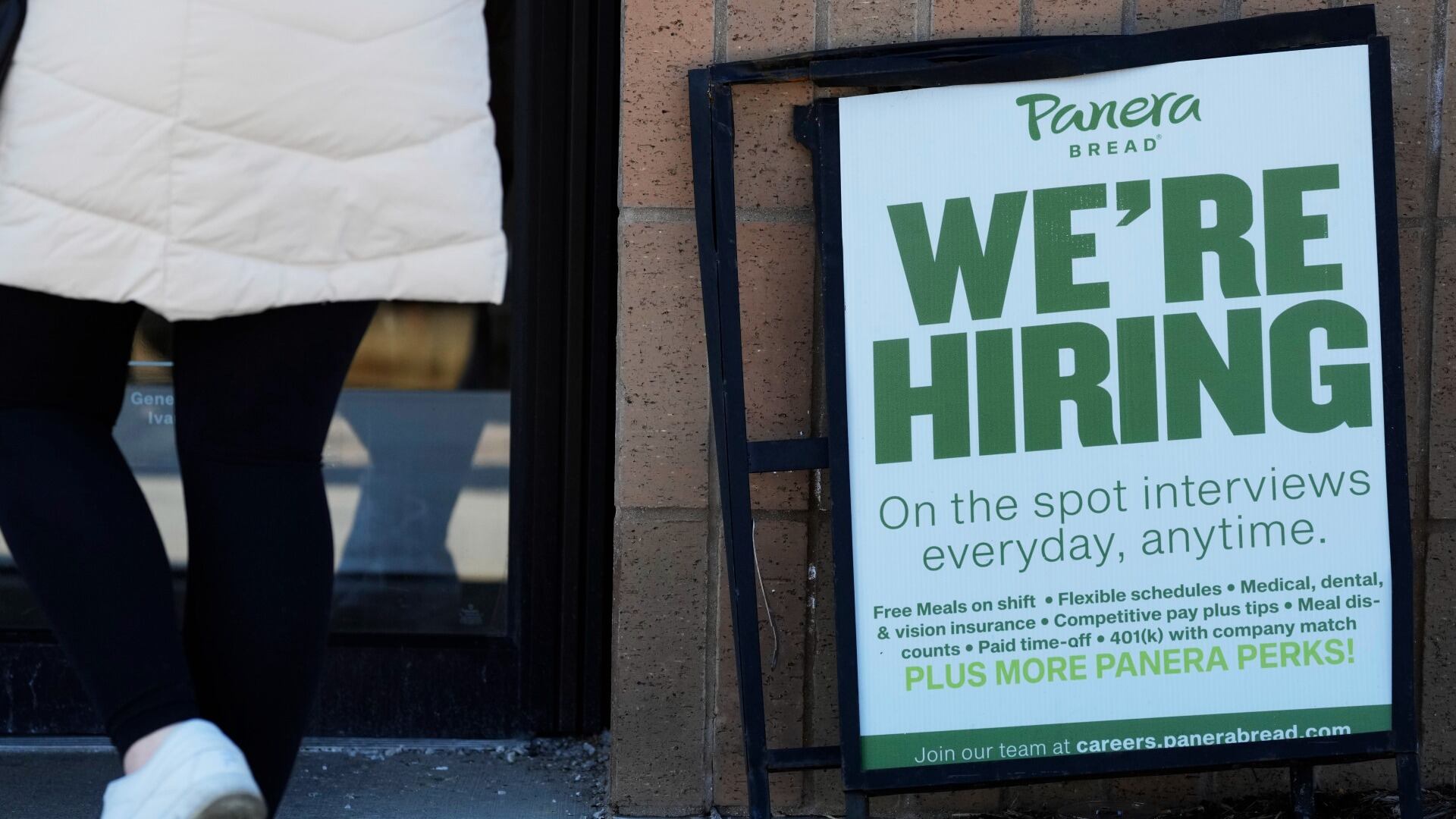
The labor market continues to defy the Federal Reserve’s attempts at loosening it, with U.S. applications for unemployment benefits down again last week and remaining at historically low levels.
General Motors (GM) announced that it will stop production on the current sixth generation of the iconic Chevrolet Camaro. Production at the Lansing Grand River Assembly Plant in Michigan is expected to end in January 2024.
Web browser Mozilla is investing $30 million into launching a startup, called Mozilla.ai, focused on building a "trustworthy, independent, and open-source AI ecosystem."
The Federal Aviation Administration (FAA) is launching a new plan to avoid flight delays in New York City and Washington, D.C. this summer. The plan will lower requirements for airlines to obtain take off and landing rights to help avoid congestion.
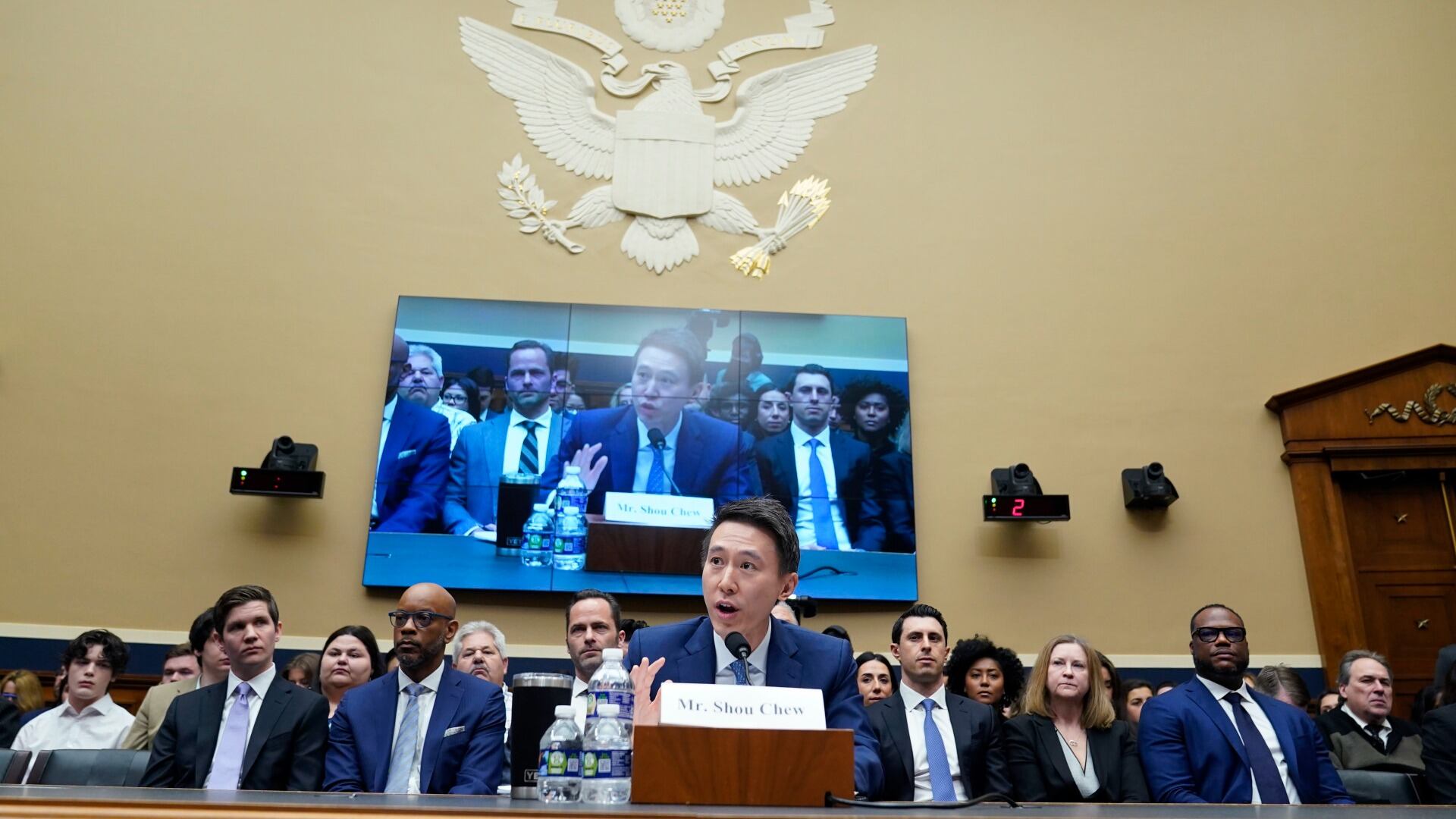
Lawmakers grilled TikTok CEO Shou Zi Chew on Thursday in a high-stakes hearing on the future of the popular, Chinese-owned video sharing platform in the U.S.
Actress Lindsay Lohan appears at the Christian Siriano Fall/Winter 2023 fashion show in New York, Feb. 9, 2023. The Securities and Exchange Commission said Wednesday, March 22, that Lohan, rapper Akon and several other celebrities have agreed to pay tens of thousands of dollars to settle claims that they promoted crypto investments to their millions of social media followers without disclosing they were being paid to do so.
Cheddar News breaks down what to look for on The Day Ahead, as TikTok CEO is scheduled to testify before Congress on Thursday while earnings from General Mills and Darden Restaurants are on tap. Residential sales data for February is also scheduled to be released.
Virgin Orbit is reportedly in talks for a $200 million rescue plan and the company said in a regulatory filing that it plans to resume operations on Thursday.