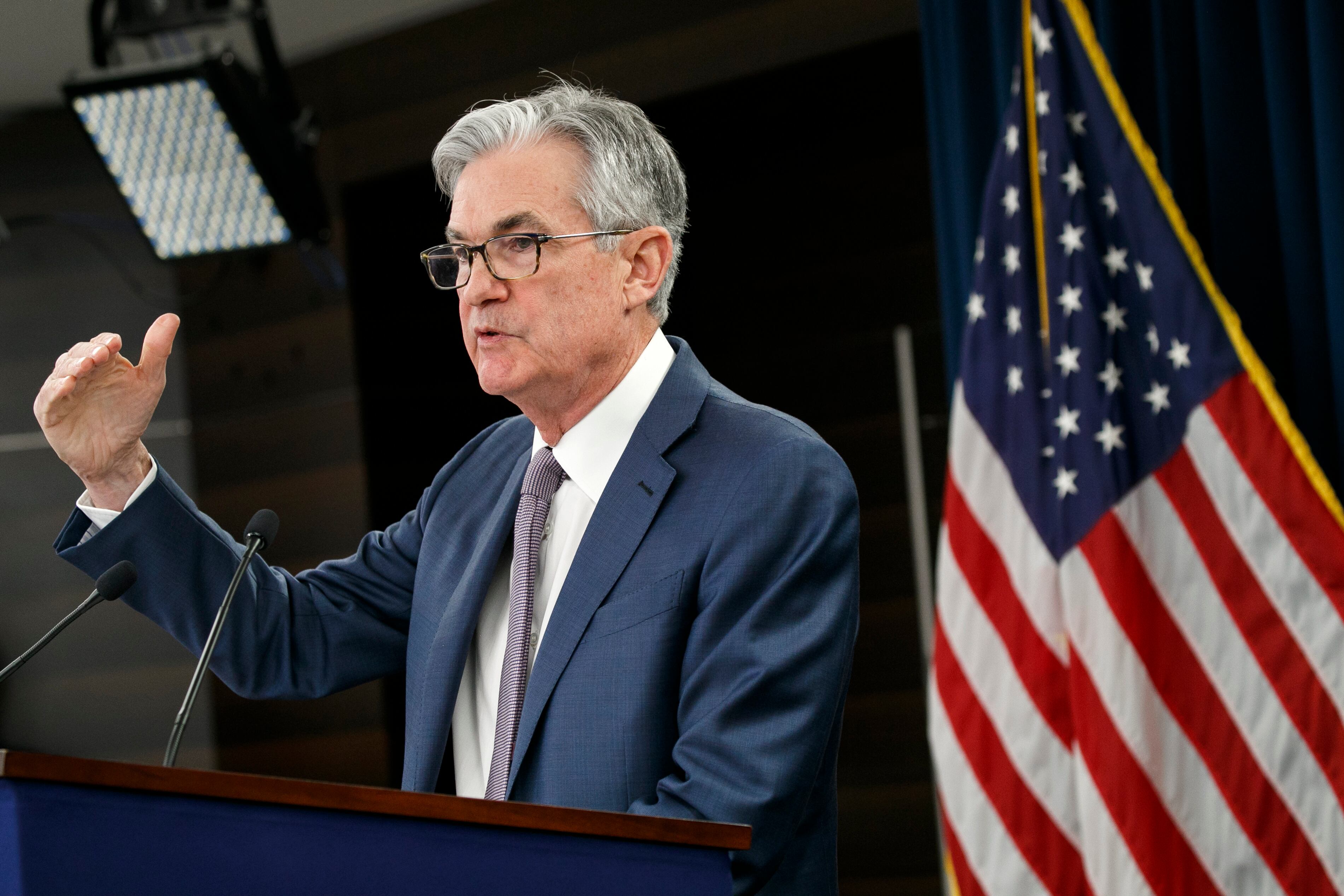
In this March 3, 2020 file photo, Federal Reserve Chair Jerome Powell speaks during a news conference to discuss an announcement from the Federal Open Market Committee, in Washington. (AP Photo/Jacquelyn Martin, File)
By Martin Crutsinger
The Federal Reserve announced a significant change Thursday in how it manages interest rates by saying it plans to keep rates near zero even after inflation has exceeded the Fed’s 2% target level.
The change signifies that the Fed is prepared to tolerate a higher level of inflation than it generally has in the past. And it means that borrowing rates for households and businesses — for everything from auto loans and home mortgages to corporate expansion — will likely remain ultra-low for years to come.
The new goal says that “following periods when inflation has been running persistently below 2%, appropriate monetary policy will likely aim to achieve inflation moderately above 2% for some time.”
The new Fed policy sought to underscore its belief that a low jobless rate was good for the economy by saying it would seek to assess the “shortfalls” in employment from the maximum level.
In a speech detailing the changes, Chairman Jerome Powell made clear that the policy change reflects the reality that high inflation — once the biggest threat to the economy — no longer appears to pose a serious danger, even when unemployment is low and the economy is growing strongly. Rather, Powell said, the economy has evolved in a way that allows the Fed to keep rates much lower than it otherwise would without igniting price pressures.
“The economy is always evolving,” Powell said. “Our revised statement reflects our appreciation for the benefits of a strong labor market, particularly for many in low- and moderate-income communities and that a robust job market can be sustained without causing an unwelcome increase in inflation."
In his speech, Powell said that the Fed's decision to allow unemployment to fall to a 50-year low before the pandemic had played an important role in lifting the fortunes of low-income workers.
Elon Musk on Tuesday dismissed speculation that he might step down as Tesla's CEO and told the company’s annual shareholders meeting that the electric car and solar panel company would start doing some advertising.
Disney on Tuesday asked a state judge to dismiss a lawsuit filed by a governing board appointed by Gov. Ron DeSantis to oversee Disney World, claiming the company has been the victim of the “weaponizing” powers of government aimed at punishing it for opposing a law dubbed “Don't Say Gay” by critics.
Disgraced Theranos CEO Elizabeth Holmes appears to be soon bound for prison after an appeals court Tuesday rejected her bid to remain free while she tries to overturn her conviction in a blood-testing hoax that brought her fleeting fame and fortune.
Cheddar News checks in on what to look out for on The Day Ahead as earnings season continues with TJX Cos., Target and Take Two Interactive among those reporting on Wednesday. April housing starts data is also set to be released while Netflix will hold its upfront presentation virtually amid a continued writers' strike.
Billy McFarland, who served four years in prison for the failed Fyre Festival in the Bahamas that saw investors lose millions, is back. McFarland joined Cheddar News to explain a new Fyre Festival he is planning along with a Broadway musical, both in the works.
Retail sales saw a modest uptick in April as inflation eased somewhat as consumers look toward the summer season to spend some more. Mario Payne, financial planner for Toams Financial, joined Cheddar News to provide some guidance on how to work up a responsible summer budget plan.