This May 22, 2020 photo shows the Federal Reserve building in Washington. (AP Photo/Patrick Semansky)
By Martin Crutsinger
he Federal Reserve is promising to use its “full range of tools” to pull the country out of a recession brought on by a global pandemic, signaling that it would keep interest rates low through 2022.
In its semi-annual monetary policy report to Congress, the central bank said Friday that the COVID-19 outbreak was causing “tremendous human and economic hardship across the United States and around the world.”
In response, the Fed said it's “committed to using its full range of tools to support the U.S. economy in this challenging time."
The Fed’s report comes two days after a policy meeting where the central bank kept it benchmark interest rate at a record low of zero to 0.25% and signaled that it planned to keep it there through 2022. The Fed said it would continue to buy billions of dollars of Treasury and mortgage-backed securities to support the financial market.
Federal Reserve Chairman Jerome Powell will testify before congressional committees for two days next week, starting Tuesday, on the new report. Lawmakers are expected to ask Powell to explain how the central bank plans to further support the economy during what is expected to be the steepest economic downturn in the last 70 years.
Powell predicted this week that the recovery will likely be slow with Americans “well into the millions” unable to get their old jobs back.
Powell’s downbeat assessment of how long it could take labor market to recover along with other renewed fears about the pandemic’s impact on the economy helped trigger a huge selloff in the market on Thursday with the Dow Jones industrial average falling 1,861.82 points or 6.9%.
After the market plunge, President Donald Trump sent out a tweet criticizing the Fed's views that a full economic recovery could take a long time.
“The Federal Reserve is wrong so often,” Trump tweeted. “I see the numbers also, and do MUCH better than they do. We will have a very good Third Quarter, a great Fourth Quarter, and one of our best ever years in 2021.”
The report submitted to Congress this week included economic projections from Powell and other top Fed officials. They showed that Fed officials expect a steep drop in economic growth of 6.4% this year with unemployment remaining at a sharply elevated 9.3% through this year.
A recently as February, unemployment was at a half-century low of 3.5%,
The economic projections showed that the Fed's key interest rate, which the central bank cut in March to a record low near zero, is expected to remain at that level through the end of 2022 with only two of the 15 Fed officials expecting a rate higher than zero by late 2022.
The Fed did not announce any new policy initiatives at its meeting this week, but financial analysts believe that those could be unveiled later this year, depending on how the economy performs in the second half.
The Fed noted a sharp deterioration in the labor market with nearly 20 million jobs lost since February, “reversing almost 10 years of job gains.”
“The most severe job losses have been sustained by the socioeconomic groups that are disproportionately represented among low-wage jobs,” according to the report.
The Fed on Friday also summarized a series of events that it has been holding since last year aimed at getting public input into improvements the central bank can make in its monetary policy work. That included an event in May in which it sought to determine how the coronavirus was impacting people's lives.
“People have put their lives and livelihoods on hold during this public health emergency,” Powell wrote in an introductory note. “While all of us have been affected, the burdens are falling most heavily on those least able to carry them.”
The Fed, Powell said, remains focused on laying the foundation for a return to the strong labor market the country was experiencing last year.
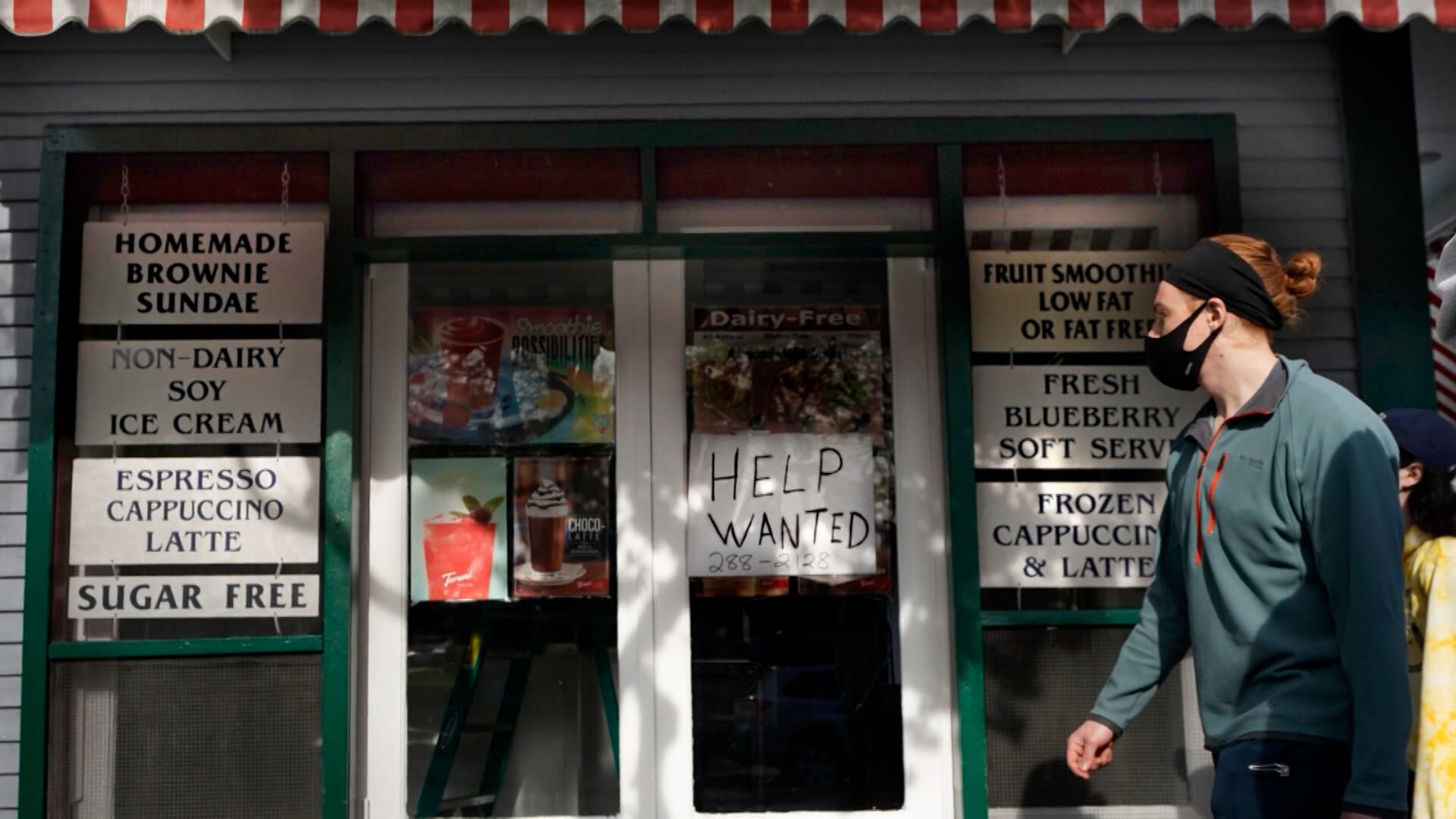
November's jobs report is tricky: nonfarm payrolls only increased by 210,000, following an October gain of 546,000. At the same time, the unemployment rate fell to 4.2% - and the labor force participation rate rose 61.8% to its highest level since March 2020. Also of note: the retail sector saw a decline of 20,000 jobs despite what was once a traditional late fall push to hire before the holiday sales rush. What's going on in the labor market, and can we expect more volatile numbers as the omicron variant spreads during the winter months? Adam Ozimek, Chief economist at Upwork, joins Cheddar News' Closing Bell to discuss the mixed jobs report, sector winners and losers, retail's flip-flop, and more.
Chinese regulators are reportedly behind China-based ride-hailing company DiDi exiting from the New York Stock Exchange, just days after listing earlier this year. The regulators stated prior that DiDi had not received the necessary clearances to list in the states. Gordon Chang, Asian affairs expert, joined Cheddar to break down what the delisting says about the relationship between nations. "This really strikes me as an attempt to really to force a decoupling of China and the U.S. in the financial markets," Chang said.
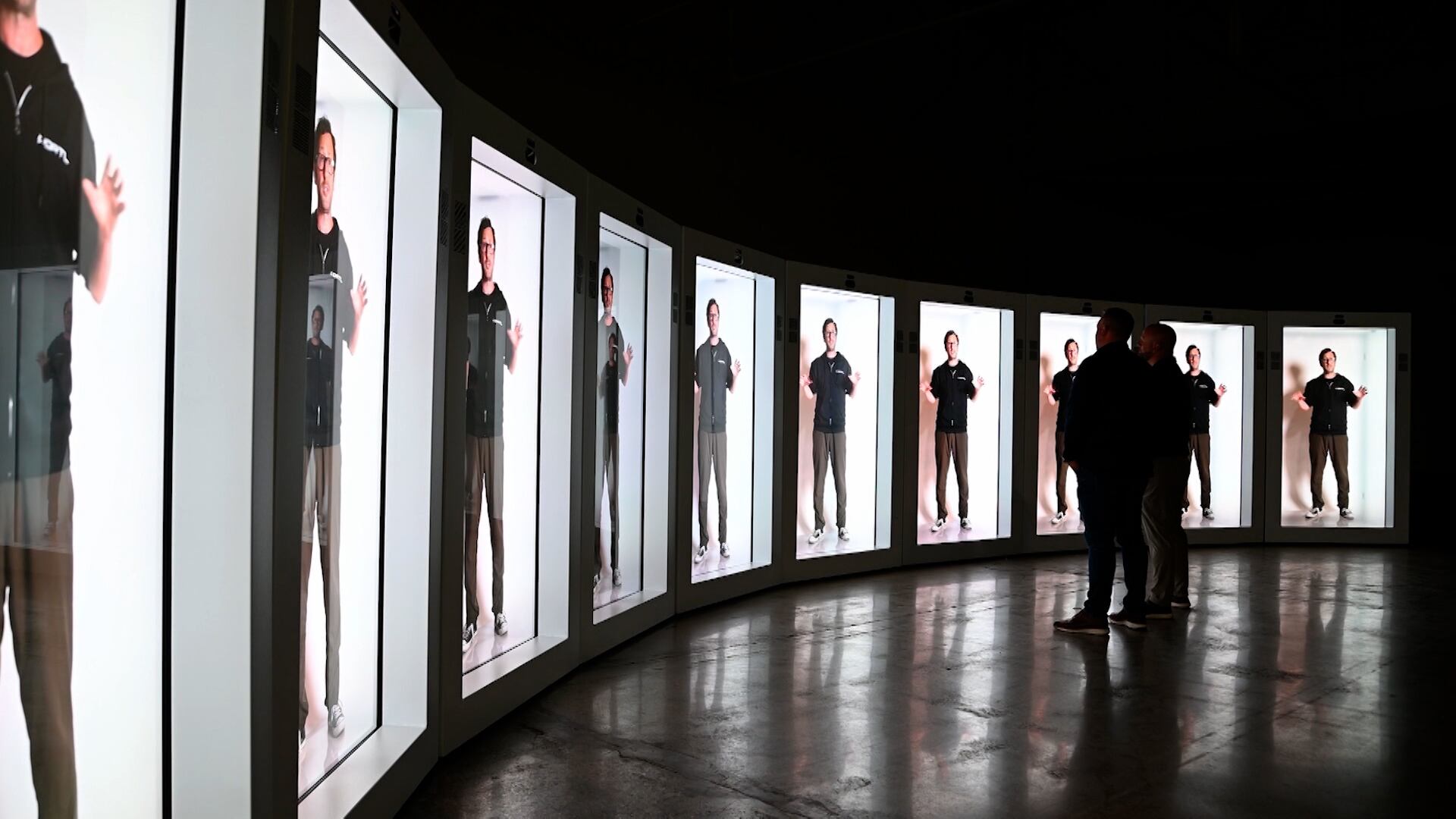
Hologram communication platform maker PORTL is looking to take communication to the next level. Founder and CEO David Nussbaum joined Cheddar to talk about the company's recent $12 million Series A funding round that will be used to bring the concept of holoportation to market. Nussbaum noted his hologram technology is just not comparable to augmented reality or virtual metaverses because the image projection is happening in real-time and in actual reality. "Well, unlike VR or AR, we're 'R.' We're real. You don't need a headset. You don't need wearables. You don't need to download anything. It's incredible," he said.
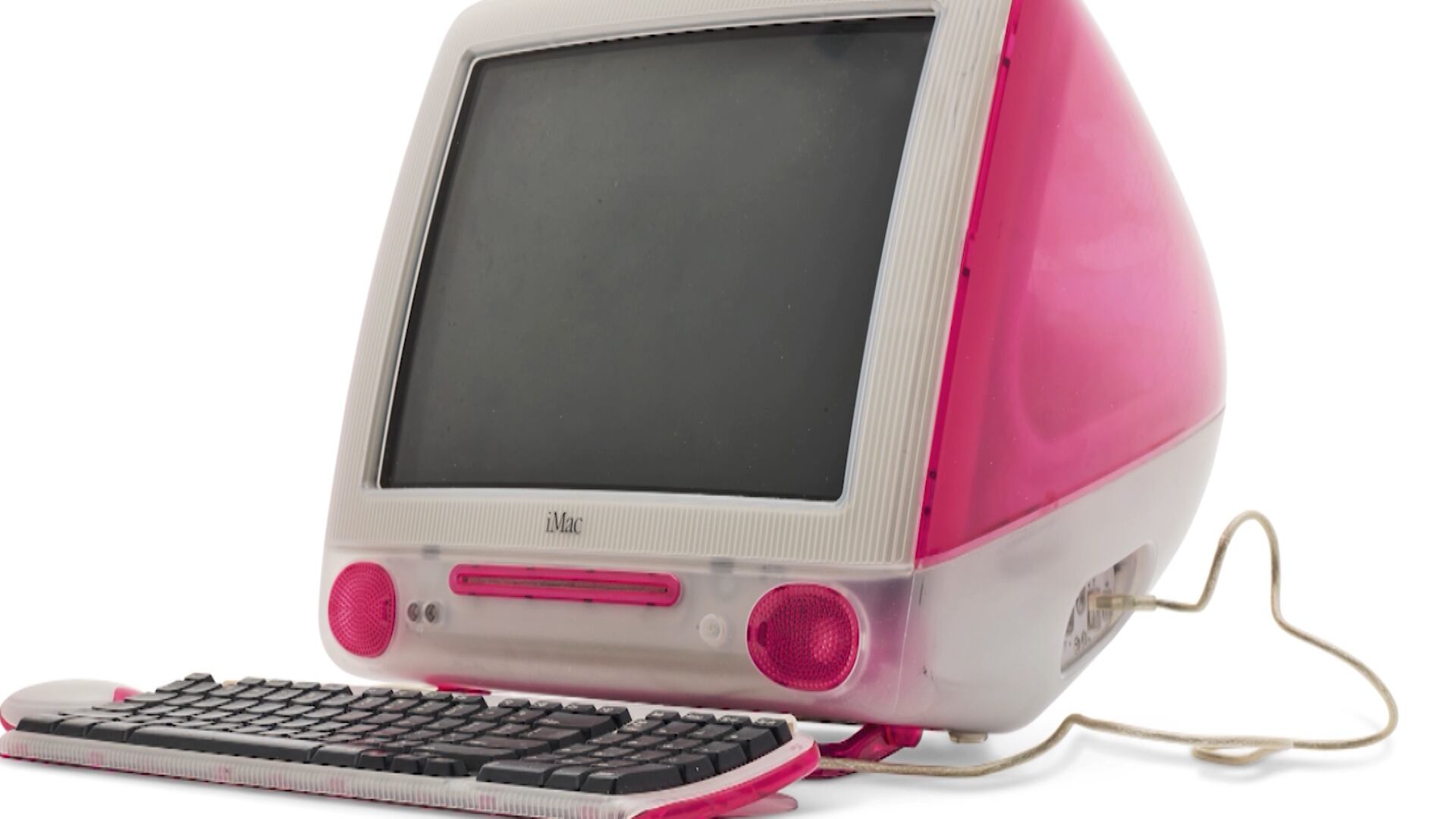
Wikipedia founder Jimmy Wales stopped by Cheddar's "Between Bells" to talk about his Birth of Wikipedia auction at Christie's putting two items linked to the origins of Wikipedia up for sale. On the auction block are his original strawberry iMac that was used to create the long-running online encyclopedia and what Wales described as an interactive NFT of his first Wikipedia edit rather than a static image. "Once it's been sold, the owner can turn it on, and anyone can edit the page and it will be reflected in the NFT," he said.
On this episode of Your Future Home, Carmine Satabella, Interior Designer & Television Host, joins to break down how to get the most out of your winter decor this year and basic kitchen fundamentals that go a long way; Max Child, CEO and co-founder of Volley, discusses the rise of voice games and how tech is continuing to change smart homes; Cheddar breaks down everything you need to know about how to start flipping homes.
China-based DiDi is delisting from the New York Stock Exchange after Chinese officials reportedly asked the ride-hailing company to do so. It will instead list on the Stock Exchange of Hong Kong.
U.S. Futures were pointing to a higher open to round out the week despite a miss on the November Jobs Report, which showed slower job growth than expected-- and as the omicron variant continues to spread across the country. Patrick Healey, Founder & President at Caliber Financial Partners joined Cheddar's Opening Bell to discuss.
It's a mixed bag for the November jobs report. Hiring slowed last month as employers only added 210,000 jobs, massively missing the estimate of 550,000. But there was one bright spot: the unemployment rate fell to 4.2%, with the number of unemployed people dropping to 6.9 million. Both of those numbers are considerably down from their highs at the end of the 2020 recession. Heather Boushey, a member of President Biden's Council of Economic Advisers, joined Cheddar to discuss the report and the state of the country's ongoing economic recovery.