CHRISTOPHER RUGABER AP Economics Writer
WASHINGTON — Federal Reserve officials were mostly optimistic about the U.S. and global economies last month, though they noted the risk posed by China's viral outbreak and said they were ready to keep their benchmark interest rate at its current low level in the coming months.
Fed policymakers observed at their Jan. 28-29 meeting that risks to the U.S. economy had faded since their previous meeting in December, according to minutes released Wednesday. The Trump administration had reached a preliminary trade agreement with China, and Congress approved an updated trade pact with Canada and Mexico.
Still, "a number of downside risks remained prominent," officials said, including the coronavirus, which "had emerged as a new risk to the global growth outlook."
Many Fed watchers have interpreted that caution as a signal that the Fed's next move, whenever it occurs, is more likely to be a cut, rather than hike. Traders are now betting that the odds of a cut by year's end are at 85 percent.
The minutes of the Fed's meeting showed that officials were ready to keep key rates at a range of 1.5 percent to 1.75 percent for the foreseeable future. Rates at that level would help the U.S. economy withstand threats from slower growth overseas, policymakers said, and help lift annual inflation back to the Fed's 2 percent objective. Persistently ultra-low inflation as measured by the Fed has been a hallmark of the economic expansion, now in its 11th year.
The officials "viewed the current stance of policy as likely to remain appropriate for a time, provided that incoming information about the economy remained broadly consistent" with their positive outlook, the minutes showed.
Stock prices, which had risen before the Fed minutes were released at 2 p.m. Eastern time, rose higher afterward. The Dow Jones Industrial Average was up about 150 points in mid-afternoon trading.
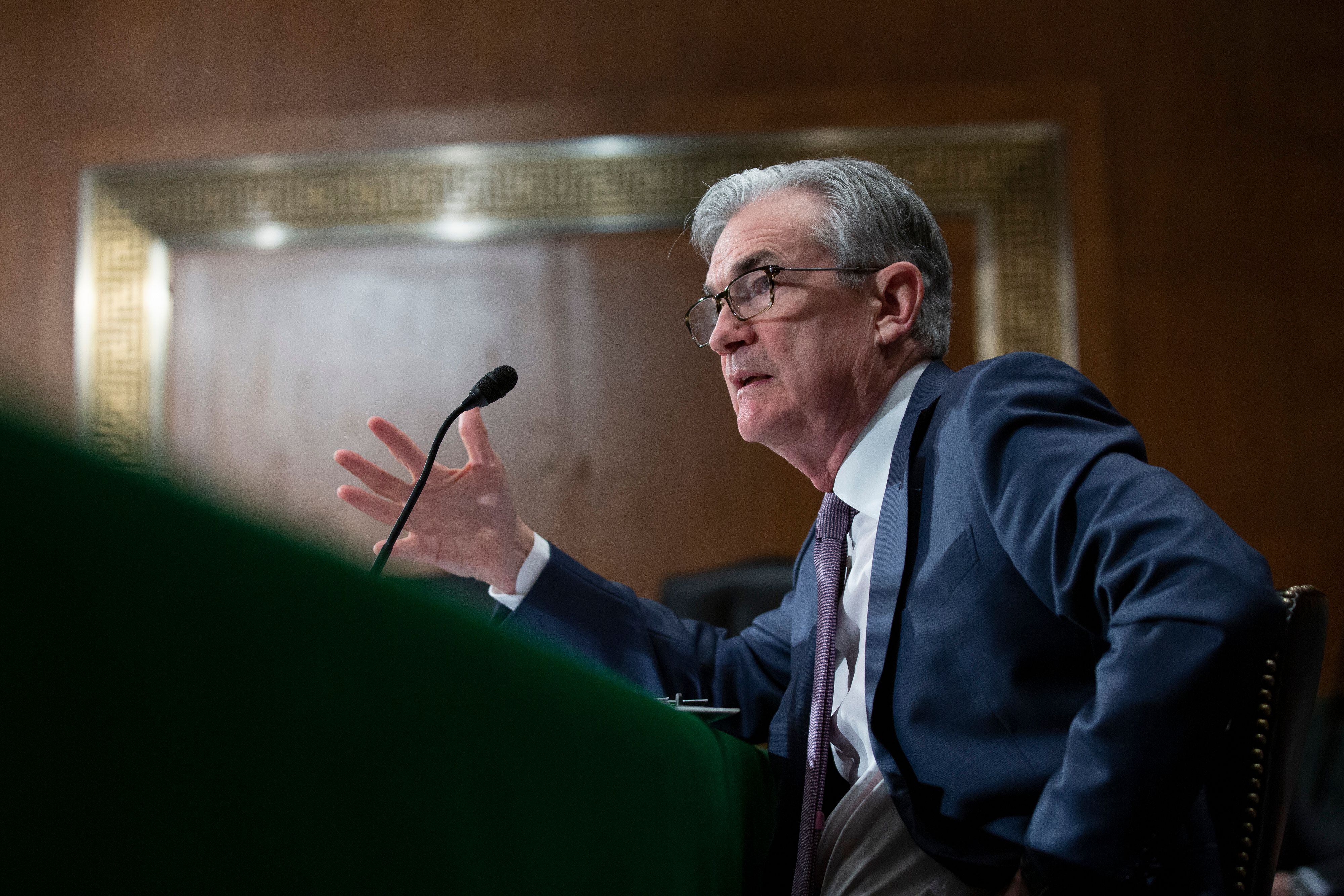
Chairman Jerome Powell said in testimony before Congress last week that U.S. growth looked durable and that the Fed would "carefully" monitor economic damage caused by the coronavirus. Most economists expect the virus to depress economic growth, at least early in the year, with many companies' supply chains and consumer markets at least partly cut off.
At last month's policy meeting, several officials sought to highlight the Fed's determination to raise inflation back to its 2 percent target level/ These officials "stressed that the (Fed) should be more explicit about the need to achieve its inflation goal on a sustained basis."