The Great Executive Shuffle of 2019 continued on Wednesday, with Expedia Group announcing the surprise departure of its CEO and CFO after clashing with the company's board over the travel company's direction. Chief Executive Mark Okerstrom and Chief Financial Officer Alan Pickerill will resign their posts effective immediately, with Chairman Barry Diller and Vice Chair Peter Kern managing the company while a new leadership team is chosen.
In a statement, Diller said that Expedia's reorganization, spearheaded by Okerstrom and Pickerill, was "sound in concept" but resulted in the company's disappointing third-quarter earnings results. Diller said the board "strongly [believes] the Company can accelerate growth in 2020" under new management.
Shares of Expedia ($EXPE) shot up more than 5 percent on the news. In contrast, shares of Alphabet ($GOOGL) moved only marginally higher on Tuesday's announcement that Google co-founders Larry Page and Sergey Brin were stepping aside and naming Sundar Pichai CEO of Alphabet.
From Expedia to Google, the year has been notable for how many chief executives have resigned, quit, or been forced out. It's happening across sectors like fast food (McDonald's), retail and apparel (Nike, Under Armour, Gap), cloud computing and enterprise software (SAP, ServiceNow), e-commerce (eBay). Some of those executives actually took each other's jobs, with Bill McDermott departing SAP for ServiceNow, and John Donahoe (who used to run eBay) leaving ServiceNow for Nike.
Even Expedia's rival in travel booking, Trivago, lost its CEO last month. And that's not to mention the collapse of WeWork, which forced out its founder and CEO over a disastrous IPO attempt. More than 170 chief executives left just in the month of October, according to Challenger, Gray and Christmas.
There is no single reason for the C-suite exodus. Some, like Steve Easterbrook at McDonald's, were fired over misconduct. Others, like Mark Parker at Nike and Adam Neumann at WeWork, departed amid other scandals. Still others, like Kevin Plank at Under Armour, resigned under the pressure of struggling businesses.
But for some of these executives, their influence in the companies they led doesn't follow them out the revolving door. Brin and Page of Google, for instance, still hold a majority of the voting power in Alphabet, about 25 percent a piece, according to regulatory filings. Because of how many businesses ー particular in Silicon Valley ー structure their Class A and Class B shares, a CEO can step down, but still never really be gone. Just ask WeWork, which had to pay Neumann $1.7 billion to give up his voting rights and walk away.
Meta, the parent company of Facebook, turned heads on Tuesday when it announced it will block some ad-targeting, specifically those of a political and religious nature.
This is one of the most direct moves the company has made in order to minimize ad-targeting by advertisers on its platforms. Hastie Afkhami, Head of Digital at S-3 Group, joins Cheddar News to discuss the impact of this move.
Sotheby's is getting into the crypto game. The auction house announced it will now be accepting bids in increments of ETH, marking the first time that an auction will field live bids in crypto. This announcement comes just a week ahead of Sotheby's contemporary art auction 'The Now Evening Auction' for two works by Banksy: Trolley Hunters and Love is in the Air. Alex Branczik, Sotheby's Chairman for Modern & Contemporary Art joined Cheddar's Opening Bell to discuss what went into this move.
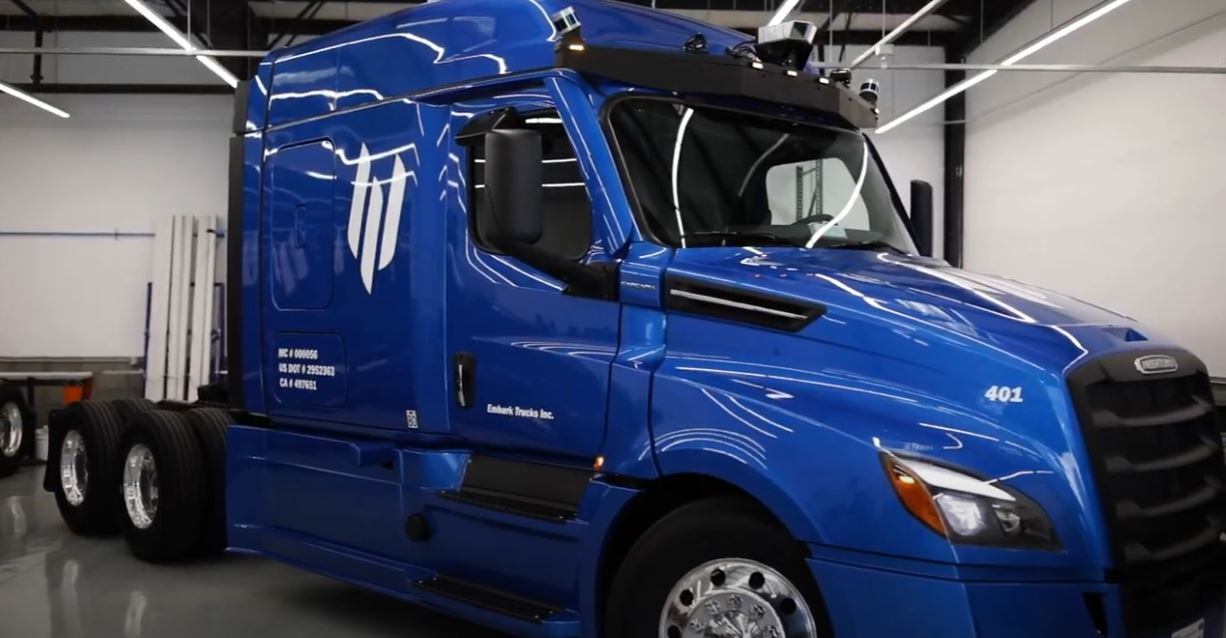
Autonomous tech developer Embark made its Nasdaq debut on Thursday via a SPAC merger, making its CEO Alex Rodrigues, the youngest chief executive of a publicly-traded company at the age of 26. He joined Cheddar's "Between Bells" to discuss what led to the IPO and what it means for the trucking industry as it looks to navigate ongoing supply chain issues. "I think there are really three major benefits to autonomous trucks. You think about the benefit from an efficiency perspective, from a safety perspective, and from an environmental perspective," Rodrigues noted.
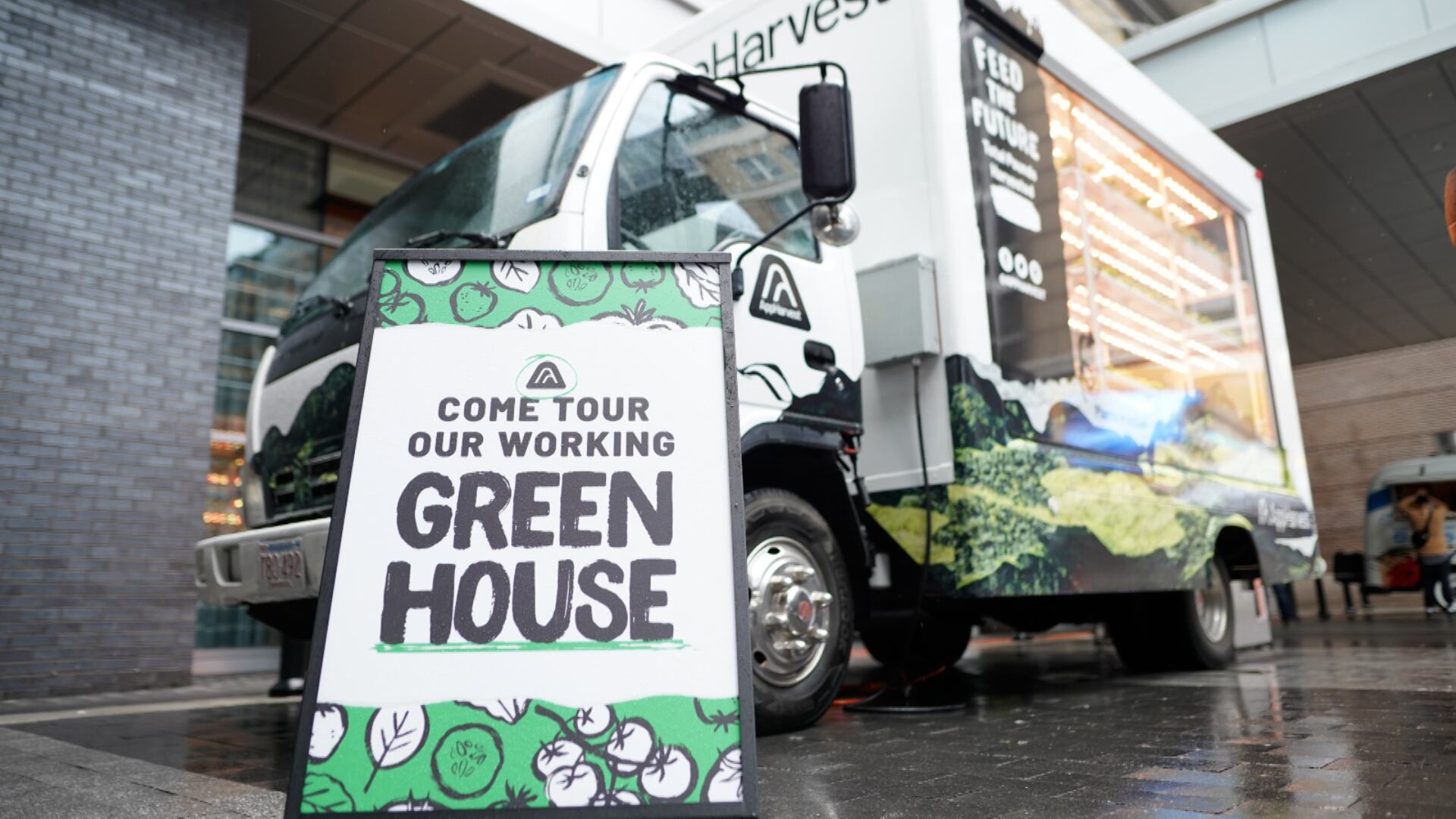
AppHarvest CEO Jonathan Webb joined Cheddar's "Opening Bell" to talk about the company's Q3 earnings, stating sales data showed the indoor farming tech firm remained on track with its 2021 outlook. Webb also discussed a new campaign called "Fight The Food Fight," to encourage consumers to support a more resilient, sustainable food system.
SpaceX and NASA have collaborated on another successful launch sending four astronauts to the international space station. The international crew will stay in orbit aboard the ISS for six months.
On this episode of Cheddar Innovates: Yat Labs Co-Founder breaks down how a 'Yat' is changing the way people think about their online identities; Scythe Robotics CEO explains how it's bringing innovation to the landscaping industry with its autonomous, all-electric mowers; Founder of California Cowboy discusses how its creating clothing designed for creating in-person connections with others with features like a beverage pocket, bottle opener, and conversation cards; Cheddar gets a look at Curiosity Stream's 'Beyond the Spotlight' biography series.
Jack Morrison, CEO and co-founder Scythe Robotics, joins 'Cheddar Innovates' to discuss how it's bringing innovation to the landscaping industry with its autonomous, all-electric lawn mowers, and how this is addressing the labor crisis in the landscaping industry.
Naveen Jain, Co-Founder of Yat Labs, joins 'Cheddar Innovates' to discuss how a 'Yat' is changing the way people think about their online identities, and why artists like Questlove and G-Eazy are backing this idea.
Mike Proulx, VP and research director at Forrester, joined Cheddar to talk all about Disney's lackluster Q3 earnings after the company reported a slowdown in Disney+ subscriber growth. Proulx discussed a Forrester study that found 45 percent of U.S. adults subscribed to streaming services because of the pandemic but 26 percent had plans to cancel a service over the next two years. "We're always going to look at growth, and we also have to look at engagement," he said. "But both of those metrics come down to having either original or exclusive content that will offer value to the subscriber base."