EXCLUSIVE: Snapchat Developing "Stories Everywhere” to Push Content Outside the App and Grow Users
Snapchat is developing a new product called “Stories Everywhere” with a goal of making Snapchat Stories available outside the app for the first time and kick-starting the app’s stagnant user growth, Cheddar has learned from a person familiar with the matter.
To lead the effort, Snapchat’s parent company, Snap Inc., has hired Rahul Chopra, the former Senior Vice President and Global Head of Video at News Corp, who recently was CEO of the media conglomerate’s social data agency Storyful.
While Stories Everywhere is still in the early stages of development, Chopra has the important task of figuring out how to finally distribute the app’s wealth of user-generated content on the web and elsewhere. The project could mean that Snapchat makes it easier to share videos on other platforms through a web player that also prompts people to sign up and download the app, the person familiar with the matter told Cheddar.
The move echoes Twitter’s 2011 decision to allow content publishers to embed tweets in articles and blog posts.
Snap has also contemplated allowing other apps to access its feeds of user-generated videos, which are curated by algorithms and Snap employees, for everything from breaking news events to sports games. Opening up its content to other apps could potentially give Snap a way to make money off content licensing at a time when the young company is under pressure from investors to grow revenue.
Additionally, Snap has restructured its expanding content division and added more key roles under the leadership of VP Nick Bell:
* Mike Su, the former Chief Product Officer at Latino-focused digital publisher Mitú, now oversees all of Snap’s content-related product development, including tools for media partners. “This will allow him to oversee the product changes needed to help our partners build sustainable businesses on Snapchat,” Bell said in an internal memo seen by Cheddar and sent to Snap employees last week.
* Snap’s Michael DiBenedetto will now lead the content team’s strategy and operations. In his memo to employees, Bell called the newly-created position “an extremely important role as we look to drive operational efficiency and deliver on our 2018 plan.”
* Former NowThis president Sean Mills will continue to oversee Snap’s original content efforts, including its rapidly growing list of exclusive shows from the likes of NBC and ESPN. In addition, Mills now oversees all programming for the redesigned Snapchat app’s Discover feed of video content, which is being slowly made available to users.
* Longtime Snap employee Josh Stone now leads all media company relations. Stone joined Snap in 2013 and helped lead the company’s initial rollout of the Discover page in 2015. He reports to Ben Schwerin, Snap’s VP of Partnerships.
In a separate memo sent to Snap employees and reviewed by Cheddar, Bell outlined his content team’s goals for 2018. They include: increase the overall output of content in the redesigned Discover feed, widen content distribution, and double-down on news. Snapchat’s previously announced redesign, which includes the new Discover feed of professional and user-generated videos, is still only active for a small percentage of users.
A Snap spokesperson declined to comment for this story.
Cheddar's Lawrence Banton speaks with entrepreneurs leading the way on textile and clothing recycling in an effort to help stem waste in fashion amid the climate crisis.
Enterprise blockchain provider, BlockApps, recently raised $41 million in a new funding round led by Liberty City Ventures. BlockApps builds products and applications for other companies on its own blockchain platform called STRATO. The company says its blockchain technology can help businesses increase the value of their assets, streamline their supply chains, and help them meet their sustainability goals. Kieren James-Lubin, President & CEO of BlockApps, joins Cheddar News' Closing Bell to discuss.
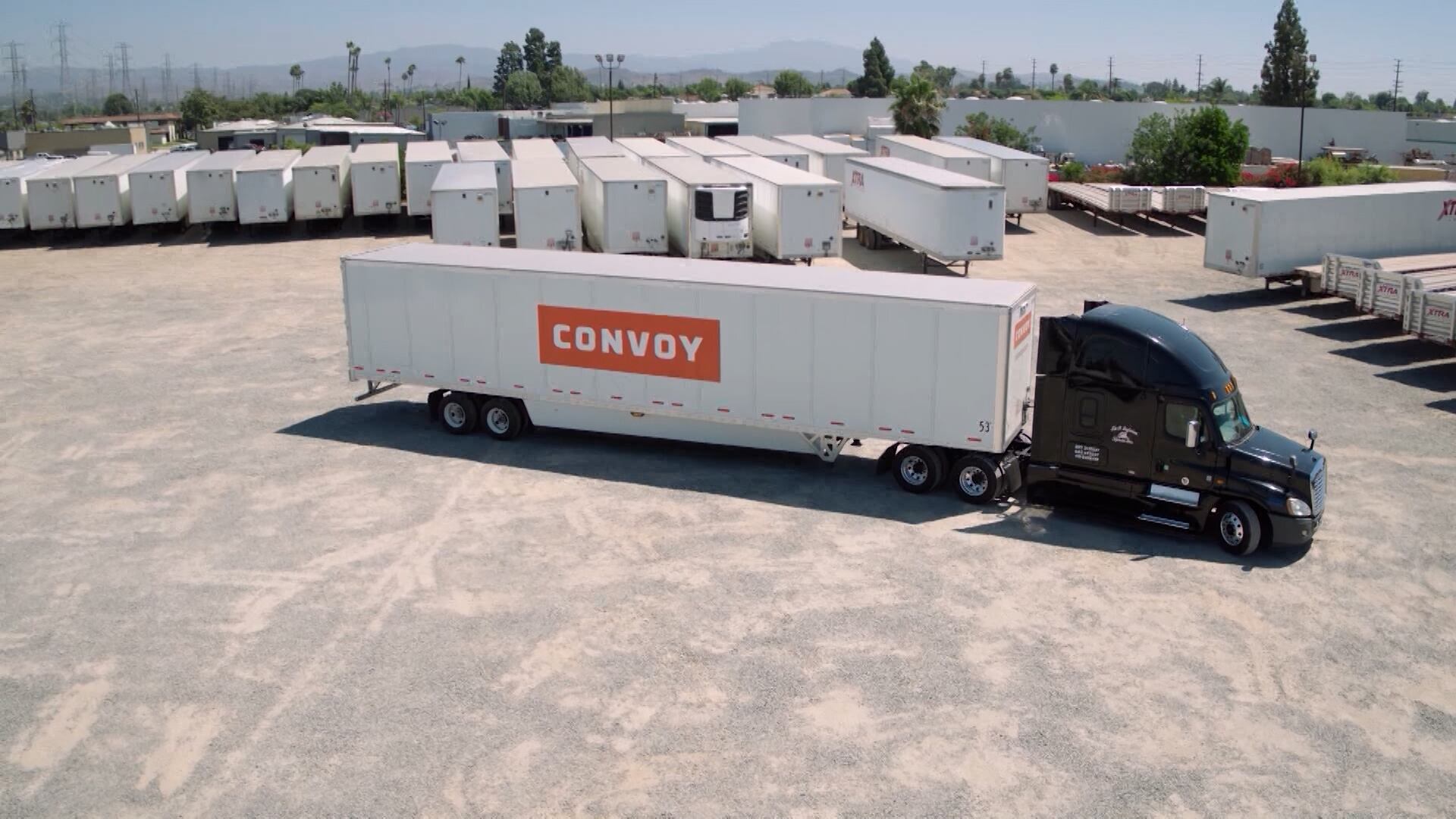
Dan Lewis, CEO of Convoy, says business luminaries like Bill Gates and Jeff Bezos are investing in his company because they're betting on Convoy and its business model to emerge as a winner in a crowded marketplace.
Anthony Bartolacci, VP of Financial Institutions at Sensor Tower, breaks down the reasons investors remain concerned about Netflix after the streaming giant said it lost subscribers last quarter.
Stocks closed near session lows Thursday as investors digested Federal Reserve Chair Jerome Powell's comment about a potential 50 basis point rate hike at the central bank's May meeting. Powell's announcement also sent the 10-year and other yields higher, with the benchmark 10-year rate hitting its highest level since late 2018. Victor Zhang, CIO at American Century Investments, joins Closing Bell to discuss today's close, Powell's comments, the Fed's moves on inflation, and more.
Tesla has continued to beat expectations as illustrated by its last quarter earnings despite issues in Shanghai, China. Dan Ives, the managing director of equity research at Wedbush Securities, joined Cheddar News to talk about the resilience of Tesla. "I thought they were almost Cinderella-like numbers," he said about the delivery numbers. "They are performing just miles ahead of any auto player, and that's why the stock is doing what it's doing. In my opinion, they're expanding their lead in EVs, even in this Category 5 hurricane that we're seeing in China." Ives noted that issues in China could pose ongoing challenges going forward even with the largely positive outlook.
Inflation is driving a return to the gig economy, according to a new survey from Branch & Marqeta that found 85 percent of workers have increased or planned to increase their amount of gig work in the past six months, with 58 percent citing inflation as the reason behind this change. Arun Sundararajan, professor at NYU Stern School of Business, breaks down this dynamic and how it's impacting the broader economy. "Inflation is rampant and people need more money. Salaried wages haven't kept up. Plus the labor market is tight. People can't find full time employees, employers can't find full time employees, and so some people are being opportunistic," he said. "And I also think there's a COVID effect because people have gotten used to more flexibility and time and space because people have gotten used to more flexibility and time and space, through the months of the lockdown."