By Kelvin Chan

The European Union is pushing online platforms like Google and Meta to step up the fight against false information by adding labels to text, photos and other content generated by artificial intelligence, a top official said Monday.

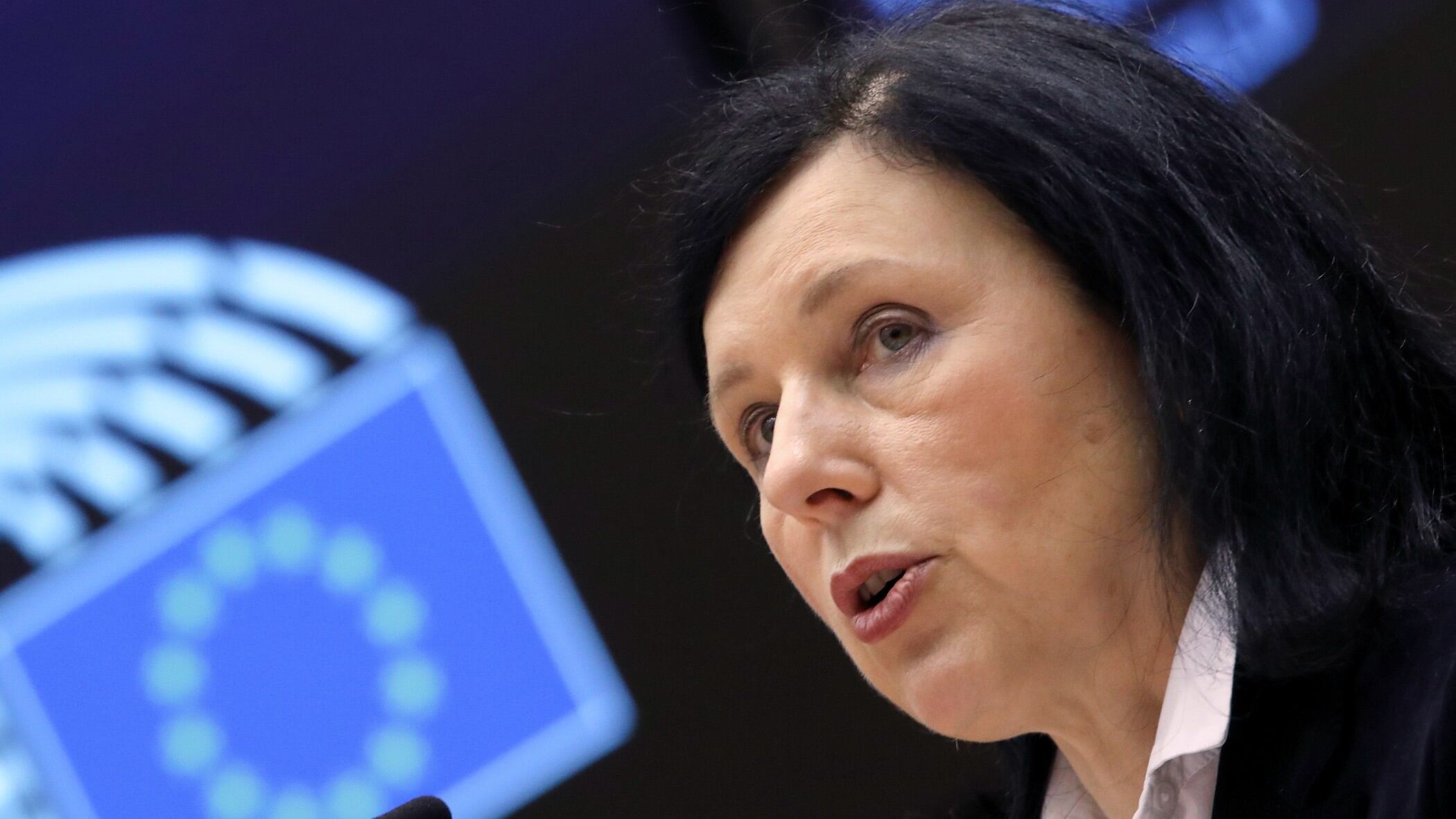
EU Commission Vice President Vera Jourova said the ability of a new generation of AI chatbots to create complex content and visuals in seconds raises “fresh challenges for the fight against disinformation.”

She said she asked Google, Meta, Microsoft, TikTok and other tech companies that have signed up to the 27-nation bloc's voluntary agreement on combating disinformation to work to tackle the AI problem.

Online platforms that have integrated generative AI into their services, such as Microsoft's Bing search engine and Google's Bard chatbot, should build safeguards to prevent “malicious actors” from generating disinformation, Jourova said at a briefing in Brussels.

Companies offering services that have the potential to spread AI-generated disinformation should roll out technology to “recognize such content and clearly label this to users,” she said.

Google, Microsoft, Meta and TikTok did not respond immediately to requests for comment.

Jourova said EU regulations are aimed at protecting free speech, but when it comes to AI, "I don’t see any right for the machines to have the freedom of speech.”

The swift rise of generative AI technology, which has the capability to produce human-like text, images and video, has amazed many and alarmed others with its potential to transform many aspects of daily life. Europe has taken a lead role in the global movement to regulate artificial intelligence with its AI Act, but the legislation still needs final approval and won't take effect for several years.

Officials in the EU, which also is bringing in a separate set of rules this year to safeguard people from harmful online content, are worried that they need to act faster to keep up with the rapid development of generative AI.

Recent examples of debunked deepfakes include a realistic picture of Pope Francis in a white puffy jacket and an image of billowing black smoke next to a building accompanied with a claim that it showed an explosion near the Pentagon.

Politicians have even enlisted AI to warn about its dangers. Danish Prime Minister Mette Frederiksen used OpenAI’s ChatGPT to craft the opening of a speech to Parliament last week, saying it was written “with such conviction that few of us would believe that it was a robot — and not a human — behind it.”

European and U.S. officials said last week that they're drawing up a voluntary code of conduct for artificial intelligence that could be ready within weeks as a way to bridge the gap before the EU's AI rules take effect.

Similar voluntary commitments in the bloc's disinformation code will become legal obligations by the end of August under the EU's Digital Services Act, which will force the biggest tech companies to better police their platforms to protect users from hate speech, disinformation and other harmful material.

Jourova said, however, that those companies should start labeling AI-generated content immediately.

Most digital giants are already signed up to the EU disinformation code, which requires companies to measure their work on combating false information and issue regular reports on their progress.

Twitter dropped out last month in what appeared to be the latest move by Elon Musk to loosen restrictions at the social media company after he bought it last year.

The exit drew a stern rebuke, with Jourova calling it a mistake.

“Twitter has chosen the hard way. They chose confrontation,” she said. “Make no mistake, by leaving the code, Twitter has attracted a lot of attention, and its actions and compliance with EU law will be scrutinized vigorously and urgently.”

Twitter will face a major test later this month when European Commissioner Thierry Breton heads to its San Francisco headquarters with a team to carry out a "stress test," meant to measure the platform's ability to comply with the Digital Services Act.

Breton, who’s in charge of digital policy, told reporters Monday that he also will visit other Silicon Valley tech companies including OpenAI, chipmaker Nvidia and Meta.

AP reporter Jan M. Olsen contributed from Copenhagen, Denmark.

Share:
More In Politics
Oregon Senator's Bill Tackles Legacy College Admissions to 'Level Playing Field'
In February, Senator Jeff Merkley (D-Ore.) and Representative Jamaal Bowman (D-N.Y. 16th District) introduced the Fair College Admissions for Students Act. The bill looks to curb the admissions advantage given to the children of alumni and donors for colleges and universities. Sen. Merkley joined Cheddar news to discuss the push behind the legislation. "My dad was a mechanic. I was applying to schools around the country. I never thought about the fact that those students who came from the most privileged backgrounds also got a special advantage in applying to college," he said. "They take up 10-25 percent of the slots at many of our universities, and so this is kind of affirmative action for those who need it least rather than a level playing field for everyone else." If enacted, the law would amend the Higher Education Act of 1965 doing away with legacy or donor status admissions for any school participating in the federal student aid program.
Stocks Close Sharply Higher On Eve of Fed Decision
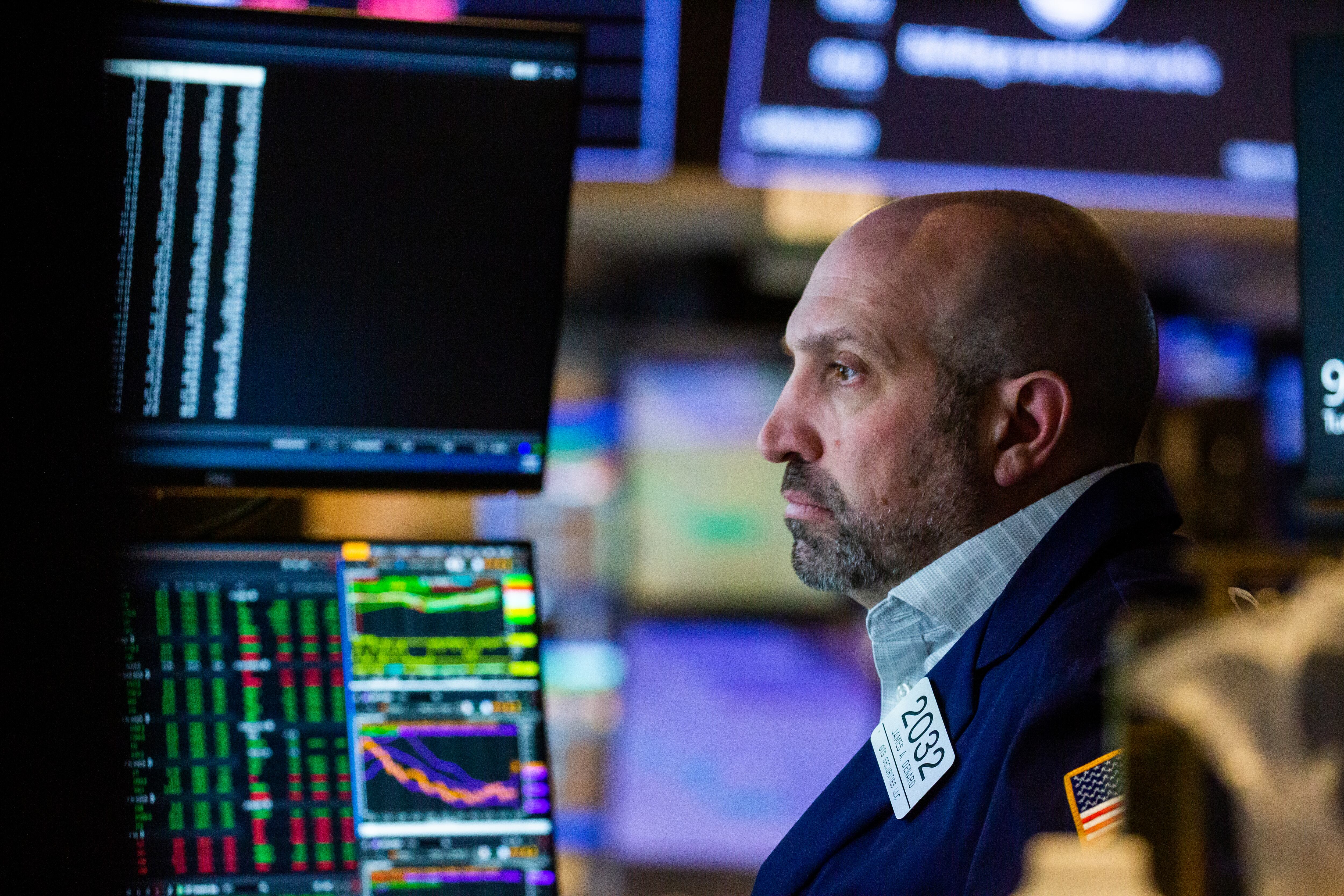
Nancy Daoud, a private wealth adviser for Ameriprise Financial, joins Cheddar News' Closing Bell, where she discusses what led to a sharp spike on Wall Street during Tuesday's session and what she will be watching for most closely when the Fed announces it latest policy decision on Wednesday.
Russia Could Default on Sovereign Debt After Foreign Reserves Frozen by Sanctions
Russia's economy is effectively at a standstill after it was slapped with extensive western sanctions, and now it has to make the first of four monthly interest payments on dollar bonds. It's likely the country will not be able to pay — so what happens next? Major credit ratings agencies have downgraded Russian sovereign debt, with Fitch issuing a 'C' rating and S&P Global Ratings issuing a 'CCC-' rating. Caleb Silver, Editor in Chief of Investopedia, joins Closing Bell to discuss what a Russian debt default could mean for Russia's economy, U.S. consumers who have pensions with exposure to Russian assets, and whether this could create a global financial crisis.
Harvard Students Build Ukraine Takes Shelter Website to Help Shelter Refugees
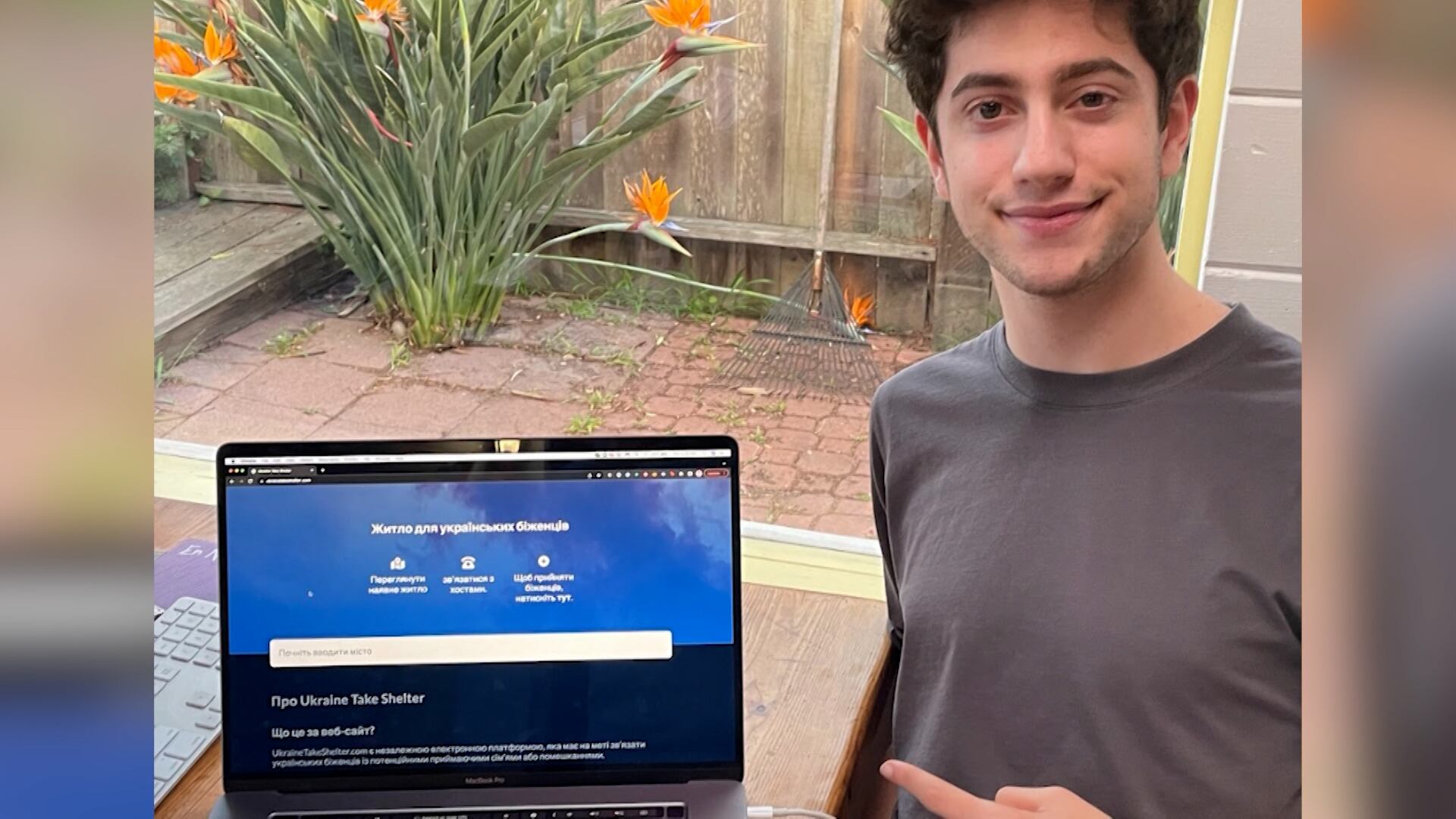
With the number of Ukrainians being displaced due to the Russian invasion surging, two students from Harvard took it on themselves to develop a website to help connect potential hosts with refugees seeking housing. The co-founder of the website Ukraine Takes Shelter, Marco Burstein, joined Cheddar news to discuss working together with fellow freshman Avi Schiffmann to streamline the effort to aid Ukrainian refugees. "We basically worked for three days straight developing the website, and since then the response has been pretty incredible," Burstein said.
What Happens Now For Brittney Griner?
Over three weeks ago, WNBA player Brittney Griner was arrested in Russia on drug charges. According to reports, the Star arrived at an airport near Moscow where authorities found Vape cartridges and hashish oil in her luggage. Grindr faces serious charges that could carry a possible sentence of 5-10 years in a Russian prison. Experts warn that Griner's arrest could be used as a bargaining chip. Partner at Stroock & Stroock & Lavan, Thomas Firestone, joined Cheddar to discuss more.
Ukrainian Fact-Checking Org on Putin Laying the Groundwork for Disinformation
On a live broadcast, an employee on a Russian state news television channel held up a sign protesting propaganda about the war in Ukraine. Ruslan Deynychenko, executive director of the Ukrainian fact-checking organization StopFake, joined Cheddar News to discuss what he called the misinformation spread to the Russian people about the invasion. "They are not about informing people they are about brainwashing people," he said. "Russian government uses their media as an instrument, as a tool, of their foreign policy."
White House May Extend Payment Pause On Student Loans
Student loan payments for millions of borrowers are set to resume on May 1st. However, signals from the Department of Education show that the date may be pushed back. Once again, it's been pushed back a few times. Initially, the Biden Administration stated loan payments would resume as the economy continues to show signs of recovery. Student Loan Expert and Author of "How to Appeal for More College Financial Aid", Mark Kantrowitz, joined Cheddar to discuss more.
Load More