By Josh Funk
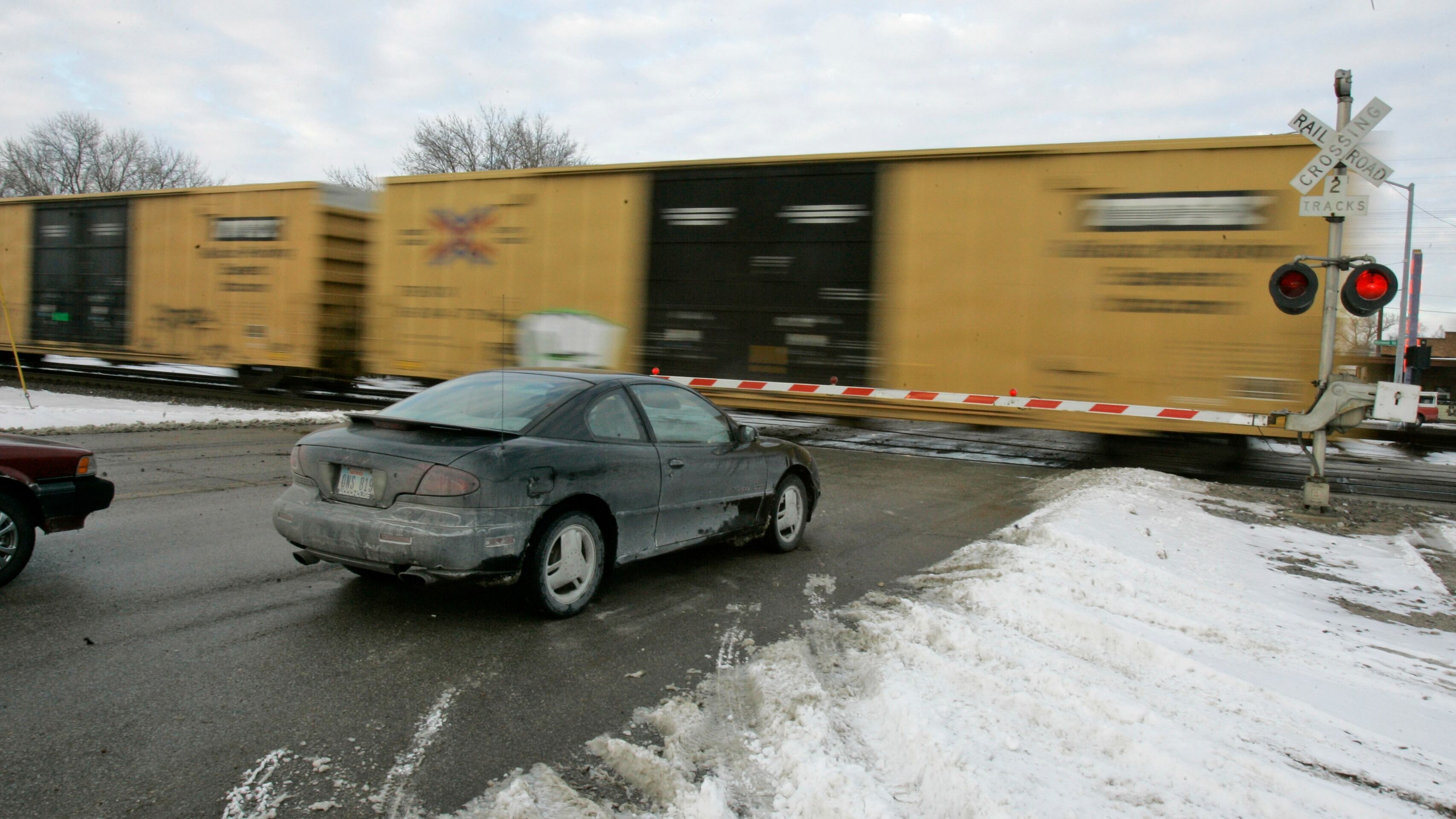
With the rail industry relying on longer and longer trains to cut costs, the Biden administration is handing out $570 million in grants to help eliminate many railroad crossings in 32 states.
The grants announced Monday will contribute to building bridges or underpasses at the sites of more than three dozen crossings that delay traffic and sometimes keep first responders from where help is desperately needed.
In some places, trains routinely stretching more than 2 miles (3.2 km) long can block crossings for hours, cutting off access to parts of towns and forcing pedestrians to attempt the dangerous act of climbing through trains that could start moving without warning.
“We see countless stories of people unable to get to work on time, goods being blocked from getting where they need to be and first responders being delayed by these these trains that can be slowed or stopped — even seeing images of children having to crawl between or under freight trains in order to get to school,” U.S. Transportation Secretary Pete Buttigieg said.
In one case Buttigieg mentioned, a Texas mom called 911 because her 3-month-old baby was in distress, but an idle train kept the ambulance from getting there quickly and the baby died at the hospital two days later.
In addition to problems associated with blocked crossings, roughly 2,000 collisions are reported at railroad crossings every year. Nearly 250 deaths were recorded last year in those car-train crashes. In one instance Buttigieg cited, a woman in California wound up stopped on the tracks after traffic backed up and she was killed when a train slammed into her vehicle.
In recent years, the major freight railroads have overhauled their operations to rely on fewer, longer trains so they can use fewer crews and locomotives as part of efforts to cut costs.
The railroads insist those changes haven't made their trains riskier, but regulators and Congress are scrutinizing their operations closely after several recent high-profile derailments. And the problems at rail crossings are well documented.
These grants are part of $3 billion in funding approved in the $1 trillion infrastructure law for these rail crossing projects that will be doled out over the next five years.
A number of the 63 projects that will receive grants involve only planning and design work for eliminating crossings in the future, but most of the money will go toward physical improvements at crossings and eliminating longstanding problems.
Buttigieg said he plans to visit Grand Forks, North Dakota, Monday to highlight a $30 million grant helping to pay for a project near the University of North Dakota campus that will improve access to the local hospital.
A grant worth nearly $37 million will help eliminate four rail crossings in Houston, which has the second-highest number of rail crossing deaths in the nation. The four new underpasses to be built will reduce traffic delays and improve pedestrian safety.
One $7.2 million grant will help improve access to an area of Fostoria, Ohio, known as the Iron Triangle because it is bordered on three sides by train tracks. A CSX train passes through the community about once every 26 minutes, with warning sirens at the crossings sounding for at least two hours daily. A new bridge will be built over the tracks on one side of the neighborhood to provide a safe route into the area.
In each of these grants, states and cities — sometimes with the help of the railroads — must cover at least 20% of the project cost.