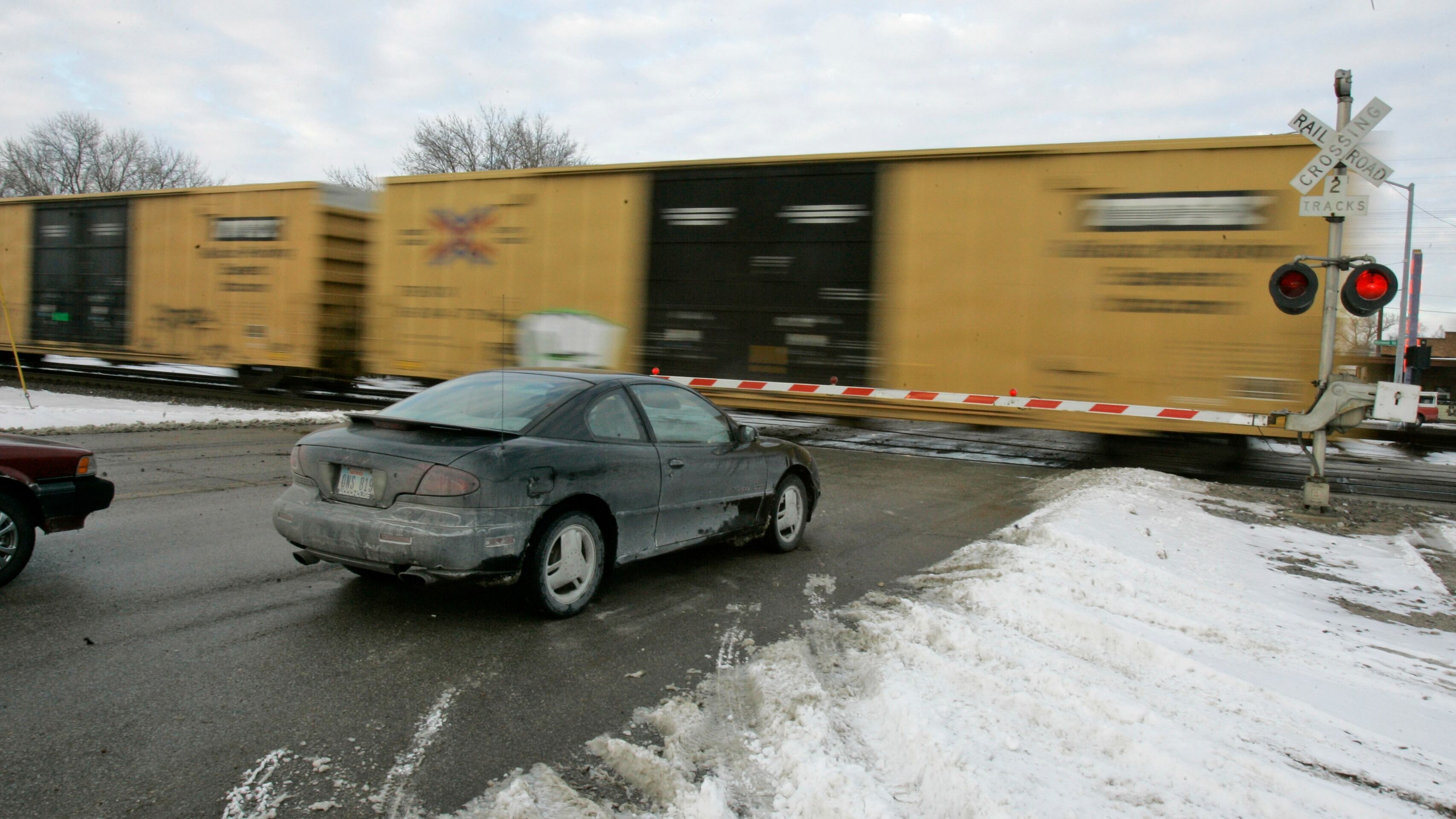
Cars wait for a train to pass, in Valley, Neb., Wednesday, Jan. 17, 2007. With the rail industry relying on longer and longer trains to cut costs, the Biden administration is handing out $570 million in grants to help eliminate railroad crossings in 32 states. The grants announced Monday, June 5, 2023 will help eliminate more than three dozen crossings that delay traffic and sometimes keep first responders from where help is desperately needed. (AP Photo/Nati Harnik, File)
By Josh Funk
With the rail industry relying on longer and longer trains to cut costs, the Biden administration is handing out $570 million in grants to help eliminate many railroad crossings in 32 states.
The grants announced Monday will contribute to building bridges or underpasses at the sites of more than three dozen crossings that delay traffic and sometimes keep first responders from where help is desperately needed.
In some places, trains routinely stretching more than 2 miles (3.2 km) long can block crossings for hours, cutting off access to parts of towns and forcing pedestrians to attempt the dangerous act of climbing through trains that could start moving without warning.
“We see countless stories of people unable to get to work on time, goods being blocked from getting where they need to be and first responders being delayed by these these trains that can be slowed or stopped — even seeing images of children having to crawl between or under freight trains in order to get to school,” U.S. Transportation Secretary Pete Buttigieg said.
In one case Buttigieg mentioned, a Texas mom called 911 because her 3-month-old baby was in distress, but an idle train kept the ambulance from getting there quickly and the baby died at the hospital two days later.
In addition to problems associated with blocked crossings, roughly 2,000 collisions are reported at railroad crossings every year. Nearly 250 deaths were recorded last year in those car-train crashes. In one instance Buttigieg cited, a woman in California wound up stopped on the tracks after traffic backed up and she was killed when a train slammed into her vehicle.
In recent years, the major freight railroads have overhauled their operations to rely on fewer, longer trains so they can use fewer crews and locomotives as part of efforts to cut costs.
The railroads insist those changes haven't made their trains riskier, but regulators and Congress are scrutinizing their operations closely after several recent high-profile derailments. And the problems at rail crossings are well documented.
These grants are part of $3 billion in funding approved in the $1 trillion infrastructure law for these rail crossing projects that will be doled out over the next five years.
A number of the 63 projects that will receive grants involve only planning and design work for eliminating crossings in the future, but most of the money will go toward physical improvements at crossings and eliminating longstanding problems.
Buttigieg said he plans to visit Grand Forks, North Dakota, Monday to highlight a $30 million grant helping to pay for a project near the University of North Dakota campus that will improve access to the local hospital.
A grant worth nearly $37 million will help eliminate four rail crossings in Houston, which has the second-highest number of rail crossing deaths in the nation. The four new underpasses to be built will reduce traffic delays and improve pedestrian safety.
One $7.2 million grant will help improve access to an area of Fostoria, Ohio, known as the Iron Triangle because it is bordered on three sides by train tracks. A CSX train passes through the community about once every 26 minutes, with warning sirens at the crossings sounding for at least two hours daily. A new bridge will be built over the tracks on one side of the neighborhood to provide a safe route into the area.
In each of these grants, states and cities — sometimes with the help of the railroads — must cover at least 20% of the project cost.
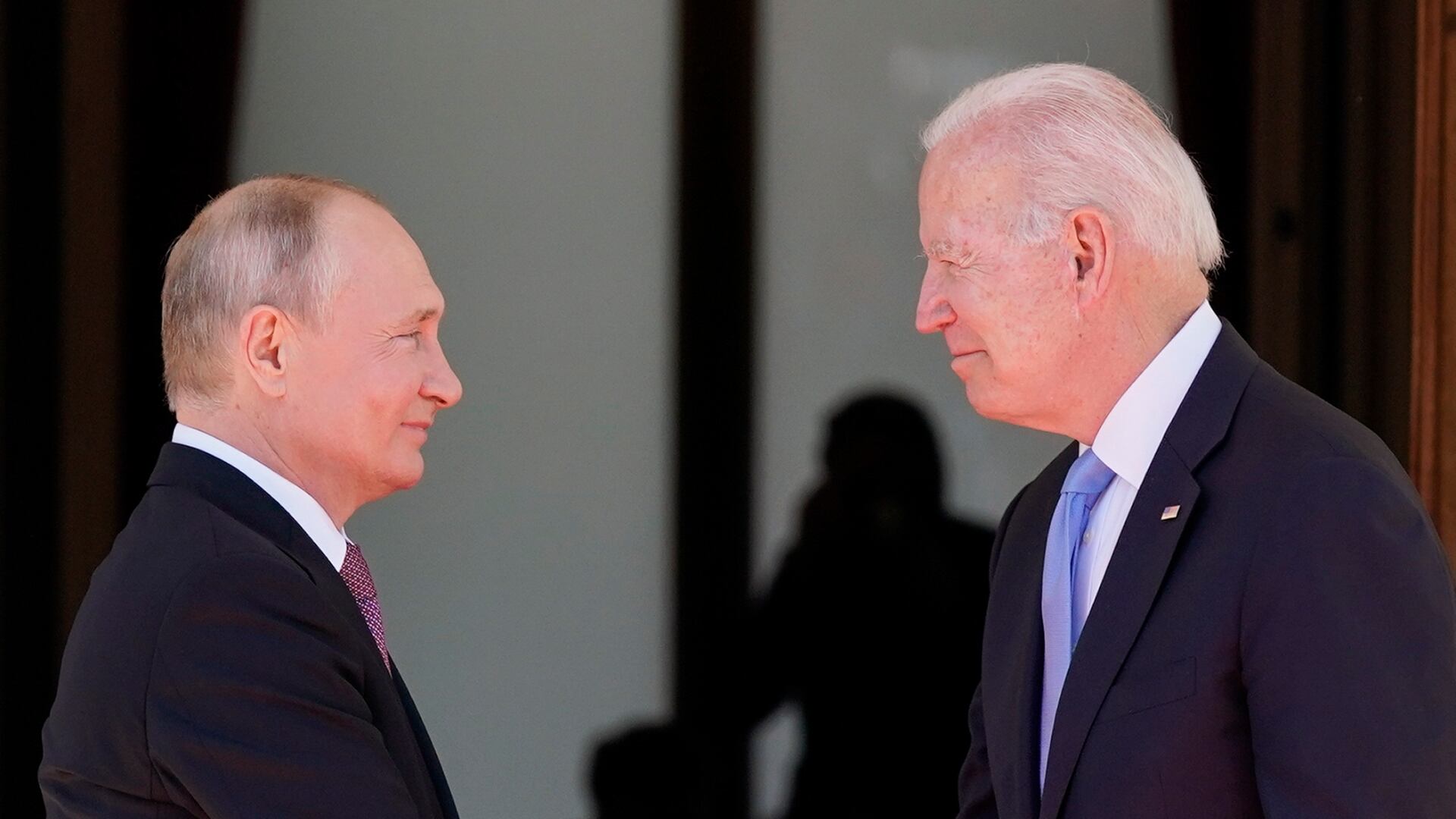
Face to face for just over two hours, President Joe Biden and Russia’s Vladimir Putin squared off in a secure video call Tuesday as the U.S. president put Moscow on notice that an invasion of Ukraine would bring enormous harm to the Russian economy.
Ahead of Instagram head Adam Mosseri's congressional hearing on the mental impact of the social platform on teens, the company announced a number of updates aimed at teen safety.
Troubled Chinese real estate giant Evergrande is once again nearing the brink of collapse. Shares of Evergrande sunk to a new record low on Monday, closing down 20 percent, as debt default fears resurfaced. Drew Bernstein, co-chairman at consultancy MarcumBP, joined Cheddar's Opening Bell to discuss. He said U.S. investors have to understand that "there is no company in China that's too big to fail, that's for sure," and that the Chinese government will be prioritizing the social welfare of the populace. Bernstein did note that it would be a managed collapse in some form.
Joan Greve, a politics reporter at The Guardian US, joined Wake Up With Cheddar to break down the implications of the Biden administration announcing a diplomatic boycott of the 2022 Beijing games in response to allegations of human rights abuses against Uyghur Muslims. She noted the significance of the move, assessing the already frayed relationship between the U.S. and China. "The Chinese have said that a boycott would be politically manipulative, and now they are actually threatening countermeasures," she said. "And that will certainly have an impact on the spirit of the games at the very least."
The Biden administration has reached an agreement with the Mexican government to resume the "Remain-in-Mexico" policy under court order. By reinstating a Trump-era border policy, asylum-seekers will be forced to stay in Mexico until their U.S. immigration court date. The program is set to resume on Monday. Ryan Devereaux, a reporter for The Intercept, joins Cheddar News to discuss.
The U.S. announced it will not send any official representation to the upcoming Beijing winter Olympics. Cheddar's Hena Doba speaks with East Asia expert Michael Swaine about the reasons behind the diplomatic move.
COVID-19 is still battering the nation's criminal justice system, causing a massive backlog in cases and delaying verdicts for months on end. This, combined with the fear of crowded prisons during a pandemic, has prompted many defendants to plead guilty in exchange for time served or probation. Tina Luongo, attorney-in-charge of the Criminal Defense Practice, joined Cheddar to discuss the court backlog, the rise in plea bargains, and why this was an issue long before the pandemic.
With so many high-profile court cases taking over the media, from the trial over the murder of Ahmaud Arbery to the trial of Kyle Rittenhouse to the ongoing Elizabeth Holmes trial, Cheddar took a look at these cases and why there is such a big interest in them. Rachel Fiset, a white collar criminal defense lawyer and partner with Zeiback, Fiset, and Coleman, and Bryan Hance, attorney-at-law, professor, and academic program director of the pre-law and paralegal studies program at National University, joined Cheddar for a roundtable discussion on why there is so much public interest in so-called courtroom drama.
Carlo and Baker discuss the sweeping new vaccine mandate in NYC that will target all private businesses. Plus, Trump's media venture gets its CEO and more.