Record producer Khaled Mohamed Khaled, aka DJ Khaled, is known for his hits, his positivity, and his continuous dedication to success. But the celebrity DJ's struggles may be less known.
The award-winner had a “mogul talk” with Cheddar about what it takes to be successful and the obstacles that have made his journey an arduous one. And for Khaled, time has been the major issue.
“There’s not enough time in the day to accomplish what I need to do, ‘cuz I don’t stop,” Khaled said during the interview. “That’s the hardest part of hustling.”
Time management is a difficult skill for many to master, but Khaled says you have to commit and “do what you got to do.” That's how he faces this challenge.
Khaled, whose latest albums “Major Key” and “Grateful” have been certified gold and platinum, shared two of the reasons for his success. He says you have to make sacrifices and be self-made.
“It’s OK for you to work 9 to 5 to fund your vision,” Khaled said, acknowledging that for some, a traditional job is what they'd like. But for those who have a vision they want to bring to life, working a side gig is a necessary evil.
“I’m a mogul, so I envisioned all of these things I want to do,” he said, adding,“my family raised me to be self-made.”
To Khaled, being self-made is not about having money as many may think, but about “respecting yourself and your vision.”
Talking the talk and dreaming big is great, Khaled explained, but for success, it’s important to walk the walk and figure out how to accomplish the vision.
“There’s other people out there that talk, but don’t accomplish the goal,” he said.
“When I was a kid, I had to do certain things to fund my music business, my record company, my management company….”
ZipRecruiter reported revenue growth for the fourth quarter of 2021 and raised its forecast for the coming year, beating Wall Street expectations. The recruitment site has benefited from one of the tightest labor markets in history as companies desperately try to fill empty positions. Ian Siegel, CEO of ZipRecruiter, joined Cheddar to discuss how the company has adapted to The Great Resignation, a tight labor market, and record inflation.
Bank of America is officially the first financial institution to be certified by J.D. Power for financial health support. The data analytics and consumer intelligence company evaluated Bank of America and other financial institutions through a rigorous process that involved reviewing nearly 100 best practices, and Bank of America is the first in the industry to receive it. Holly O'Neill, President of Retail Banking at Bank of America, joined Cheddar to talk more about this certification, what it means, and how to get started on the path to financial health.
Ford is looking to charge its electric business forward -- splitting its EVs and legacy internal combustion engine models into separate units. Ford says the split will streamline its EV business and boost profits, while giving it a better competitive edge. Ford's new EV focused business will be called Ford Model e. Greg Martin, Co-Founder, Rainmaker Securities joined Cheddar's Opening Bell to discuss.
Markets opened higher on Thursday despite ongoing uncertainty amid the Russia-Ukraine conflict. John Petrides, Portfolio Manager, Tocqueville Asset Management joined Cheddar's Opening Bell to discuss early market activity.
Thomas Hayes, Chairman & Managing Member of
Great Hill Capital, talks about the impact rising oil prices are having on airlines and outlines how investors can navigate geopolitical uncertainty.
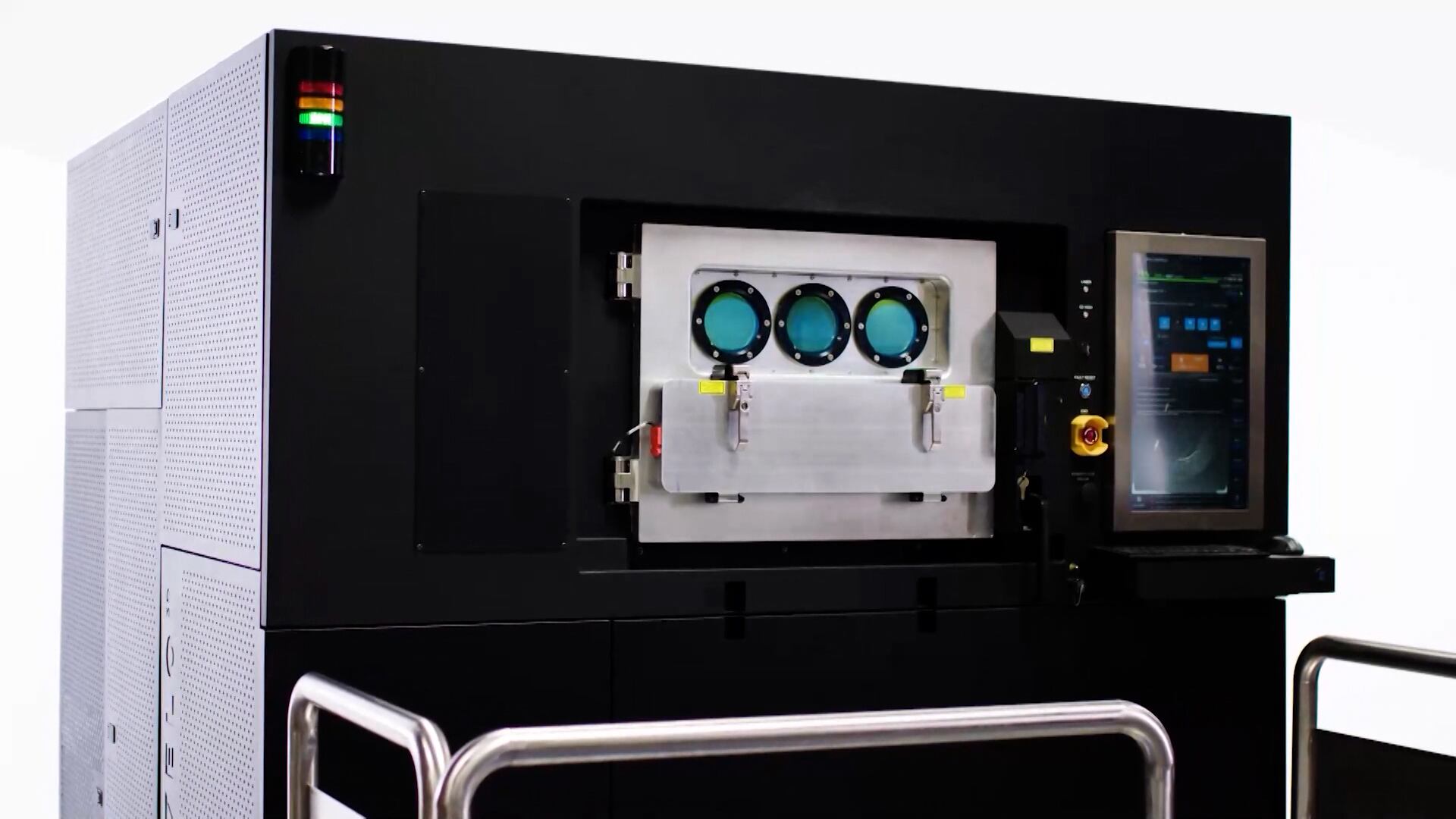
Velo3d, a company that provides metal 3D printed parts for companies such as SpaceX, reported a boost in Q4 revenue quarter over quarter. Founder and CEO Benny Buller, joined Cheddar News to discuss the earnings and the foundation of the company's current success. "The whole space sector is about 25 percent of our business. We have a lot of business in aviation, in power generation, in energy, and in semiconductors. I would say that the big jump in our revenue is related to the release of our Sapphire XC, which is a scale-up product reducing costs by about three times compared to the first Sapphire machines," he said. "This allows customers to dramatically reduce costs as well as make much bigger parts."