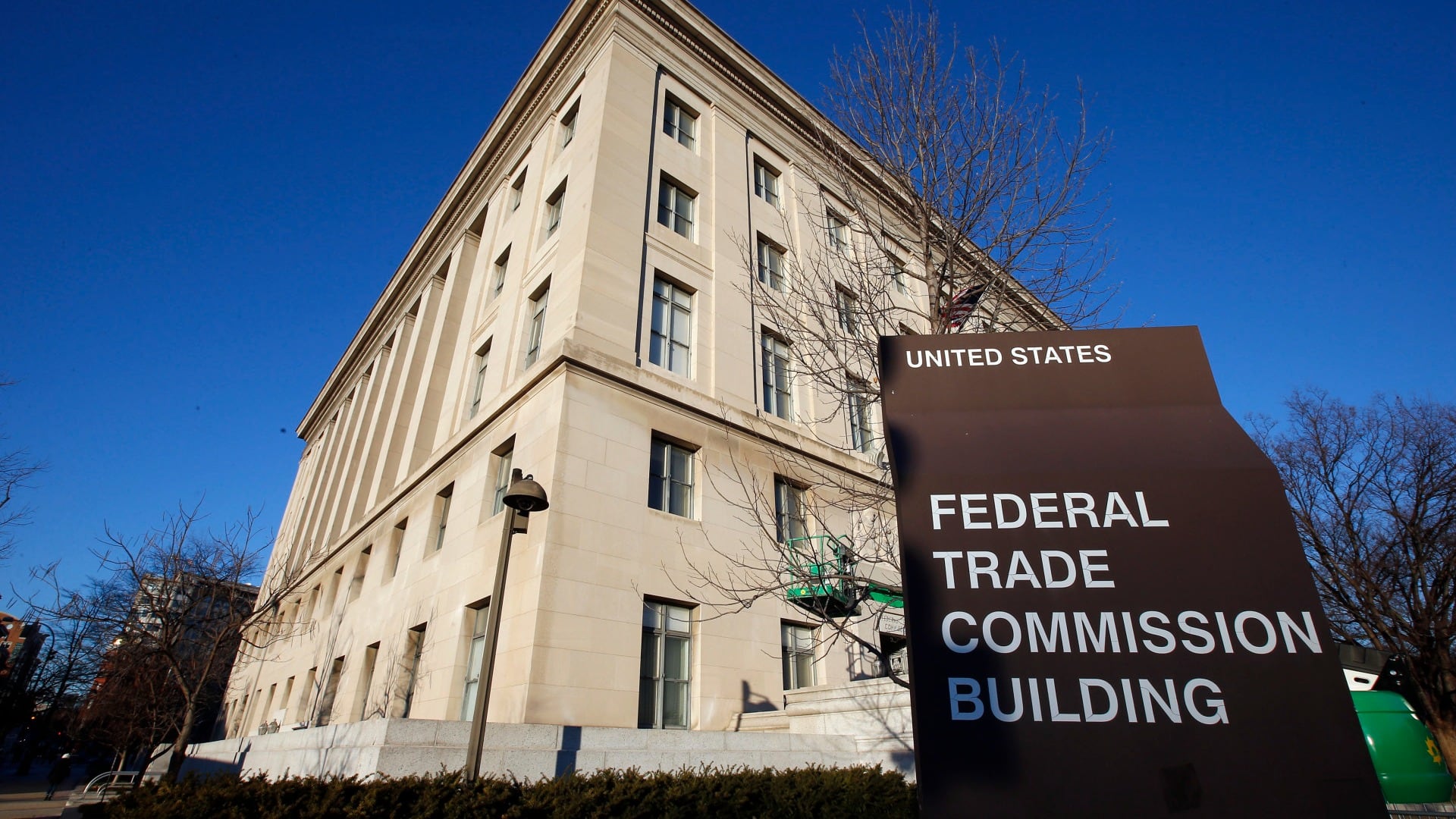
The Federal Trade Commission building in Washington is pictured on Jan. 28, 2015. The Federal Trade Commission is proposing a new rule that would prevent employers from imposing noncompete clauses on their workers. (AP Photo/Alex Brandon, File)
Parents whose kids bought virtual gear without their knowledge on the popular Fortnite video game could soon be able to get a refund.
U.S. regulators are starting to notify more than 37 million people by email that they may be eligible for compensation as part of a legal settlement with Fortnite's maker, Epic Games Inc.
The Federal Trade Commission announced late last year that Epic Games would pay $520 million in penalties and refunds to settle complaints revolving around children’s privacy and its payment methods that tricked players into making unintended purchases.
Part of that $520 million consists of $245 million in customer refunds, as part of a settlement finalized in March. It's meant to cover some of the costs of unwanted V-Bucks, the game's in-game currency, or virtual items such as outfits or cartoonish purple llama loot crates.
Consumers have until Jan. 17 to submit a claim.
Epic Games had also agreed to pay a $275 million fine for allegedly collecting personal information on Fortnite players under the age of 13 without informing their parents or getting their consent. It was the biggest penalty ever imposed for breaking an FTC rule.
According to the FTC, those eligible for refunds include Fortnite users charged in-game currency for items they didn’t want between January 2017 and September 2022; those whose child made charges to their credit card without their knowledge between January 2017 and November 2018; and those whose account was locked after they complained to their credit card company about wrongful charges.
Epic Games said after settling the case in December that it implemented additional safeguards to prevent unintended purchases. In an updated statement Tuesday, it referred people to the FTC’s page.
This story has been updated to clarify that Epic Games agreed to pay a fine for allegedly collecting personal information on Fortnite players under the age of 13 without informing their parents or getting their consent.
A new poll finds U.S. adults are more likely than they were a year ago to think immigrants in the country legally benefit the economy. That comes as President Donald Trump's administration imposes new restrictions targeting legal pathways into the country. The Associated Press-NORC Center for Public Affairs Research survey finds Americans are more likely than they were in March 2024 to say it’s a “major benefit” that people who come to the U.S. legally contribute to the economy and help American companies get the expertise of skilled workers. At the same time, perceptions of illegal immigration haven’t shifted meaningfully. Americans still see fewer benefits from people who come to the U.S. illegally.
Shares of Tylenol maker Kenvue are bouncing back sharply before the opening bell a day after President Donald Trump promoted unproven and in some cases discredited ties between Tylenol, vaccines and autism. Trump told pregnant women not to use the painkiller around a dozen times during the White House news conference Monday. The drugmaker tumbled 7.5%. Shares have regained most of those losses early Tuesday in premarket trading.
Scott Trench, host of the BiggerPockets Money Podcast, explores how recent rate cuts, high borrowing costs, and mortgage rates are reshaping U.S. real estate.
A look into how disruption, AI, and global economic trends are transforming the modern supply chain with Jeremy Jansen, Head of Supply Chain at Wells Fargo.
Delta CSO Amelia DeLuca reveals at the Fast Co. Innovation Festival how tech, sustainable aviation fuel, and smart operations are revolutionizing air travel.
Chipmaker Nvidia will invest $100 billion in OpenAI as part of a partnership that will add at least 10 gigawatts of Nvidia AI data centers to ramp up the computing power for the owner of the artificial intelligence chatbot ChatGPT.
Two of the nation’s biggest real estate services companies are combining in a deal that will bring Century 21, Compass and several other major brokerage brands under the same umbrella.