By Kimberlee Kruesi and Michelle L. Price
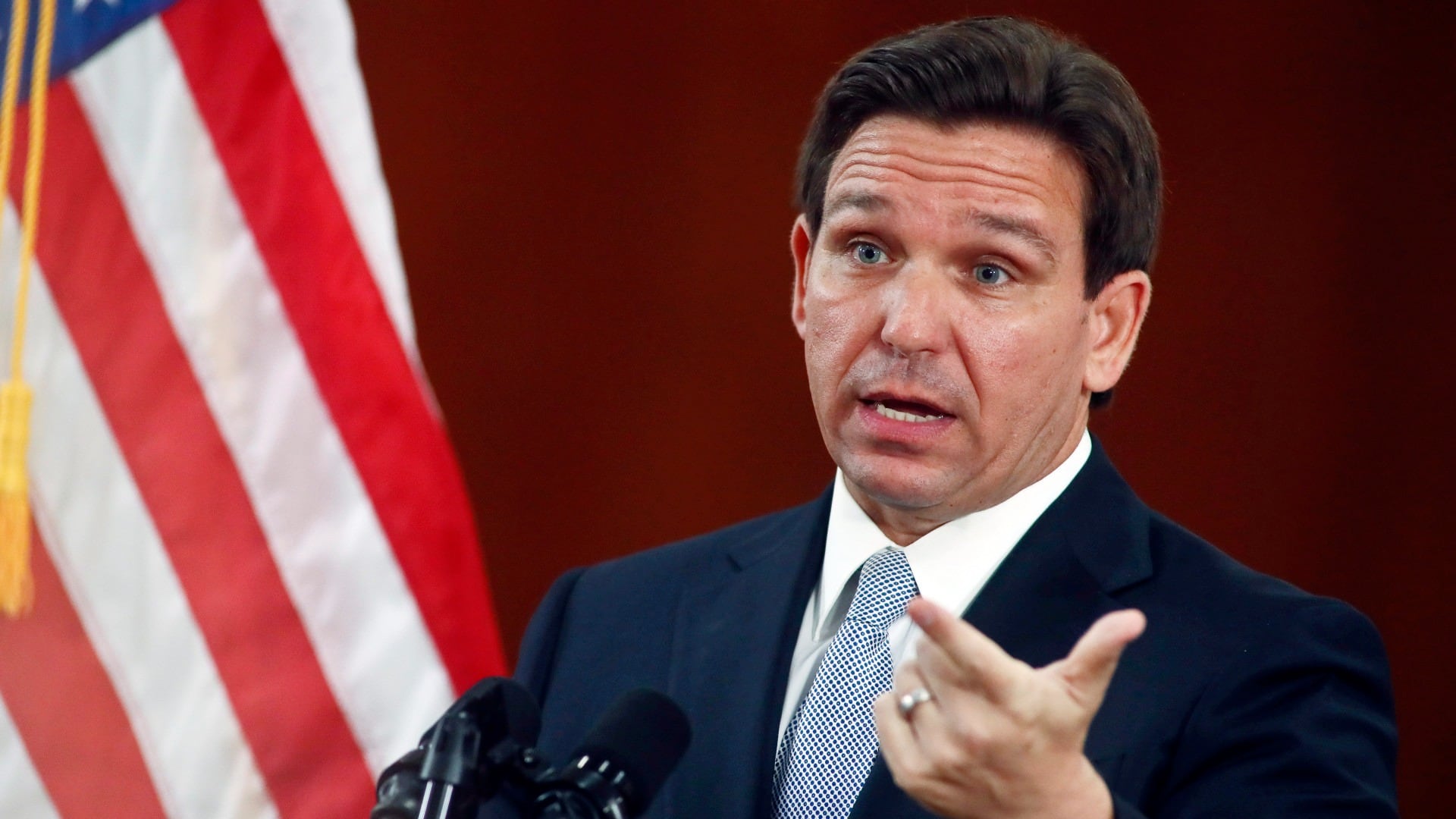
Florida Gov. Ron DeSantis was involved in a multi-car accident on Tuesday in Tennessee but was uninjured as he traveled in a motorcade to a campaign stop for his 2024 presidential bid.
The chain reaction crash happened before 8:15 a.m. when traffic slowed on Interstate 75 in Chattanooga, causing four cars in the motorcade to hit one another, police said. All the vehicles involved in the crash were government vehicles taking DeSantis and his team to his scheduled event, police said.
The Republican White House hopeful was not hurt, police and DeSantis press secretary Bryan Griffin said. A female DeSantis staff member suffered a minor injury and was later treated at the campaign event, police said.
Representatives for DeSantis’ campaign did not answer questions about who was driving the governor or reveal details about the accident. DeSantis was continuing on to his event, spokesperson Andrew Romeo said. A spokesperson for the Florida governor’s office deferred questions about the accident to the campaign.
Florida law says the Florida Department of Law Enforcement must provide security for the governor and his immediate family. It can include uniformed and nonuniformed officers.
DeSantis was scheduled to hold events throughout central and eastern Tennessee as he prioritizes Super Tuesday states in his campaigning. Super Tuesday, held on March 5 next year, is when the largest number of delegates are up for grabs of any day in the primary cycle.
Earlier this month, DeSantis addressed more than 1,800 attendees at a state GOP dinner in Nashville.
The Florida governor, who has trailed front-runner Donald Trump in the GOP presidential contest, was expected to be at a fundraiser at a private home in Chattanooga on Tuesday. Hosts for the fundraiser were to pay $10,000 per couple for the event, while co-hosts were paying $5,000 and other attendees were paying $2,000 each, according to the Chattanooga Times Free Press.
DeSantis was expected to attend additional fundraisers on Tuesday in Knoxville and Franklin.
The Republican candidate has been attending a string of fundraisers lately as his campaign has faced some surprising financial pressures. He was in Utah over the weekend holding fundraisers and in New York last week for an event in the Hamptons.
Just two months after entering the race, DeSantis already has been cutting staff while facing new questions about his aggressive spending, his media strategy and his apparent willingness to brawl with any and all foes except for Trump, the one person he must defeat to claim the GOP’s 2024 presidential nomination.
“The DeSantis campaign is recalibrating. It’s clear it needs to,” said Republican strategist Terry Sullivan, who managed Marco Rubio’s 2016 presidential campaign. “But at the end of the day, they’re still better positioned than any other challenger to Donald Trump, times 10.”
DeSantis’ team has quietly expressed confidence for months that voters would eventually tire of Trump’s escalating legal troubles and personal baggage. But that baggage, playing out in the U.S. legal system just as the GOP primary intensifies, is leaving precious little oxygen for his rivals to break through. And Trump’s standing with Republican primary voters seems to be growing stronger with every new legal challenge.
Still, DeSantis’ team has raised a stunning $150 million for his presidential ambitions so far. The vast majority, $130 million, has gone to a super PAC run by allies who cannot legally coordinate with the campaign.
The DeSantis campaign itself raised more than $20 million in the first six weeks he was in the race, though recently released federal filings revealed that he and his team had burned through more than $8 million in a spending spree that included more than 100 paid staffers, a large security detail and luxury travel.
Price reported from Washington. Associated Press writer Meg Kinnard in Houston contributed to this report.