*By Mike Teich*
A sweeping data privacy bill has been approved in California, but it may be too late for internet users to protect their information, said former National Counterterrorism Center officer Dave White.
"You have to consider yourself compromised," he said. "You’ve already given your data away."
Experts are calling it the nation's most far-reaching law to give consumers more control over their personal data. Under the law, customers can request what personal data companies have collected and what third parties have received it.
The passing of the historical bill didn't come without criticism. The ACLU of Northern California said the legislation falls "woefully short" in defending individuals' rights.
"It's a great first step," White said. However, “it doesn’t go far enough."
Companies that collect user data, from Amazon to Microsoft to Uber, lobbied aggressively against the law, pouring millions into a [opposition campaigns](https://www.theverge.com/2018/6/15/17468292/amazon-microsoft-uber-california-consumer-privacy-act).
But consumer advocates called it a milestone victory. "Today was a [huge win](http://money.cnn.com/2018/06/28/technology/california-consumer-privacy-act/index.html) and gives consumer privacy advocates a blueprint for success," James P. Steyer, CEO and founder of Common Sense Media. "We look forward to working together with lawmakers across the nation to ensure robust data privacy protections for all Americans."
For full interview, [click here](https://cheddar.com/videos/california-passes-historic-privacy-bill).
Hanneke Weitering, staff writer at Space.com, discusses SpaceX's launch of the Falcon 9 rocket that carried a Spanish imaging satellite and two demo Starlink broadband test satellites. With this technology, SpaceX hopes to provide high speed, low cost energy across the globe.
Chris Tung, Chief Marketing Officer at Alibaba, discusses the company's first official partnership with the International Olympic Committee. This year, Alibaba is the exclusive worldwide partner of the Olympic Games for cloud computing and e-commerce.
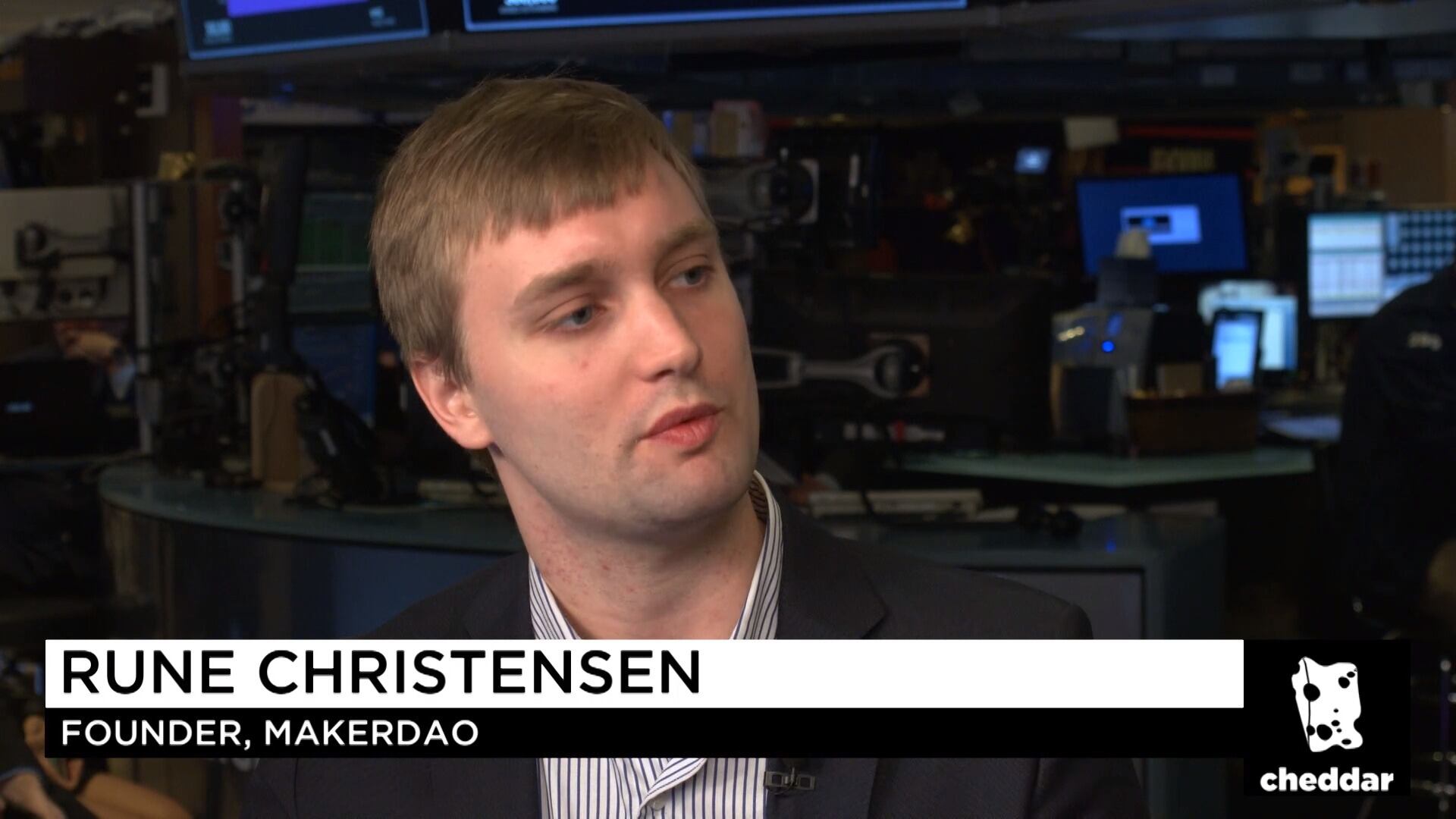
Rune Christensen, founder of MakerDao, discusses how his company's cryptocurrency is different from the rest because it's less volatile.
Michael Simon, staff writer for PC World, previews Mobile World Congress kicking off this weekend in Spain. Samsung, LG, Sony, and others are all expected to unveil new phones.
Rune Christensen, the founder of MakerDAO, walks us through the ethereum blockchain project and says that venture capital firm Andreessen Horowitz is attracted to the stability of its token, the "Dai".
One of the reasons to keep the purge a secret is that the company's bot-fighting technology was "so bad," says Daily Beast reporter Taylor Lorenz. But the latest move might be too little, too late.
Paul Manafort and Robert Gates face 32 new charges in Robert Mueller's Russia investigation. Snap CEO Evan Spiegel gets a record-breaking payday. Teenagers across the country and politicians continues to weigh in on gun control in the wake of the mass shooting in Parkland, FL.
Twitter is taking steps to remove bots after growing criticism. This week the company quietly deleted thousands of automated accounts. Shares of Twitter were down about 3 percent on Thursday. The Daily Beast's Technology Reporter Taylor Lorenz explains whether this move is a little too late for Twitter.
Educational technology start-up Kidaptive recently closed a $19 million Series C round of funding. The company's co-founder and CEO P.J. Gunsagar explains how this surge of funding is impacting Kidaptive's plans.
The Hive hosts Kristen Scholer and Jon Kelly discuss the week's biggest news stories. From student protests to Jared Kushner's security clearance, it's been a non-stop week in Washington.