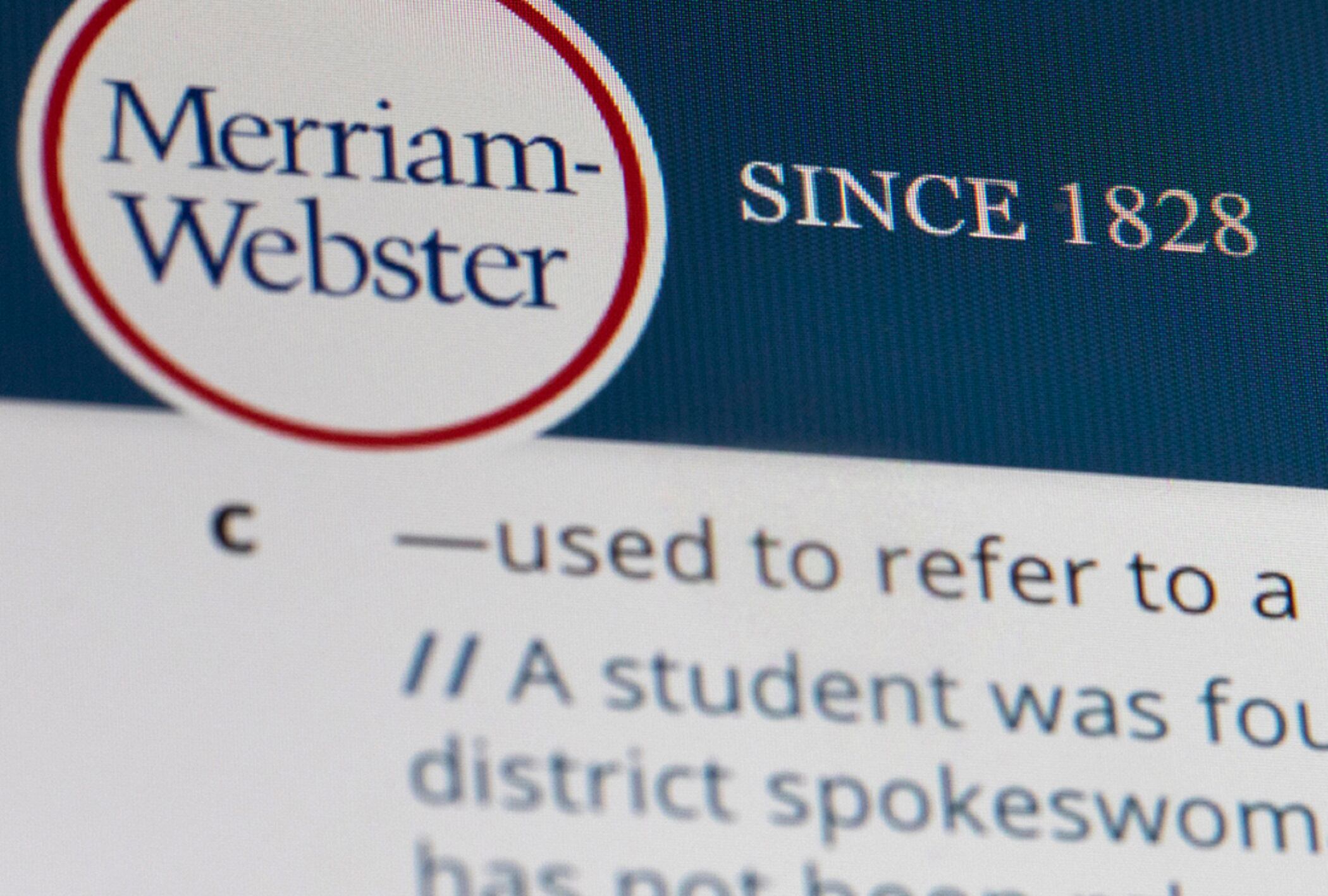
Merriam-Webster.com is displayed on a computer screen on Friday, Dec. 6, 2019, in New York. Merriam-Webster has added 455 new words to its venerable dictionary, including a number of abbreviations and slang terms that have become ubiquitous on social media.(AP Photo/Jenny Kane, File)
Dad bod, amirite, TBH and FTW are now dictionary-appropriate.
Merriam-Webster has added 455 new words to its venerable dictionary, including a number of abbreviations and slang terms that have become ubiquitous on social media.
“Just as the language never stops evolving, the dictionary never stops expanding,” the nearly 200-year-old Springfield, Massachusetts-based company said on its website. "New terms and new uses for existing terms are the constant in a living language."
The dictionary company said the quick and informal nature of messaging, texting, and tweeting, which has only increased during the pandemic, has “contributed to a vocabulary newly rich in efficient and abbreviated expression.”
Among them: “TBH”, an abbreviation for “to be honest” and “FTW,” an abbreviation for “for the win.”
Merriam-Webster explains that FTW is used "especially to express approval or support. In social media, FTW is often used to acknowledge a clever or funny response to a question or meme.”
And it says “amirite” is a quick way to write “am I right,” as in, "English spelling is consistently inconsistent, amirite?”
The coronavirus pandemic also looms large in the collection of new entrants as “super-spreader,” “long COVID” and “vaccine passport” made the list.
Partisan politics contributed more slang to the lexicon, such as “whataboutism," which Merriam-Webster defines as “the act or practice of responding to an accusation of wrongdoing by claiming that an offense committed by another is similar or worse.” For Britons, the dictionary notes that “whataboutery” is more commonly used.
The dreaded “vote-a-ramas” that have become a fixture in the U.S. Congress is explained this way: “an unusually large number of debates and votes that happen in one day on a single piece of legislation to which an unlimited number of amendments can be introduced, debated, and voted on.”
And still, other new terms come from the culinary world, such as “fluffernutter,” the homey sandwich of peanut butter, marshmallow crème, and white bread.
Horchata, the cold, sweetened beverage made from ground rice or almonds and usually flavored with cinnamon or vanilla, also made the cut, as did chicharron, the popular fried pork belly or pigskin snack.
As for “dad bod”? The dictionary defines that as a “physique regarded as typical of an average father; especially: one that is slightly overweight and not extremely muscular.”
2021 was a wild ride for the world of cryptos. Both Bitcoin and Etherum hit new all-time highs, as well as other coins like SHIB-INU. According to several experts, crypto is here to stay and is expected to blast off in the year 2022 as more and more people invest in the crypto world. The host of "The O Show" Wendy O, joined Cheddar to discuss more.
According to recent new polls, Americans are becoming more and more skeptical about tech companies. A number of respondents revealed their distrust of companies like Apple, Instagram, Facebook, and even Tik Tok. They say that they believe it is time for government agencies to step in to take action in order to protect users' personal information and data. Technology Reporter at AXIOS Ashley Gold, joined Cheddar to discuss more.
Over the past year, the new love for gaming has created a huge demand for the consumption of content on streaming platforms. All this has caused a rise in gaming influencers all over the world. Founder of Viral Nation Joe Gagliese and Digital Video Executive Andrew Wall, joined Cheddar to discuss more.
The U.S. population has dipped to its slowest rate since the nation's founding. According to the U.S. Census Bureau, the population grew just point 0.11% from 2020 to 2021 due in part to decreased international migration, decreased fertility, and increased mortality from the pandemic. Paul Overberg, reporter at the Wall Street Journal, joined Cheddar to discuss what's behind the record slow growth in population and why it has negative implications for the economy and the nation.
Carlo and Baker kick off the weirdest week of the year with all the news you missed over the holiday weekend, including calls for the CDC to shorten its isolation window as Omicron sweeps through the country.
The 2022 Winter Olympics will be without some of hockey's biggest players. The NHL and the NHL Player's Association have agreed to not participate in the men's hockey tournament at the Games in Beijing next year. The league has been forced to postpone some games because of a rise in COVID-19 cases among players. Washington Post sports reporter Samantha Pell joins Cheddar News' Closing Bell to discuss what this could mean for the Winter Olympics and the sport of hockey.
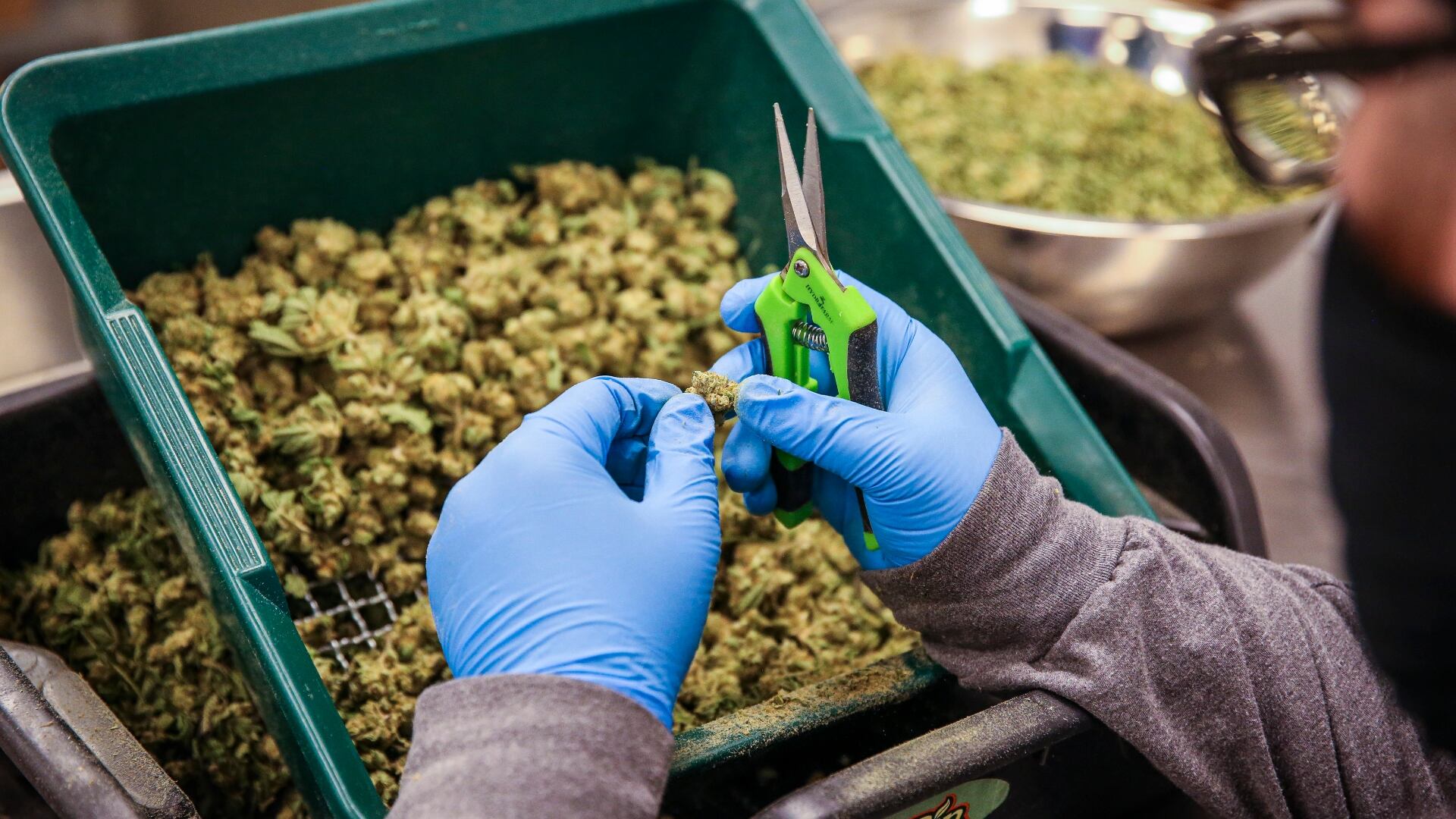
Baron Davis and Kate Hudson want you to bring cannabis home for the holidays. The cannabis-infused seltzer brand Cann released a new spot featuring the actress and former NBA player. The campaign comes hand in hand with Cann's launch of a new holiday bundle, which includes its product with Hudson's King Street Vodka. Davis and Hudson are also Cann investors. Cheddar cannabis reporter Chloe Aiello spoke to Davis about his involvement with the company and its new campaign.
Healthcare workforce management platform ShiftMed
recently announced a $45 million funding round.
The company's platform connects nurses and healthcare professionals to hospitals and other healthcare providers.
ShiftMed's new funding comes amid widespread labor shortages in the healthcare sector. The company's CEO Todd Walrath joins Cheddar News' Closing Bell to discuss.
Universities like UCLA, Yale, and Duke have announced they're implementing remote learning amid the COVID omicron variant surge, despite President Biden recommending that K-12 schools should continue in-person education. Jared C. Bass, senior director for Higher Education at American Progress, joined Cheddar to break down what institutions of higher education might be considering differently. "I think some universities are allowing periods of a bit of a respite to allow students to get testing and make sure when they do return back to campus that they're healthy," he noted.