California’s landmark law to protect user data, the California Consumer Privacy Act, will take effect on Jan. 1. The legislation is meant to protect people’s information as they spend more time online, giving them more knowledge about what data is being collected about them, and where it is being sold and disclosed to.
This is just the tipping point for the largely unregulated social media and online world. As people become more aware of how their online activity is being used, whether it is to target advertising or political messages, they will put more pressure on government officials to protect their personal information. At the same time companies that rely on data for advertising, especially giants like Facebook and Google, will have to work with legislators to comply while growing their businesses.
Teens will become more conscious about the emotional effect of social media
With younger generations relying on mobile phones as their communication conduits, they are more online than any previous generation. About 95 percent of teens have access to a smartphone — and a little under half of them are online on a “near-constant basis” according to a Pew study.
Interesting enough, a quarter of teens told Pew they felt social media had negative effects on their lives. Facebook use itself has been linked to unhappiness, while a University of Pennsylvania study showed that limiting social media use to 30 minutes a day could lead to a decrease in feeling lonely or depressed.
Armed with the knowledge about the positives and negatives of social media, since there is more research than ever before, today’s teens will be more aware of the effects having an Instagram-perfect life could have on their well-being.
TikTok Won’t Stop
Teens still watch about 20 hours of television a week, but they’re also more likely to find their entertainment through other avenues like YouTube. A lot of this content relies on user-generated material, leading to the rise of creator-made shows, and clips and memes becoming the viral watercooler topics of today.
Enter TikTok: An entertainment platform perfect for people with short attention spans but a lot of creative energy. Instead of simple passive comments about the world or mundane facts about your day, TikTok allows people to share performances to help inspire, entertain, or get people talking. For the creators themselves, it’s one way to stand out in a crowded world and know you made a difference thanks to view counts. It’s why the platform is poised to take over in the next decade.
Welcome the era of social commerce
Online retailers have always struggled with getting people to buy things right after they see it online. Shoppers usually see an ad, put it in a digital cart and maybe come back to purchase it later on, if at all.
Thanks to Instagram however, companies are having more success with people purchasing things directly from an ad. As the behavior to click-through advertisements to purchase an item immediately becomes more comment, more ad dollars will flow from traditional brick-and-mortar store marketing to digital advertising inside social feeds. And, as messaging apps become more prominent, a greater number of people will get used to chatting with chatbots to get that customer experience rather than talk to a salesperson in-store.
Driver assistance monitoring systems are meant to keep the driver's eyes on the road, but according to a report from AAA, different ways of monitoring provide significantly different results. The study found that direct camera-based systems that scanned the driver's eye movements were faster and more reliable than those indirect systems that looked at steering-wheel input. Megan McKernan, the manager of automotive services for the Automobile Club of Southern California, joined Cheddar to discuss the findings. "Triple-A is recommending that automakers include both direct and indirect systems just to really prevent consumers from trying to misuse these systems," she said, noting that neither system on its own is not foolproof.
"Sing 2" has overthrown "Spider-Man: No Way Home" as the number one film at the UK box office. The animated sequel brought in $8.1 million, in just its two first weekends. However, "No Way Home" is still on track to beat "Avatar" as the number one grossing movie of all time.
Pinterest recently added augmented reality to its portfolio. The image sharing and social media platform's new e-commerce tech will allow consumers to interact with retailers and visualize online products inside their homes.
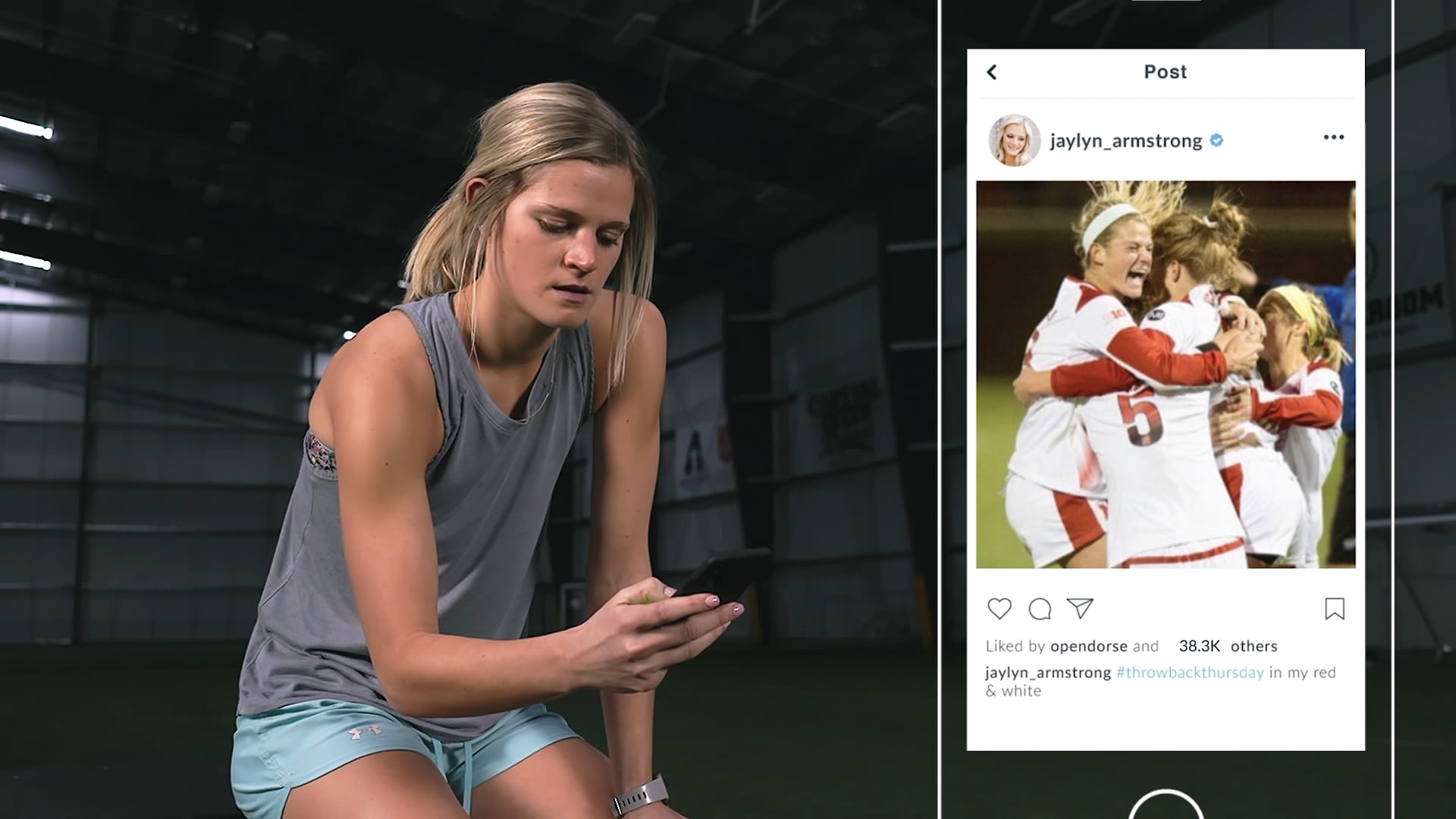
On this episode of Cheddar Reveals, Jim Riordan, Director of the MBA Sport Management program at Florida Atlantic University, breaks down the successes, failures, and chaos of the first seven months of the Name, Image, Likeness policy in college athletics; Adi Kunalic, President of Opendorse, discusses the first-ever association-wide deal in college athletics between Opendorse and the NAIA, and how Opendorse is marketing and educating student-athletes to make the most of their NIL deal potential; Cheddar gets a look at Curiosity Stream's 'Predicting a Pro'.
Jim Riordan, Director of the MBA Sport Management program at Florida Atlantic University, joins Cheddar Reveals to break down the successes, failures, and chaos of the first seven months of the Name, Image, Likeness policy in college athletics.
Adi Kunalic, President of Opendorse, joins Cheddar Reveals to discuss the first-ever association-wide deal in college athletics between Opendorse and the NAIA, and how Opendorse is marketing and educating student-athletes to make the most of their NIL deal potential.
Jason Chinnock, CEO of Ducati North America, discusses ways demand has changed over the last year and what supplying race bikes for the MotoE World Cup series means for Ducati's future.
The value of most cryptocurrencies have plummeted in recent months since reaching all-time highs in November, wiping out more than $1 trillion in value globally. The steep crash has some talking about the possibility of a crypto winter, a term referring to a prolonged bearish period where asset prices persistently fall over many months. This all comes as the Fed is expected to raise interest rates, and the Biden administration is working on an executive order to regulate Bitcoin and other assets. Josh Goodbody, COO of Qredo, joined Cheddar's Opening Bell to discuss the crypto crash, and how the industry might recover from it.
Logitech posted better-than-expected earnings in its third quarter, reporting sales of $1.63 billion dollars, down 2% from the year ago quarter, but well ahead of the Wall Street consensus of $1.48 billion dollars. The PC and gaming peripherals company also raised its annual guidance for both sales and profitability. Bracken Darrell, Logitech CEO, joined Cheddar to break down his reaction to the results, how the pandemic played a role in its growth, and where he wants to take the company next.