A worrisome bout of inflation struck the economy in April, with U.S. consumer prices for goods and services surging 0.8%, the largest monthly jump in more than a decade, and the year-over-year increase reaching its fastest rate since 2008.
The acceleration in prices, which has been building for months, has unsettled financial markets and raised concerns that it could weaken the economic recovery from the pandemic recession.
Wednesday's report from the Labor Department showed sharply higher prices for everything from food and clothes to housing. A 10% surge in the prices of used cars and trucks — a record jump — accounted for roughly one-third of last month's increases. Prices for vehicles, both used and new, have been soaring as a result of a computer chip shortage that has slowed auto production and reduced dealer supplies.
Over the past 12 months, consumer prices have jumped 4.2% — the fastest rise since a 4.9% gain in the 12 months that ended in September 2008. Excluding volatile food and energy, core inflation rose 0.9% in April and 3% over the past 12 months.
After years of dormant inflation, with the Federal Reserve struggling to increase it, worries about rising prices have shot to the top of economic concerns. Shortages of goods and parts related to disrupted supply chains have been a key factor.
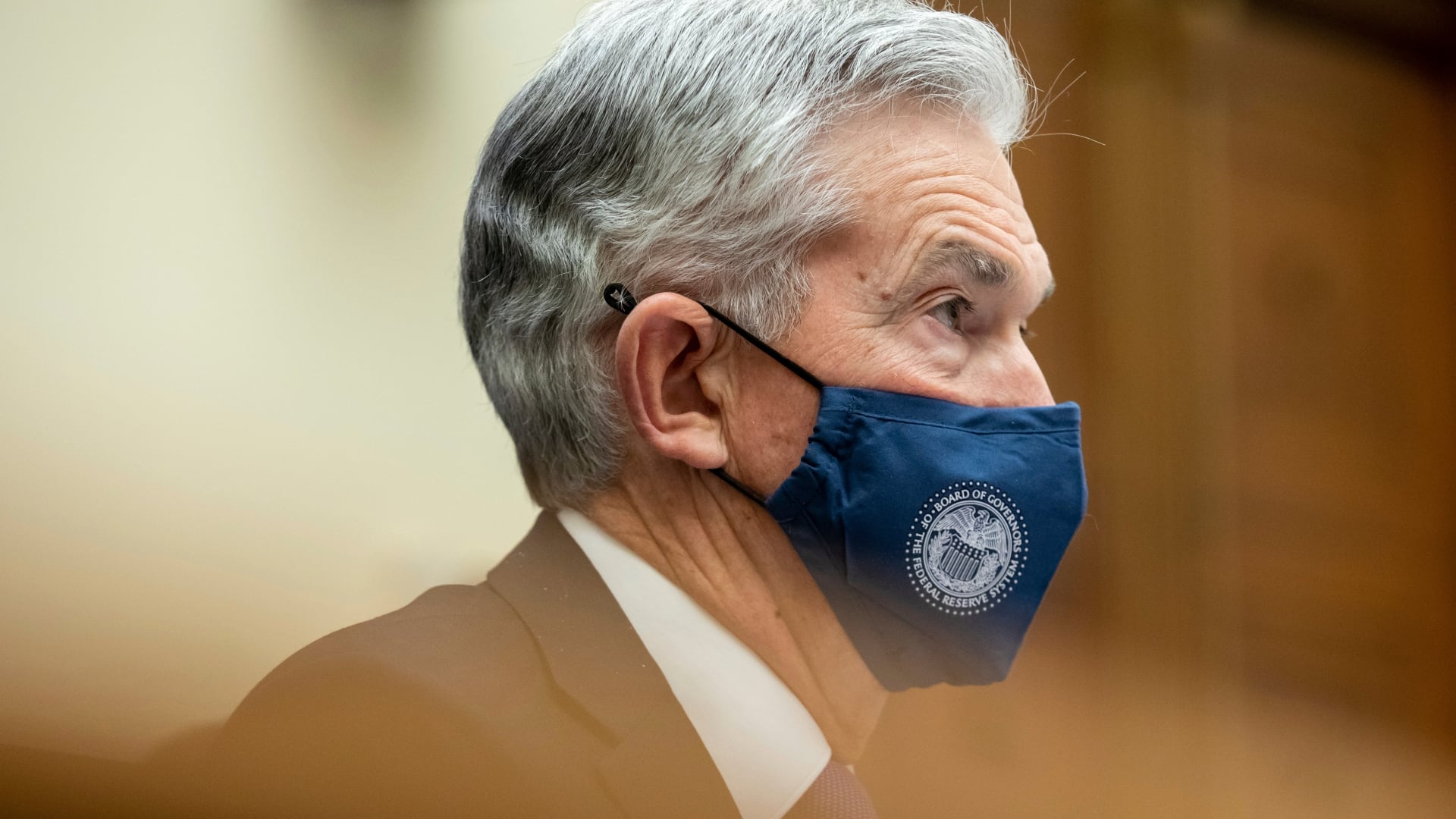
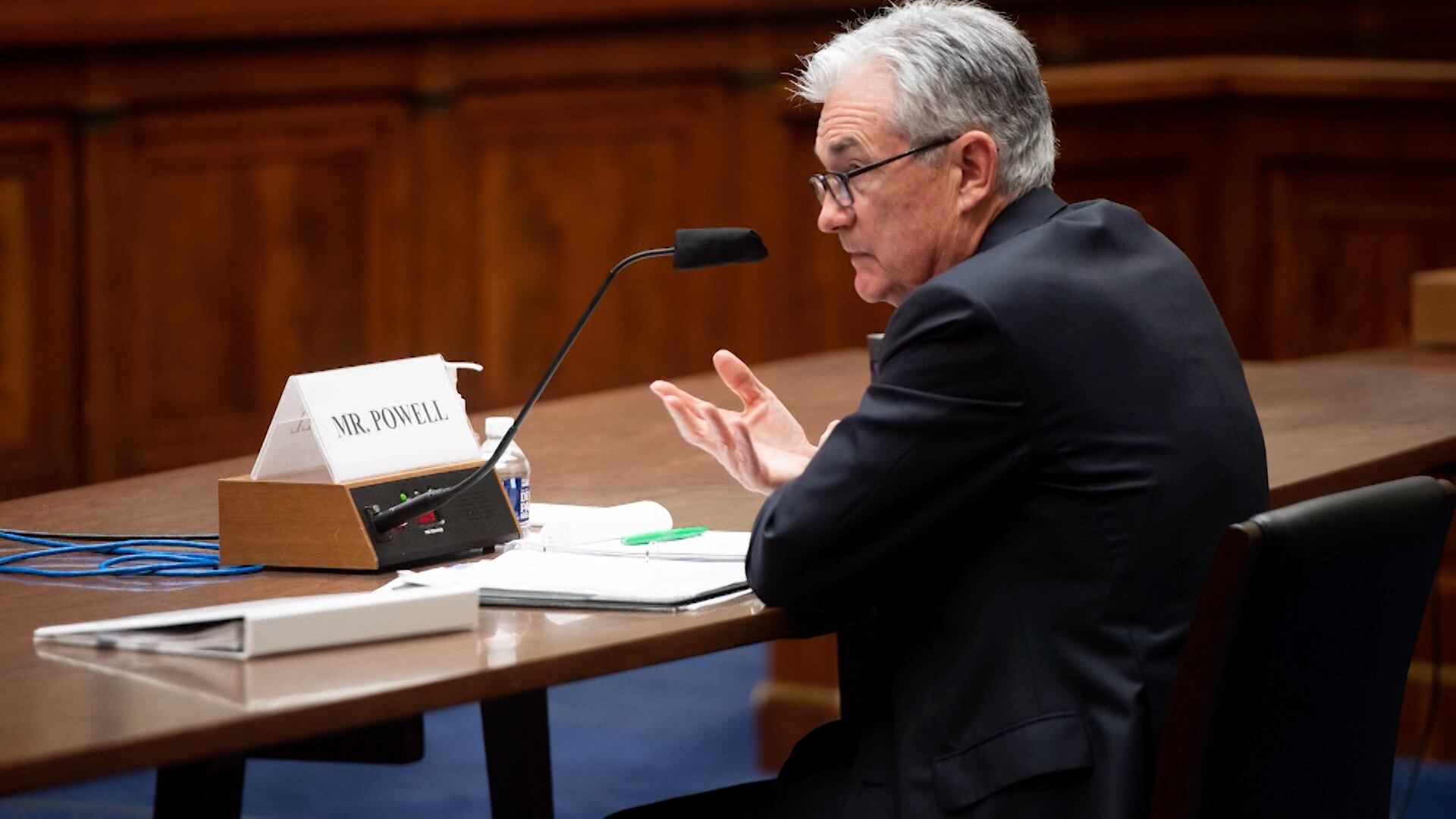
The Fed, led by Chair Jerome Powell, has repeatedly expressed its belief that inflation will prove temporary as supply bottlenecks are unclogged and parts and goods flow normally again. But some economists have expressed concern that as the economic recovery accelerates, fueled by rising demand from consumers spending freely again, so will inflation.
“It looks like inflation pressures are not only building but are likely to be here at least through the rest of the year,” said Joel Naroff, chief economist at Naroff Economic Advisors. “With growth robust, firms have a measure of pricing power tat they haven't had in decades, and they appear to be using it.”
Investors, too, have grown increasingly jittery. On Tuesday, the Dow Jones Industrial Average sank more than 470 points — 1.4% — its worst day since Feb. 26.
Wednesday's inflation report showed that food prices rose 0.4%, the biggest such increase since a 0.5% rise last June. Energy costs, though, edged down 0.1%, with gasoline pump prices falling 1.4%, the biggest drop since May 2020.
Last month, Powell suggested at a news conference that Fed officials expect inflation to move above its 2% annual target over the next few months. The Fed has said it will allow prices to rise slightly above 2% for a period of time to make up for the past decade's shortfalls in inflation.
Powell has said that as long as the increase in inflation doesn't appear to be hurting consumer and business expectations about price increases, the central bank would be willing to let prices rise without acting to raise interest rates. That view has been supported by comments from other Fed officials including Lael Brainard, a board member who warned Tuesday against a premature Fed tightening that could harm the economy.
We're entering a brave new world of broadly legal sports betting. Over 30 states and Washington, DC, have legalized sports betting in the year and a half since the supreme court struck down the federal ban on the activity.
But legalization isn't a simple proposition. The federal law might be struck down but its still up to each state to decide whether to legalize sports betting, and answer a litany of questions that come with it. Should you include online gambling? How much should people be allowed to bet? Should there be limits on advertising for sports betting?
Darren Heitner, founder of Heitner Legal, and Daniel Wallach, founder of Wallach Legal, join None of the Above's "Business of Sports: The Year Gambling Took Over" special to discuss.
Over the past decade, the resale market has completely transformed, allowing people to utilize platforms such as Etsy, Poshmark, eBay, and more to create a lucrative business from the comfort of their homes. However, as the space of secondhand sellers and thrifters gets more and more crowded, small businesses are facing bigger obstacles to not only thrive in the market but also survive. Yvette Liebesman, a law professor at Saint Louis, joins Cheddar News to discuss.
Even as tech giant Google implements a vaccination mandate, charging its employees to declare their vaccine status within a time frame or risk dismissal, the federal government is tangled up in the court system trying to impose one of its own. Cindy Cohn, the executive director of the Electronic Frontier Foundation, and Harry Nelson, founder and managing partner of Nelson Hardiman LLP, joined Cheddar to debate the ethics, efficacy, and legality surrounding the issue. While Cohn noted that she thinks the federal mandate might be legally sound, her organization is also concerned with a separate question of privacy. "At EFF what we're most interested in is the digital surveillance that's going along with some of these attempts to try to track and confirm whether people are vaccinated or not," she said.
A new report from CNBC says Instagram recently reached a new milestone -- 2 billion monthly active users. It comes amid a year of controversy for the photo-sharing app and its parent company, Meta. SocialFlow CEO Jim Anderson joins Cheddar News' Closing Bell to discuss.
A report from KPMG International found that global mergers and acquisitions in 2021 reached $5.1 trillion in transactions. Carol Streicher, U.S. deal advisory and strategy service group leader for KPMG, joined Cheddar's "Closing Bell" to talk about the record-breaking year and next year's outlook, which KPMG says could be even more staggering. "We're not seeing any slow down in '22," she said, regarding survey results of 350 business leaders. "Things that were tailwinds for us in M&A activity this past year are going to continue to be tailwinds for us in 2022."
MotorTrend named the Rivian R1T as the 2022 truck of the year - a prestigious title given by the publication as a way for automakers to tout third-party validation. Rivian beat out traditional, legacy truck favorites like Ford and General Motors.
MotorTrend said the company earned high marks for safety, efficiency, value, advanced design, engineering excellence, and performance of intended function. MotorTend head of editorial Ed Loh joins Cheddar News' Closing Bell to discuss.
Stocks closed higher Wednesday on the heels of the Federal Reserve's December meeting. Chairman Jerome Powell announced the central bank would leave interest rates low and unchanged for now, with the anticipation of three hikes next year. The Fed will also speed up the timeline of its asset tapering, beginning in January 2022. Dan Russo, Portfolio Manager and Director of Research at Potomac Fund Management joins Cheddar News' Closing Bell to discuss today's close, how investors reacted to the Fed's announcements, and more.
There is a new way for investors to bet on cannabis - the AdvisorShares Poseidon Dynamic Cannabis ETF targets about 20 of the biggest names in U.S. cannabis. It comes at a time when it's still difficult for investors to access the space. Cheddar News cannabis reporter Chloe Aiello spoke with co-founder and managing director for Poseidon Investment Management, Emily Paxhia.
Victor Li, an economics professor at the Villanova School of Business, joins Cheddar News' Closing Bell, where he discusses the latest Fed decision and the implications it has on the stock market.