A worrisome bout of inflation struck the economy in April, with U.S. consumer prices for goods and services surging 0.8%, the largest monthly jump in more than a decade, and the year-over-year increase reaching its fastest rate since 2008.
The acceleration in prices, which has been building for months, has unsettled financial markets and raised concerns that it could weaken the economic recovery from the pandemic recession.
Wednesday's report from the Labor Department showed sharply higher prices for everything from food and clothes to housing. A 10% surge in the prices of used cars and trucks — a record jump — accounted for roughly one-third of last month's increases. Prices for vehicles, both used and new, have been soaring as a result of a computer chip shortage that has slowed auto production and reduced dealer supplies.
Over the past 12 months, consumer prices have jumped 4.2% — the fastest rise since a 4.9% gain in the 12 months that ended in September 2008. Excluding volatile food and energy, core inflation rose 0.9% in April and 3% over the past 12 months.
After years of dormant inflation, with the Federal Reserve struggling to increase it, worries about rising prices have shot to the top of economic concerns. Shortages of goods and parts related to disrupted supply chains have been a key factor.
The Fed, led by Chair Jerome Powell, has repeatedly expressed its belief that inflation will prove temporary as supply bottlenecks are unclogged and parts and goods flow normally again. But some economists have expressed concern that as the economic recovery accelerates, fueled by rising demand from consumers spending freely again, so will inflation.
“It looks like inflation pressures are not only building but are likely to be here at least through the rest of the year,” said Joel Naroff, chief economist at Naroff Economic Advisors. “With growth robust, firms have a measure of pricing power tat they haven't had in decades, and they appear to be using it.”
Investors, too, have grown increasingly jittery. On Tuesday, the Dow Jones Industrial Average sank more than 470 points — 1.4% — its worst day since Feb. 26.
Wednesday's inflation report showed that food prices rose 0.4%, the biggest such increase since a 0.5% rise last June. Energy costs, though, edged down 0.1%, with gasoline pump prices falling 1.4%, the biggest drop since May 2020.
Last month, Powell suggested at a news conference that Fed officials expect inflation to move above its 2% annual target over the next few months. The Fed has said it will allow prices to rise slightly above 2% for a period of time to make up for the past decade's shortfalls in inflation.
Powell has said that as long as the increase in inflation doesn't appear to be hurting consumer and business expectations about price increases, the central bank would be willing to let prices rise without acting to raise interest rates. That view has been supported by comments from other Fed officials including Lael Brainard, a board member who warned Tuesday against a premature Fed tightening that could harm the economy.
Michele Schneider, Partner and Director of Trading Research & Education for MarketGauge.com, joins Cheddar News' Closing Bell, where she says the spread of the Omicron variant and Jerome Powell's comments following the latest Fed decision are spooking investors heading into the weekend.
Andrew Hawkins, transportation editor at The Verge, joins Cheddar News' closing Bell, where he breaks down FedEx's EV truck delivery from GM's BrightDrop Company while also discussing the shipping giant's strategy following its latest earnings report.
Alinda Mashiku, Conjunction Analysis and Risk Assessment Deputy Manager at the NASA Goddard Space Flight Center, joins Future of Space: Humankind's Leap Forward to explain how space debris is threatening operations in space at a time when more satellites are being deployed.
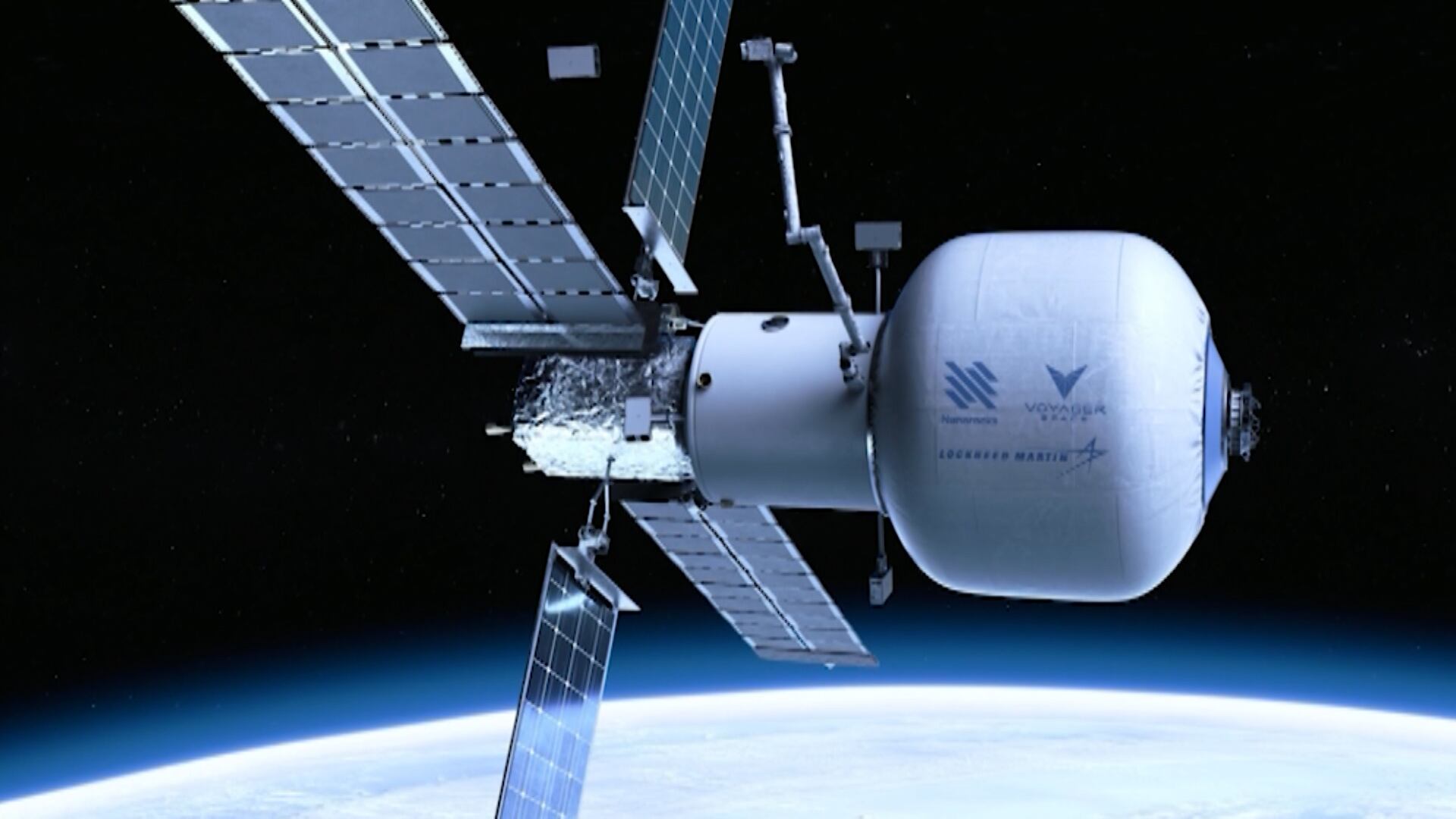
Marshall Smith, Senior Vice President of Space Systems at Nanoracks and Kirk Shireman, Vice President of the Lunar Exploration Campaign at Lockheed Martin join Future of Space: Humankind's Leap Forward to discuss upcoming plans for developing their Starlab commercial space station after being awarded a $160 million contract by NASA.
Both AMC and Cinemark shares rose Friday after a pandemic-era record number of moviegoers attended the 'Spider-Man: No Way Home' opening night. The movie is expected to pull at least $150 million in box office sales opening weekend. But is this momentum enough for theater chains as the COVID-19 omicron variant poses new threats? Daniel Loria, Editorial Director at Boxoffice PRO, joins Cheddar News' Closing Bell to discuss.
The billionaire space race took off in 2021, making major strides in space tourism. That growth is only expected to skyrocket in the next year, as the government and private institutions and companies look to shape the final frontier's exploration. Cheddar News dives into the biggest moments of the year in space, and what comes next for space travel and tourism.
While other CEOs of Southwest and American Airlines questioned current mask mandates in front of Congress, Delta CFO Dan Janki in his exclusive interview with Cheddar, was more cautious about doing away with the safety measure. "We're right now at the beginning of another wave," he said. "This is probably not the time to change mask policy." Janki also discussed his airline's future in loyalty program pricing, international travel, meal services, and stock pricing.
E-commerce data platform Rokt is prepping for an IPO as it comes off of a $325 million Series E fundraise, and CEO Bruce Buchanan joined Cheddar to discuss the future of his company. He explained how Rokt uses data science to optimize the consumer experience with their clients and discussed the goal to go public in 2023. "We're at a size and scale now where it's important we can give liquidity to investors, we can use the public markets to attract more talent, and we can use the public markets also to go on and acquire more businesses," he said. "We think it's about time that we do list."
Rideshare company Lyft is following its competitor Uber into the food delivery market by partnering with Olo, the on-demand commerce platform, and its dispatch network. Joining Cheddar to discuss the team-up, Olo founder and CEO Noah Glass. "Consumers will be able to place orders through the same apps and websites they go to … and see delivery as an option," he said. "And Lyft is now one of the providers who may be picking up the order on behalf of the consumer and taking it from the restaurant to the consumer." Glass also stated that Olo optimizes deliveries without adding the burden of additional fees on the restaurant side.