A worrisome bout of inflation struck the economy in April, with U.S. consumer prices for goods and services surging 0.8%, the largest monthly jump in more than a decade, and the year-over-year increase reaching its fastest rate since 2008.
The acceleration in prices, which has been building for months, has unsettled financial markets and raised concerns that it could weaken the economic recovery from the pandemic recession.
Wednesday's report from the Labor Department showed sharply higher prices for everything from food and clothes to housing. A 10% surge in the prices of used cars and trucks — a record jump — accounted for roughly one-third of last month's increases. Prices for vehicles, both used and new, have been soaring as a result of a computer chip shortage that has slowed auto production and reduced dealer supplies.
Over the past 12 months, consumer prices have jumped 4.2% — the fastest rise since a 4.9% gain in the 12 months that ended in September 2008. Excluding volatile food and energy, core inflation rose 0.9% in April and 3% over the past 12 months.
After years of dormant inflation, with the Federal Reserve struggling to increase it, worries about rising prices have shot to the top of economic concerns. Shortages of goods and parts related to disrupted supply chains have been a key factor.
The Fed, led by Chair Jerome Powell, has repeatedly expressed its belief that inflation will prove temporary as supply bottlenecks are unclogged and parts and goods flow normally again. But some economists have expressed concern that as the economic recovery accelerates, fueled by rising demand from consumers spending freely again, so will inflation.
“It looks like inflation pressures are not only building but are likely to be here at least through the rest of the year,” said Joel Naroff, chief economist at Naroff Economic Advisors. “With growth robust, firms have a measure of pricing power tat they haven't had in decades, and they appear to be using it.”
Investors, too, have grown increasingly jittery. On Tuesday, the Dow Jones Industrial Average sank more than 470 points — 1.4% — its worst day since Feb. 26.
Wednesday's inflation report showed that food prices rose 0.4%, the biggest such increase since a 0.5% rise last June. Energy costs, though, edged down 0.1%, with gasoline pump prices falling 1.4%, the biggest drop since May 2020.
Last month, Powell suggested at a news conference that Fed officials expect inflation to move above its 2% annual target over the next few months. The Fed has said it will allow prices to rise slightly above 2% for a period of time to make up for the past decade's shortfalls in inflation.
Powell has said that as long as the increase in inflation doesn't appear to be hurting consumer and business expectations about price increases, the central bank would be willing to let prices rise without acting to raise interest rates. That view has been supported by comments from other Fed officials including Lael Brainard, a board member who warned Tuesday against a premature Fed tightening that could harm the economy.
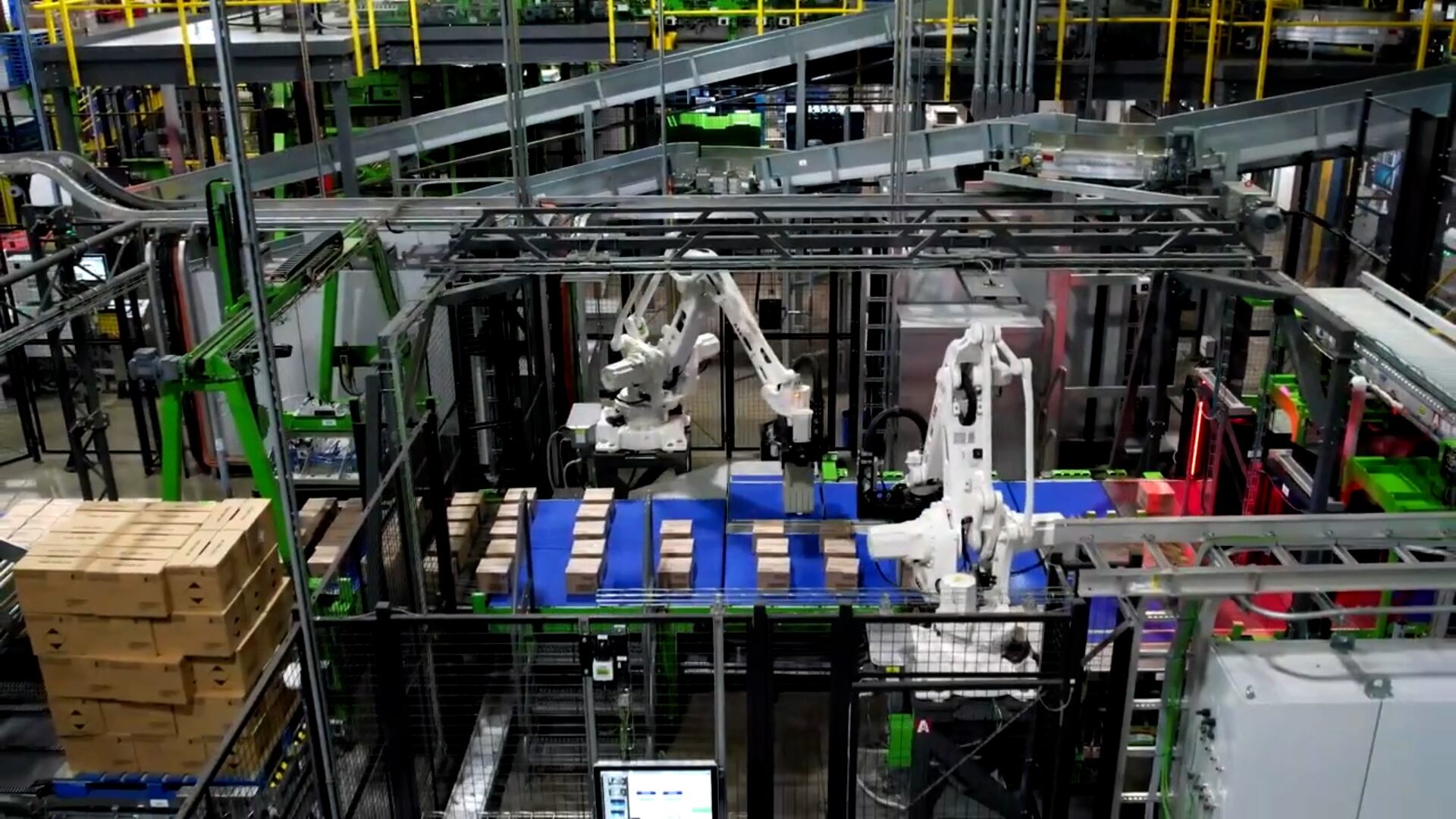
Robotics automation technology company Symbotic made its market debut on the Nasdaq via a SPAC merger with SVF Investment Corp. 3, a special purpose acquisition company sponsored by an affiliate of SoftBank Investment Advisers. Symbotic rang the Opening Bell at the Nasdaq to celebrate the occasion this morning. Its debut on Wall Street comes amid an urgent need for logistics solutions, as it aims to reimagine supply chains with its A.I.-powered robotic and software platform. Tom Earnst, CFO of Symbotic, and Vikas Parekh, managing partner at Softbank Investment Advisors, join Cheddar News' Closing Bell to discuss.
Michelle Castillo joined Closing Bell to break down Elon Musk's announcement to SpaceX employees that the Starlink internet business might not see itself as an IPO until 2025, Twitter planning to hand over the user data he requested as a condition of the acquisition, and Warren Buffet-backed Chinese EV company BYD stating it will be supplying batteries to Tesla "very soon."
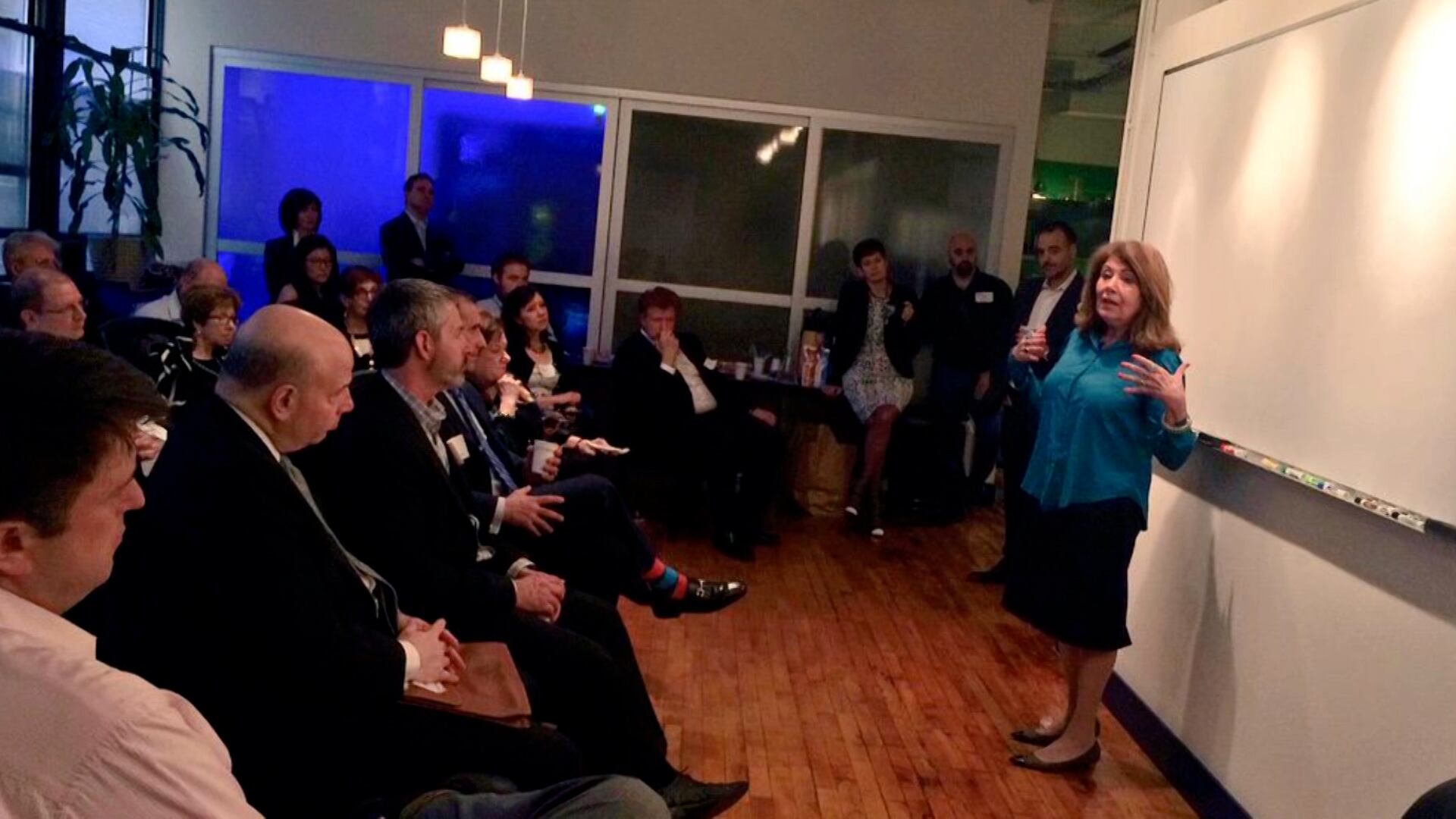
At the age of 65, Judy Katz, who ran her own public relations firm for years, was looking for a change. After retirement, she started a brand-new business as an author and ghostwriter of books. Judy Katz joins Jamie Hopkins to discuss finding a new beginning as a ghostwriter and living life to the fullest post-retirement.
Catching you up with today's market check with the mortgage demand plummeting to a 22-year low, Walmart heir Rob Walton getting set to buy the Denver Broncos for $4.56 billion, and talks continuing over Jetblue’s attempted purchase of Spirit headlines.
Meta announced its plans to join the Cannes Lions International Festival of Creativity. This is leaving businesses and customers wondering what the tech giant has in store for the event. Nicola Mendelsohn, the vice president of the global business group at Meta, joined Cheddar News to preview what the tech giant will discuss at this year's festival. "We're going to be showcasing more about reels. We're going to be talking about our commerce solutions, are messaging solutions, and of course, the method of us speaking of new ways to kind of connect with customers," she said.
On today's episode of On The Job: Cheddar gets a look at how the salon and beauty industry has pivoted throughout the pandemic; Mark Brim, President of Aquent's Recruiting Division Vitamin T, breaks down how remote work has transformed hiring and recruiting process across the board;
Julie Bauke, President & Chief Career Strategist at The Bauke Group, breaks down why companies are being 'ghosted' by new hires, and what repercussions can come from this.
Mark Brim, President of Aquent's Recruiting Division Vitamin T, joins On The Job to discuss how remote work has transformed hiring and recruiting process across the board, and the latest trends surrounding remote hiring across the globe.
Julie Bauke, President & Chief Career Strategist, The Bauke Group, joins Cheddar to discuss the phenomenon of new hires accepting jobs and quitting before their first day of work, and how ghosting one company may come back to bite you when you find a job you really want.