By Leah Willingham
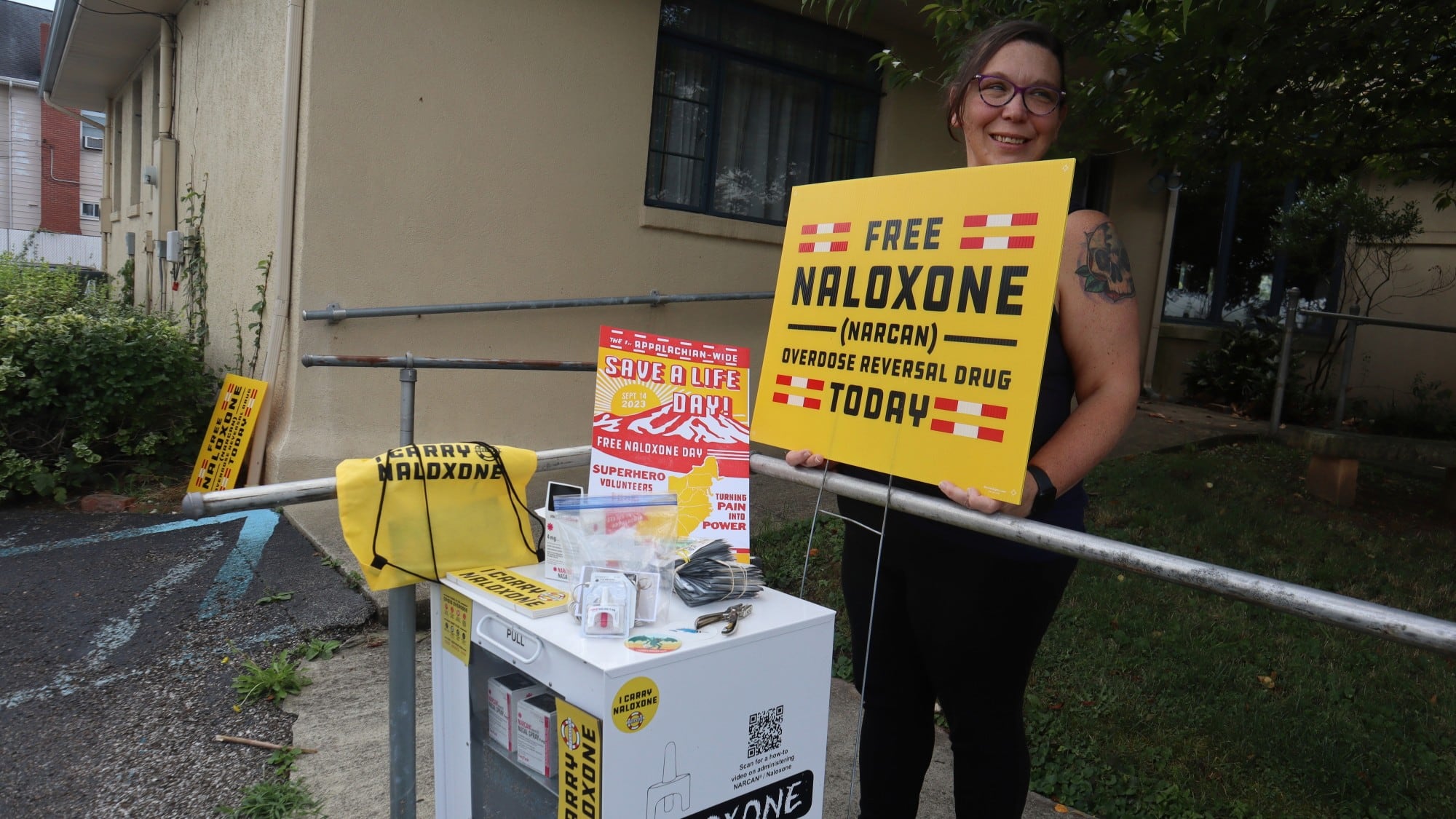
An effort to destigmatize the use of overdose reversal drugs that started as a pilot in two West Virginia counties has expanded to all thirteen states in Appalachia this year.
The first-ever “Appalachian Save a Life Day” comes Thursday, on the heels of the approval of Narcan as drug that can be purchased over the counter for nonprescription use — a long-awaited victory towards normalizing and improving access to the decades-old, live-saving medication.
More than 30,000 doses of naxolone, or Narcan, are being distributed in 13 states. Community organizations will then offer the drug for free at convenient locations like fast food restaurants, Walmarts, health departments, churches, convenience stores and fire departments.
More than 180 counties are participating at more than 300 different sites. The events are a celebration of what advocates have been working toward for years.
In 1971, the U.S. Food and Drug Administration approved use of naloxone, also referred to by its brand name “Narcan,” to treat overdoses. However, its use was confined to paramedics and hospitals. Narcan nasal spray was first approved by the FDA in 2015 as a prescription drug, and in March, it was approved for over-the-counter sales and started being available this month at major pharmacies for a suggested price of around $50 for two doses.
“It kind of gives you chills a little bit when you think about it, just because it's this huge group of people coming together — and you don’t even know most of them — all because we deeply care about the same issue,” said Caroline Wilson, a social worker and person in recovery who organized Save a Life Day events in West Virginia's Eastern Panhandle.
Spearheaded by the Charleston-based nonprofit Solutions-Oriented Drug Response, “Save a Life Day” began as a two-county pilot program in 2020 in West Virginia, expanding to 17 counties in-state in 2021. Last year, all 55 counties in the state with the nation's highest rate of opioid overdoses in the nation participated. The 2023 event has expanded to include Alabama, Georgia, Kentucky, Maryland, Mississippi, New York, North Carolina, Ohio, Pennsylvania, South Carolina, Tennessee, Virginia, and West Virginia.
The state of West Virginia dedicated $600,000 to this year's effort. West Virginia’s Office of Drug Control Policy and the University of Charleston Pharmacy School have supplied naloxone for West Virginia’s events since its inception in 2020.
Solutions-Oriented Drug Response co-founder Sarah Stone said even in the last five years, she's seen a major shift in the way people are talking about naloxone.
“I would say five years ago, people would easily say, ’Let people die, I would step over this person before I would offer assistance,' or my personal favorite is: ’We can Narcan him three times, but not the fourth — there’s a limit,'" she said. "And you just don’t hear those things anymore, or not often.”
Braden Hopkins, a 20-year-old student at the University of Alabama, has been pushing for more naloxone and fentanyl test strip training and access within Greek life and other organizations. She's invited medical professionals to her sorority for training and wants to see it normalized to the point where at least one person in every Greek life house is Narcan-trained.
Hopkins, who is vice president of the school's chapter of Students for Sensible Drug Policy, said most of her peers don't know what it is — a concerning thought at a school with a significant party culture, she said.
“People just don't know how to have conversations about drugs and alcohol use,” said Hopkins, who will be tabling on the school’s quad distributing resources, test strips and doing HIV-testing outreach as part of Save a Life Day.
Harm Reduction Ohio, the largest distributor of naloxone in the state of Ohio, praised the greater availability of the drug but voiced concerns that the cost could prohibit those who need it most from getting it.
“I think over-the-counter is going to do a lot to decrease the stigma to when people see on a shelf, but $45 to $50, a dose is not going to help people who use drugs,” said AmandaLynn Reese, the organization's chief program officer. “What we really need to do is make sure we are targeting the areas that need it.”