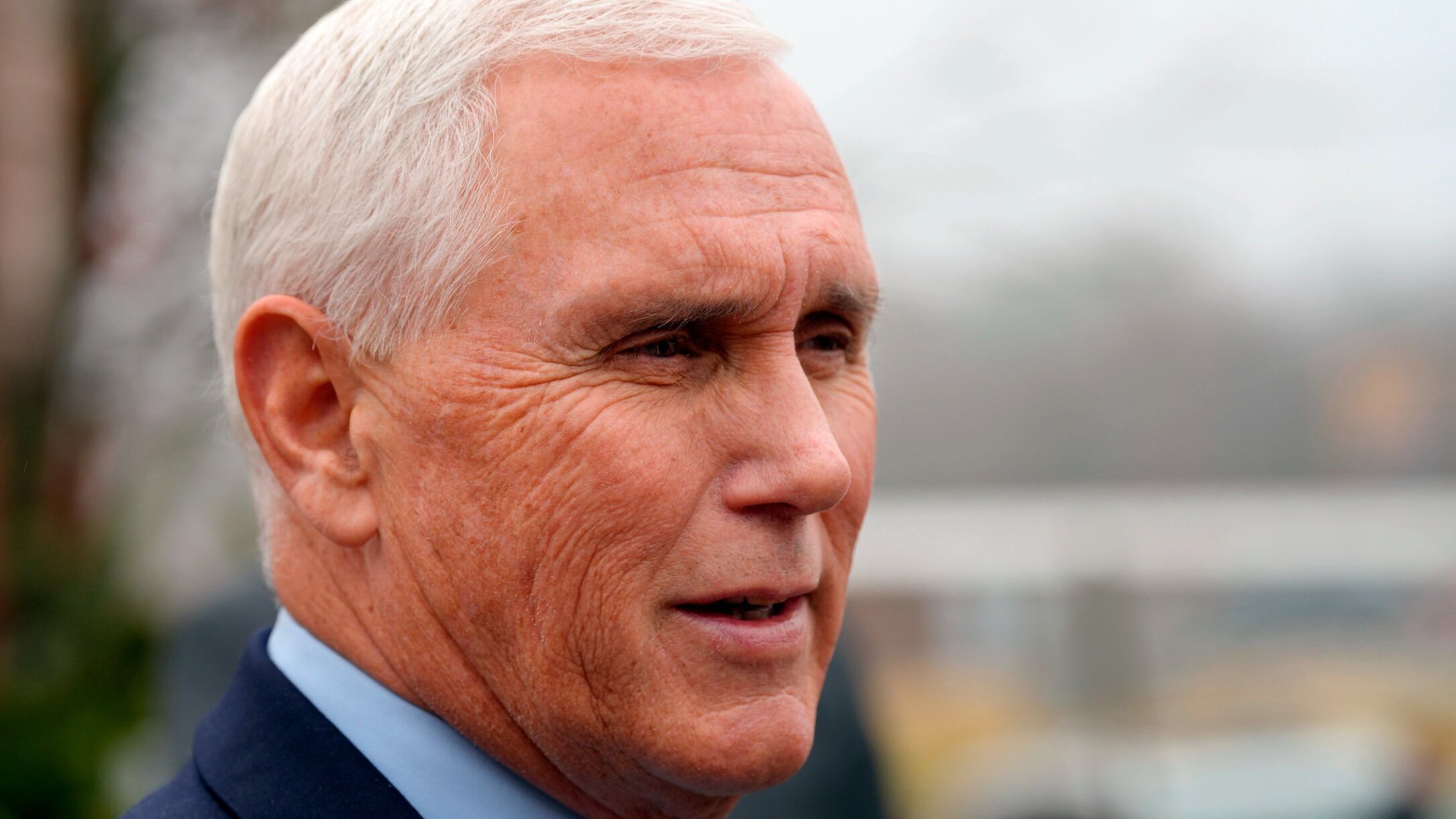
Former Vice President Mike Pence speaks with reporters after remarks to an audience about his new book on Tuesday, Dec. 6, 2022, at Garden Sanctuary Church of God in Rock Hill, S.C. (AP Photo/Meg Kinnard)
Documents with classified markings were discovered in former Vice President Mike Pence's Indiana home last week, his lawyer told the National Archives in a letter — the latest in a string of discoveries of confidential information in private residences.
The records "appear to be a small number of documents bearing classified markings that were inadvertently boxed and transported to the personal home of the former vice president at the end of the last administration," Pence's lawyer, Greg Jacob, wrote in the letter shared with The Associated Press.
He said that Pence “engaged outside counsel, with experience in handling classified documents, to review records stored in his personal home after it became public that documents with classified markings were found in President Joe Biden's Wilmington residence.
The access road to President Joe Biden's home in Wilmington, Del., is seen from the media van on Jan. 13, 2023. (AP Photo/Carolyn Kaster, File)
The Justice Department already is using special counsels to investigate the presence of documents with classification markings taken from the Florida estate of former President Donald Trump and from Biden’s home and former Washington office. The department says roughly 300 documents marked classified, including at the top-secret level, were taken from Mar-a-Lago, and officials are trying to determine whether Trump or anyone else should be charged with illegal possession of those records or with trying to obstruct the months-long criminal investigation.
Pence's lawyer said in his letter that the former vice president “was unaware of the existence of sensitive or classified documents at his personal residence” and "understands the high importance of protecting sensitive and classified information and stands ready and willing to cooperate fully with the National Archives and any appropriate inquiry.”
Jacob said that Pence immediately secured the documents that were discovered in a locked safe. And according to a follow-up letter from the lawyer dated Jan. 22, FBI agents visited Pence's residence to collect the documents.
A Justice Department spokesman declined to comment Tuesday, and a lawyer for Pence did not immediately respond to an email seeking elaboration.
Asked directly if he had retained any such information, he said, “No, not to my knowledge.”
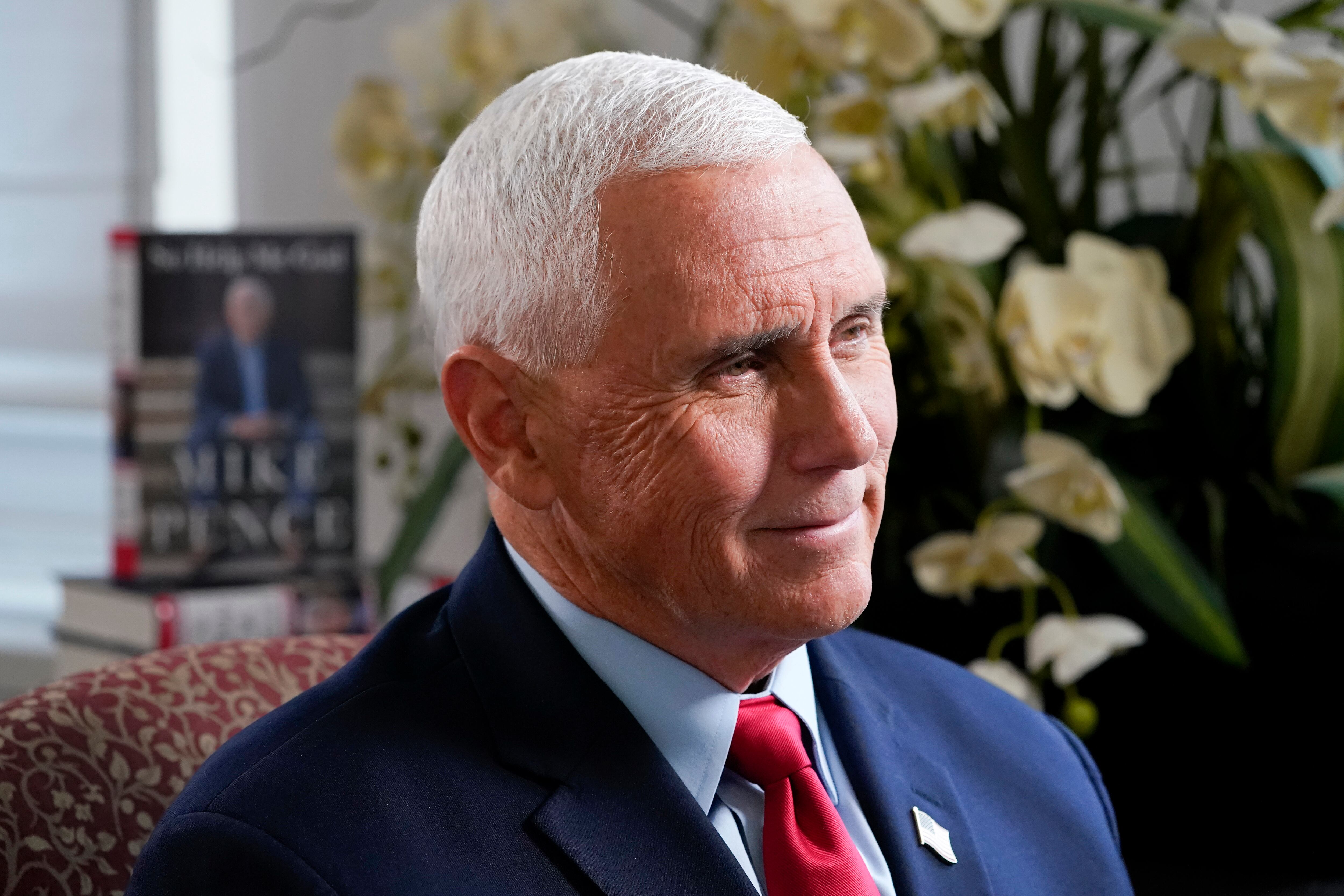
Former Vice President Mike Pence sits for an interview with the Associated Press, Wednesday, Nov. 16, 2022, in New York. (AP Photo/John Minchillo)
In a January interview with Fox Business, Pence described a “very formal process” used by his office to handle classified information as well as the steps taken by his lawyers to ensure none was taken with him.
“Before we left the White House, the attorneys on my staff went through all the documents at both the White House and our offices there and at the vice president’s residence to ensure that any documents that needed to be turned over to the National Archives, including classified documents, were turned over. So we went through a very careful process in that regard," Pence said.
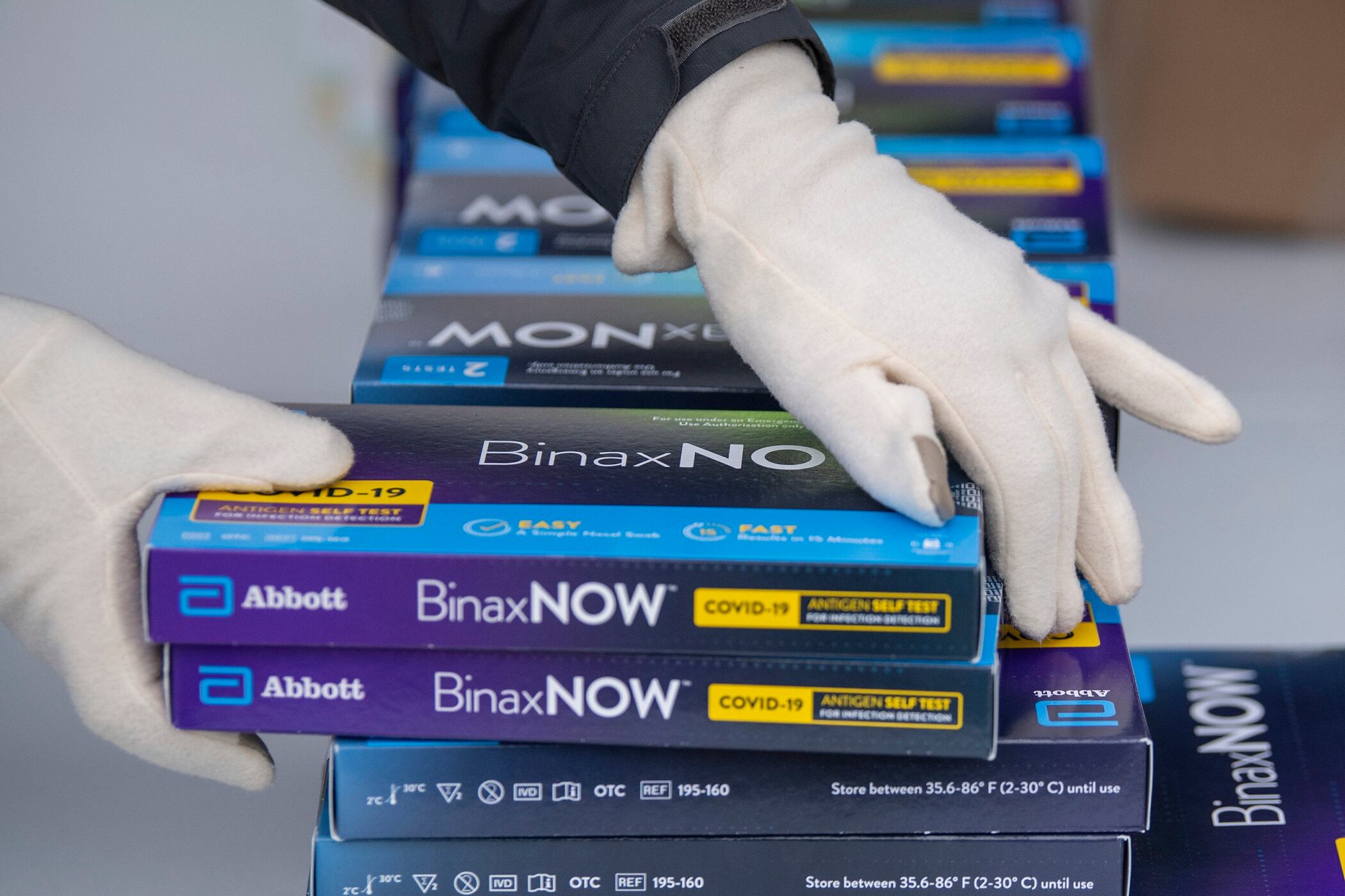
The Biden administration on Tuesday quietly launched its website for Americans to request free at-home COVID-19 tests, a day before the site was scheduled to officially launch.
Just 27% of voters aged 18-29 approve of the job Biden is doing as president, according to a survey from The Economist and YouGov late last year. Santiago Mayer, executive director of Voters of Tomorrow, joins Cheddar Politics to discuss why President Biden is losing support among young voters.
Jesse Lehrich, co-founder of Accountable Tech, joins Cheddar News to discuss it being one year since Trump was exiled from social media and the former President's new platform 'Truth Social.'
Cliff Albright, co-founder of the group Black Voters Matter, joins Cheddar Politics to discuss why he boycotted President Biden's voting rights speech this week, and the push from Senate Democrats to debate and vote on the Freedom to Vote Act and the John Lewis Voting Rights Advancement Act.
Senator Jon Ossoff (D-Ga.) has teamed up with fellow Democratic senator and former astronaut Mark Kelly to introduce the Ban Congressional Stock Trading Act, a bill to essentially end stock trading by sitting lawmakers. From the other side of the aisle, Senator Josh Hawley (R-Mo.) introduced his own legislation to enact something similar. The dueling bills come at a time when it's popular to constrain members of Congress from owning and trading stocks. Karl Evers-Hillstrom, a business and lobbying reporter at The Hill, spoke to Cheddar about the significance of the bills, and what they could mean for lawmakers, their families, and staffers moving forward.
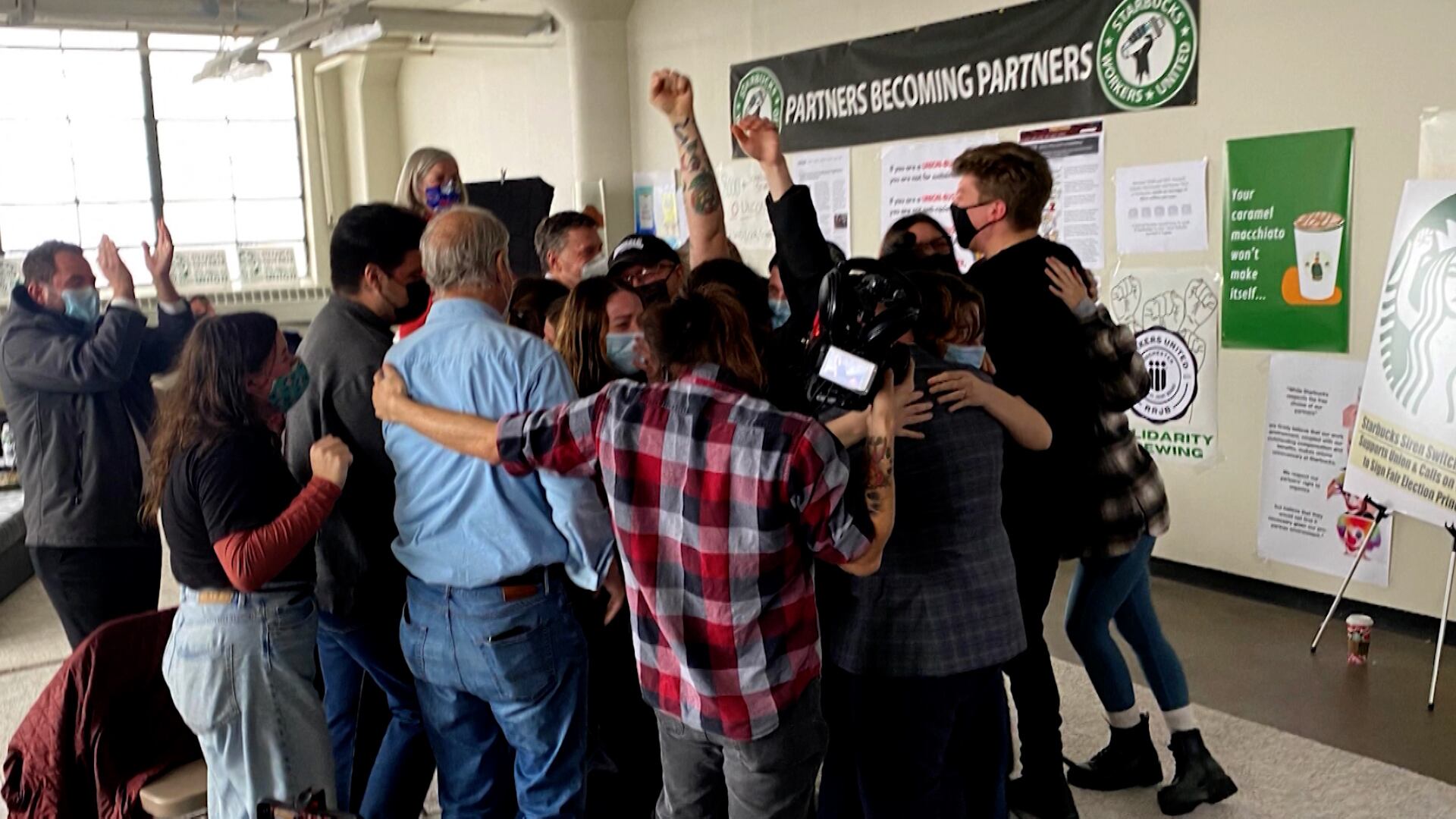
A second Starbucks location in the U.S. has officially voted to unionize. On Monday, the National Labor Relations Board announced workers at the Starbucks store located in the Buffalo, NY suburb of Cheektowaga voted 15-9 in favor of being represented by Workers United, an affiliate of the Service Employees International Union. The New York Times reports votes were tallied in December but remained inconclusive as the union challenged the ballots of several employees it said did not work at the store. A Starbucks spokesperson has said that it may appeal the labor board's decision, which comes as several other Starbucks stores across the country are also pushing to form a union. Danka Dragic, shift supervisor for the second Starbucks store in the country to unionize, joined Cheddar News' Closing Bell to discuss.
Earlier today, Minnesota Republican Representative, Tom Emmer, introduced a bill that would prevent the Federal Reserve from issuing a central bank digital currency directly to American consumers. According to the Congressman from Minnesota, requiring Americans to open a fed account to access a digital currency, would "put the Fed on insidious path akin to China's digital authoritarianism." Rep. Tom Emmer joined Cheddar's None of The Above to discuss more.
Sixteen of the country's most prestigious universities have been hit with a lawsuit claiming those schools illegally conspired to eliminate competitive financial aid offers for students. Just some of the schools mentioned include Yale, Brown, Columbia, UPenn, and Cornell. Author of "Who Gets In and Why" and Professor of practice at Arizona State University, Jeff Selingo, joined Cheddar to discuss more.