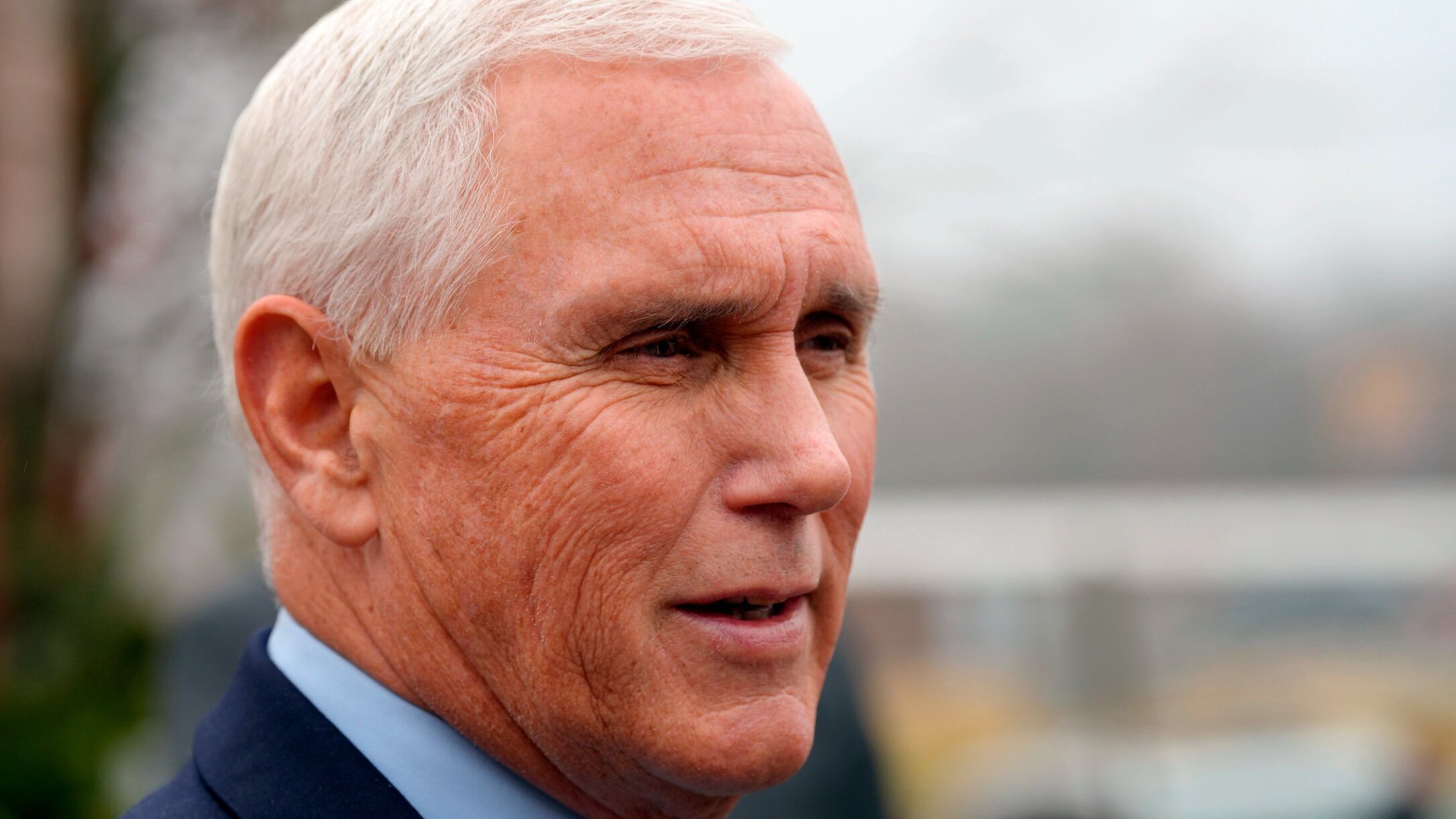
Former Vice President Mike Pence speaks with reporters after remarks to an audience about his new book on Tuesday, Dec. 6, 2022, at Garden Sanctuary Church of God in Rock Hill, S.C. (AP Photo/Meg Kinnard)
Documents with classified markings were discovered in former Vice President Mike Pence's Indiana home last week, his lawyer told the National Archives in a letter — the latest in a string of discoveries of confidential information in private residences.
The records "appear to be a small number of documents bearing classified markings that were inadvertently boxed and transported to the personal home of the former vice president at the end of the last administration," Pence's lawyer, Greg Jacob, wrote in the letter shared with The Associated Press.
He said that Pence “engaged outside counsel, with experience in handling classified documents, to review records stored in his personal home after it became public that documents with classified markings were found in President Joe Biden's Wilmington residence.
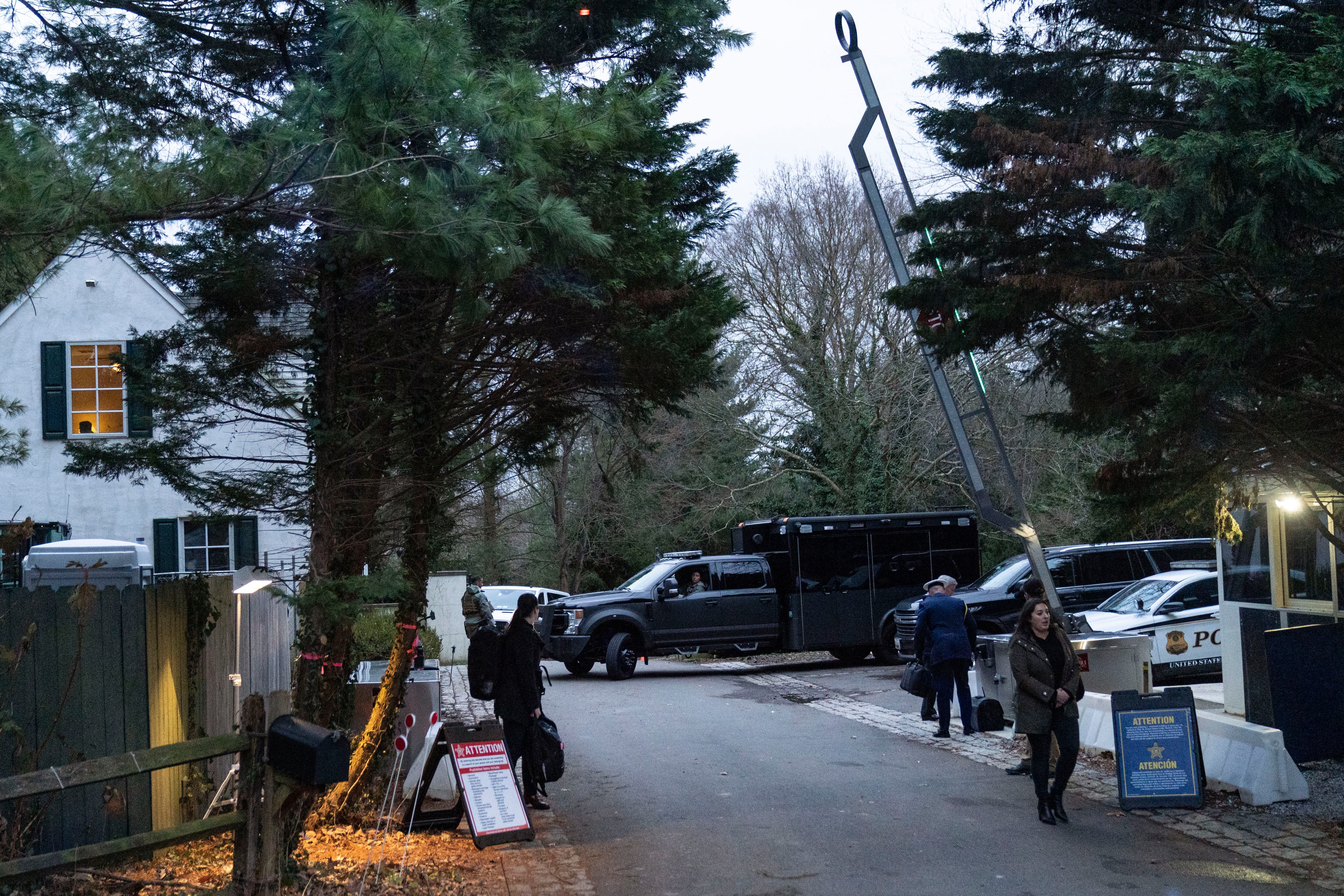
The access road to President Joe Biden's home in Wilmington, Del., is seen from the media van on Jan. 13, 2023. (AP Photo/Carolyn Kaster, File)
The Justice Department already is using special counsels to investigate the presence of documents with classification markings taken from the Florida estate of former President Donald Trump and from Biden’s home and former Washington office. The department says roughly 300 documents marked classified, including at the top-secret level, were taken from Mar-a-Lago, and officials are trying to determine whether Trump or anyone else should be charged with illegal possession of those records or with trying to obstruct the months-long criminal investigation.
Pence's lawyer said in his letter that the former vice president “was unaware of the existence of sensitive or classified documents at his personal residence” and "understands the high importance of protecting sensitive and classified information and stands ready and willing to cooperate fully with the National Archives and any appropriate inquiry.”
Jacob said that Pence immediately secured the documents that were discovered in a locked safe. And according to a follow-up letter from the lawyer dated Jan. 22, FBI agents visited Pence's residence to collect the documents.
A Justice Department spokesman declined to comment Tuesday, and a lawyer for Pence did not immediately respond to an email seeking elaboration.
Asked directly if he had retained any such information, he said, “No, not to my knowledge.”
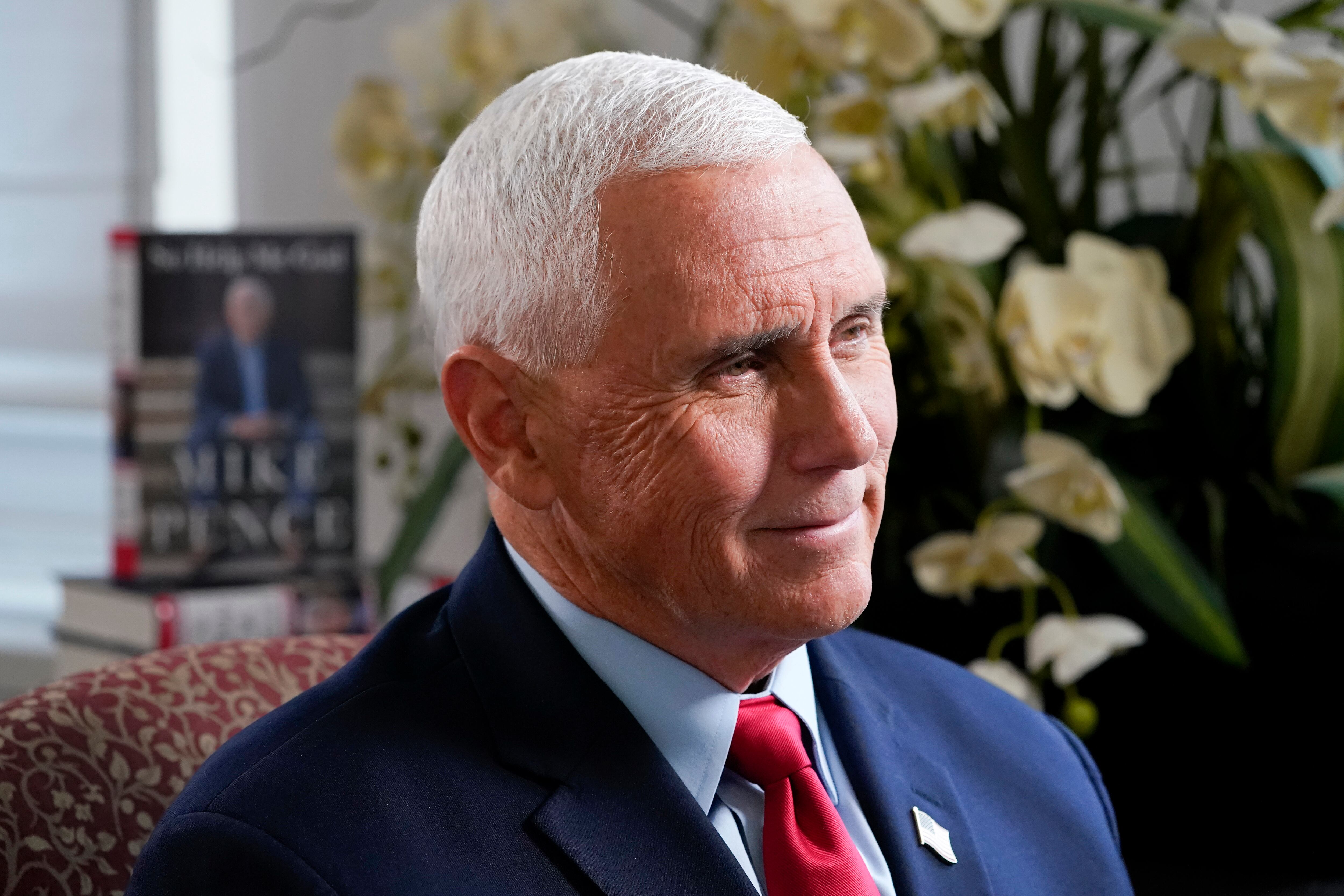
Former Vice President Mike Pence sits for an interview with the Associated Press, Wednesday, Nov. 16, 2022, in New York. (AP Photo/John Minchillo)
In a January interview with Fox Business, Pence described a “very formal process” used by his office to handle classified information as well as the steps taken by his lawyers to ensure none was taken with him.
“Before we left the White House, the attorneys on my staff went through all the documents at both the White House and our offices there and at the vice president’s residence to ensure that any documents that needed to be turned over to the National Archives, including classified documents, were turned over. So we went through a very careful process in that regard," Pence said.
Emily Hoeven, newsletter editor at CalMatters, joins Cheddar News to discuss California Governor Gavin Newsom's gun law modeled after Texas's abortion law.
Chuck Rocha, host of 'Nuestro' podcast and opinion contributor at The New York Times, joins Cheddar News to discuss why Democrats are losing Hispanic voters.
More businesses are requiring workers to return to the office, but there is concern that many employees in the middle class, especially women and people of color, need remote work options for reasons including childcare and financial security. Joan Williams, director of the Center for WorkLife Law at the University of California, joined Cheddar to discuss why office mandates could be detrimental to the middle class. She noted that while companies claim a return to offices would help foster more collaboration and efficiency, reports show that they are successfully able to do their jobs from home.
The U.S. postal service has confirmed that it secretly developed and tested a blockchain-based mobile voting system ahead of the 2020 election. Susan Greenhalgh, senior advisor on election security, Free Speech for People, joins Cheddar News to discuss the cybersecurity complications of a mobile voting system.
The U.S. Supreme Court ruled to allow the controversial Texas abortion law to remain in effect, banning abortion at six weeks and allowing any private citizen to sue a person or doctor aiding or abetting someone seeking an abortion. Outraged at this decision, California Governor Gavin Newsom is working to draft a proposal in line with the law as it relates to guns. Shawn Hubler, California correspondent at the New York Times, joins Cheddar News to discuss.
Even as tech giant Google implements a vaccination mandate, charging its employees to declare their vaccine status within a time frame or risk dismissal, the federal government is tangled up in the court system trying to impose one of its own. Cindy Cohn, the executive director of the Electronic Frontier Foundation, and Harry Nelson, founder and managing partner of Nelson Hardiman LLP, joined Cheddar to debate the ethics, efficacy, and legality surrounding the issue. While Cohn noted that she thinks the federal mandate might be legally sound, her organization is also concerned with a separate question of privacy. "At EFF what we're most interested in is the digital surveillance that's going along with some of these attempts to try to track and confirm whether people are vaccinated or not," she said.