A woman uses her phone as she passes by the ByteDance headquarters in Beijing, China, on Friday, Aug. 7, 2020. The Chinese government is complicating the U.S.-government-ordered sale of U.S. TikTok assets. China on Friday, Aug. 28, 2020 introduced export restrictions on artificial intelligence technology, seemingly including the type that TikTok uses to choose which videos to spool up to its users. That means TikTok's Chinese owner, ByteDance, would have to obtain a license to export any restricted technologies to a foreign company. (AP Photo/Ng Han Guan)
By Tali Arbel and Zen Soo
The Chinese government is complicating the U.S.-government-ordered sale of U.S. TikTok assets.
China on Friday introduced export restrictions on artificial intelligence technology, seemingly including the type that TikTok uses to choose which videos to spool up to its users. That means TikTok's Chinese owner, ByteDance, would have to obtain a license to export any restricted technologies to a foreign company.
The Trump administration has threatened to ban TikTok by mid-September and ordered ByteDance to sell its U.S. business, claiming national-security risks due to that Chinese ownership. The government worries about user data being funneled to Chinese authorities. TikTok denies it is a national-security risk and is suing to stop the administration from the threatened ban.
Prospective buyers for U.S. TikTok assets include Microsoft and Walmart and, reportedly, Oracle. Oracle has declined to comment.
On Saturday, Chinese state-owned media outlet Xinhua News Agency quoted government trade adviser and professor Cui Fan, who said that Bytedance should consider whether it should halt negotiations to sell TikTok in the U.S.
"As with any cross-border transaction, we will follow the applicable laws, which in this case include those of the U.S. and China," said ByteDance General Counsel Erich Andersen.
The Chinese government's new restrictions may be a "tactic to drive up valuation" of TikTok, said RBC Capital Markets analyst Alex Zukin, who still expects a deal announcement "relatively soon." The Wall Street Journal reported last week that ByteDance is asking for $30 billion for the U.S. operations, but has faced resistance from bidders. The Journal said in a Sunday story that deal talks had "slowed."
Microsoft and Walmart declined to comment on Monday.
White House press secretary Kayleigh McEnany, during a White House briefing, did not directly answer whether the administration would accept a sale of U.S. assets of TikTok if the deal were subject to Chinese government approval. "Negotiations are ongoing on a sale of TikTok so we are not going to get in the way of those negotiations," she said.
—
Associated Press writer Kevin Freking contributed to this report from Washington.
Steve Ehrlich, Co-Founder & CEO of Voyager Digital, breaks down the economic factors impacting Bitcoins performance and outlines ways to hedge against rising inflation.
The Mobile World Congress is underway in Barcelona this week. The annual global trade show is showcasing the latest advancements in mobile and other progressive technologies.
Katie Collins, Senior European Correspondent, CNET joined Cheddar's Opening Bell to break down the latest announcements.
Rolf Illenberger, Founder & CEO of VRdirect, discusses how businesses are using virtual reality and talks about the importance of VR training in a remote work environment.
NerdWallet reported strong fiscal Q4 results in its first earnings report as a publicly traded company. The personal finance company saw revenue increase 75 percent year-over-year as the company witnessed a rebound in consumer demand as the pandemic wanes. Tim Chen, Founder & CEO, NerdWallet joined Cheddar's Opening Bell to discuss.
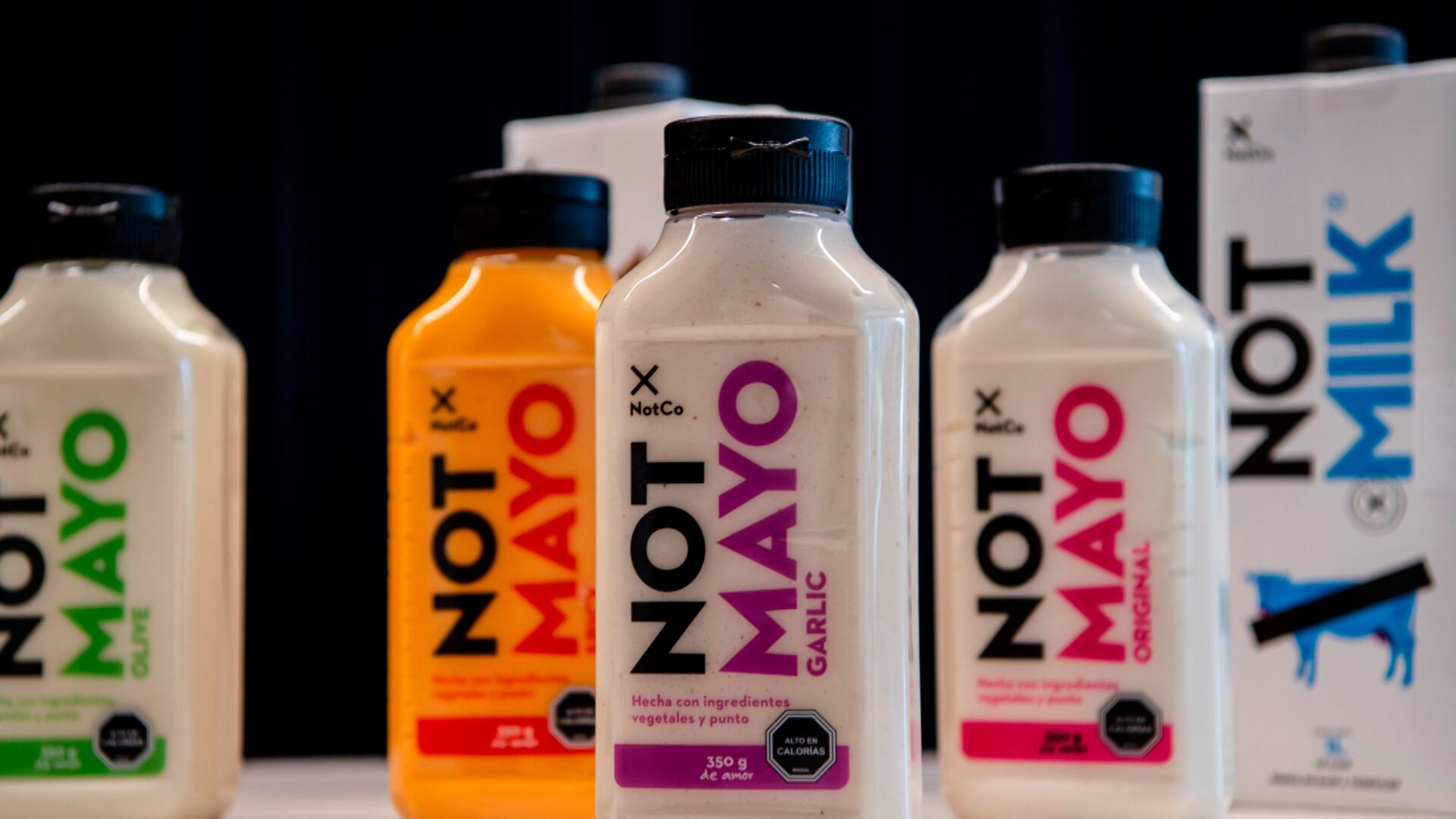
Kraft Heinz is launching a new joint venture with NotCo, a Chilean startup that creates plant-based substitutes using artificial intelligence. The goal is to reimagine global food production and bring plant-based versions of Kraft Heinz products to market at a faster speed, all while driving sustainability. Matias Muchnik, CEO and Co-Founder of NotCo, joined Cheddar's Opening Bell to discuss the partnership, NotCo's technology, and his response to the backlash against the ingredients in meatless meat.
Ross Mayfield, Investment Strategy Analyst at Baird, discusses how companies with international exposure are impacting U.S. investors and highlights which industries are navigating geopolitical conflict.
Jim Bruderman, Vice Chairman of 1879 Advisors, discusses how markets are navigating the Russia-Ukraine conflict and spotlights areas within tech that could rebound.
Christian Ledoux, Director of Investment Research at CAPTRUST, talks about the ripple effect Russia's invasion of Ukraine is having on U.S. markets and outlines ways investors are navigating volatility.
Craig Fehr, Principal & Investment Strategist at Edward Jones, talks about the major risks to the markets and which industries are poised for growth in the near term.
Rob Haworth, Senior Investment Strategist at U.S. Bank Wealth Management, discusses how Markets can navigate geopolitical conflict and whether the Fed will take an aggressive stance on inflation.