A woman uses her phone as she passes by the ByteDance headquarters in Beijing, China, on Friday, Aug. 7, 2020. The Chinese government is complicating the U.S.-government-ordered sale of U.S. TikTok assets. China on Friday, Aug. 28, 2020 introduced export restrictions on artificial intelligence technology, seemingly including the type that TikTok uses to choose which videos to spool up to its users. That means TikTok's Chinese owner, ByteDance, would have to obtain a license to export any restricted technologies to a foreign company. (AP Photo/Ng Han Guan)
By Tali Arbel and Zen Soo
The Chinese government is complicating the U.S.-government-ordered sale of U.S. TikTok assets.
China on Friday introduced export restrictions on artificial intelligence technology, seemingly including the type that TikTok uses to choose which videos to spool up to its users. That means TikTok's Chinese owner, ByteDance, would have to obtain a license to export any restricted technologies to a foreign company.
The Trump administration has threatened to ban TikTok by mid-September and ordered ByteDance to sell its U.S. business, claiming national-security risks due to that Chinese ownership. The government worries about user data being funneled to Chinese authorities. TikTok denies it is a national-security risk and is suing to stop the administration from the threatened ban.
Prospective buyers for U.S. TikTok assets include Microsoft and Walmart and, reportedly, Oracle. Oracle has declined to comment.
On Saturday, Chinese state-owned media outlet Xinhua News Agency quoted government trade adviser and professor Cui Fan, who said that Bytedance should consider whether it should halt negotiations to sell TikTok in the U.S.
"As with any cross-border transaction, we will follow the applicable laws, which in this case include those of the U.S. and China," said ByteDance General Counsel Erich Andersen.
The Chinese government's new restrictions may be a "tactic to drive up valuation" of TikTok, said RBC Capital Markets analyst Alex Zukin, who still expects a deal announcement "relatively soon." The Wall Street Journal reported last week that ByteDance is asking for $30 billion for the U.S. operations, but has faced resistance from bidders. The Journal said in a Sunday story that deal talks had "slowed."
Microsoft and Walmart declined to comment on Monday.
White House press secretary Kayleigh McEnany, during a White House briefing, did not directly answer whether the administration would accept a sale of U.S. assets of TikTok if the deal were subject to Chinese government approval. "Negotiations are ongoing on a sale of TikTok so we are not going to get in the way of those negotiations," she said.
—
Associated Press writer Kevin Freking contributed to this report from Washington.
Identity and access management company ForgeRock looks to use pattern recognition and artificial intelligence to ease secure access for users as an alternative to just password management. CEO Fran Rosch joined Cheddar News to discuss how the company's services work. "I mean, who likes to set up and use a new password? And they're also really bad security because a lot of people repeat the same one and use it everywhere and use the simplest one possible," he said. "We're trying to really create a smarter better identity system where we can find different ways, smarter ways, of recognizing you as a user and giving you access to what you need by really eliminating the password altogether."
Ford announced today that it will be separating its electric vehicles business from its internal combustion engine vehicles in two divisions named Ford Model E and Ford Blue, respectively. Ford Motor Company CFO John Lawler joined Cheddar to discuss the decision-making behind the restructuring. "When you think about the expertise that Ford has in like body structural engineering, chassis engineering, manufacturing at scale, there isn't an EV startup company out there that wouldn't love to have our capabilities in that space," he said.
Amazon is confirming it’s closing all of its physical bookstores as well as its 4-star shops and pop up locations as the online behemoth reworks its physical footprint.
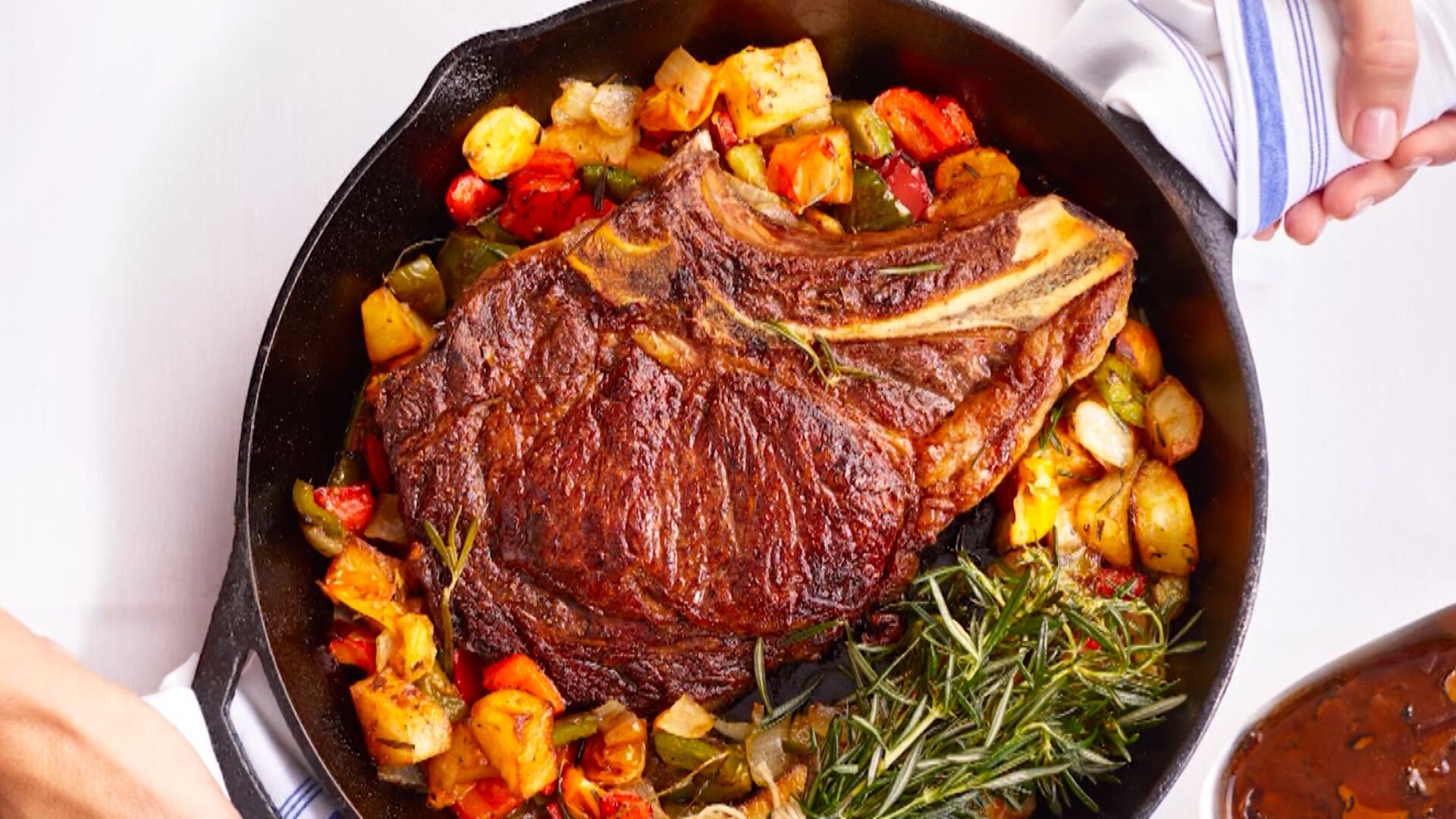
Vittorio Assaf, co-founder of Serafina, joins Cheddar News to discuss two new concepts from Serafina Restaurants in NYC: Cafe Serafina and Serafina To-Go. Assaf also talks about the company's new cookbook.
Maude Okrah, co-founder of Black Beauty Roster, joins Cheddar News to discuss how her company is working with WarnerMedia to provide diverse makeup and hair stylists for actors of color on set.
As energy costs soar, labor shortages continue, and supply disruptions sweep the nation, the annual inflation rate accelerates to the highest since 1982. However, some corporations are finding some silver linings. Paul Constant, the writer at civic ventures and cohost of "Pitchfork Economics" podcast, joins Cheddar News.
As Russia continues to invade Ukraine, its tech outsourcing sector is at risk. Over the past few years, the country has become a popular outsourcing destination for American and European tech companies, but now the future of that industry is uncertain. Isabelle Bousquette, enterprise technology reporter, for The Wall Street Journal, discusses what repercussions the crisis might have on the industry, and what companies are doing to mitigate possible disruptions.