A woman uses her phone as she passes by the ByteDance headquarters in Beijing, China, on Friday, Aug. 7, 2020. The Chinese government is complicating the U.S.-government-ordered sale of U.S. TikTok assets. China on Friday, Aug. 28, 2020 introduced export restrictions on artificial intelligence technology, seemingly including the type that TikTok uses to choose which videos to spool up to its users. That means TikTok's Chinese owner, ByteDance, would have to obtain a license to export any restricted technologies to a foreign company. (AP Photo/Ng Han Guan)
By Tali Arbel and Zen Soo
The Chinese government is complicating the U.S.-government-ordered sale of U.S. TikTok assets.
China on Friday introduced export restrictions on artificial intelligence technology, seemingly including the type that TikTok uses to choose which videos to spool up to its users. That means TikTok's Chinese owner, ByteDance, would have to obtain a license to export any restricted technologies to a foreign company.
The Trump administration has threatened to ban TikTok by mid-September and ordered ByteDance to sell its U.S. business, claiming national-security risks due to that Chinese ownership. The government worries about user data being funneled to Chinese authorities. TikTok denies it is a national-security risk and is suing to stop the administration from the threatened ban.
Prospective buyers for U.S. TikTok assets include Microsoft and Walmart and, reportedly, Oracle. Oracle has declined to comment.
On Saturday, Chinese state-owned media outlet Xinhua News Agency quoted government trade adviser and professor Cui Fan, who said that Bytedance should consider whether it should halt negotiations to sell TikTok in the U.S.
"As with any cross-border transaction, we will follow the applicable laws, which in this case include those of the U.S. and China," said ByteDance General Counsel Erich Andersen.
The Chinese government's new restrictions may be a "tactic to drive up valuation" of TikTok, said RBC Capital Markets analyst Alex Zukin, who still expects a deal announcement "relatively soon." The Wall Street Journal reported last week that ByteDance is asking for $30 billion for the U.S. operations, but has faced resistance from bidders. The Journal said in a Sunday story that deal talks had "slowed."
Microsoft and Walmart declined to comment on Monday.
White House press secretary Kayleigh McEnany, during a White House briefing, did not directly answer whether the administration would accept a sale of U.S. assets of TikTok if the deal were subject to Chinese government approval. "Negotiations are ongoing on a sale of TikTok so we are not going to get in the way of those negotiations," she said.
—
Associated Press writer Kevin Freking contributed to this report from Washington.
The future of entertainment is interactive, according to the creators of the Fireside app. Mark Cuban and Falon Fatemi say that more and more, audience members will want to be part of the live content they are watching, and Fireside helps content creators do just that. They can create a live audience Q&A, facilitate a discussion, and more, all with the click of a button in the app. Creators also have full control of how they distribute and monetize each piece of content they create. Fatemi, CEO & Co-Founder of Fireside, joins Cheddar to discuss the app's interactive content features, what users and creators can get out of the app, plans for NFT and other virtual products, and more.
Doug Flynn, Co-founder of Flynn Zito Capital Management, joins Cheddar News' Closing Bell, where he explains why the S&P and Nasdaq faded into the red to begin the week and what investors will be monitoring most closely when the Fed announces its latest policy decision on Wednesday.
Tim Davis, Partner and Executive Managing Director at Steward Partners, joins Cheddar News' Closing Bell, where he discusses what activity we could expect to see from the crypto market this week as the Fed decision approaches, the prices of Bitcoin and Ether struggle to find a spark, and the industry continues to digest President Biden's executive order on crypto.
Mission-driven fintech company Propel raised $50 million in a Series B round led by Nyca Partners. Propel's mission is to help low-income Americans improve their financial health. The company's free app is called Providers, designed as a one-stop-shop for Americans to manage government benefits and other income side-by-side. Jimmy Chen, founder and CEO of Propel, joins Cheddar News' Closing Bell to discuss.
Slingshot Aerospace, a company focused on the future of space sustainability, raised $25 million in its latest Series A funding round. The company's projects will allow commercial, government, and civil satellite operators to share traffic information. Slingshot Aerospace's co-founder and CEO Melanie Stricklan joined Cheddar News' Closing Bell to talk about the up-and-coming company.
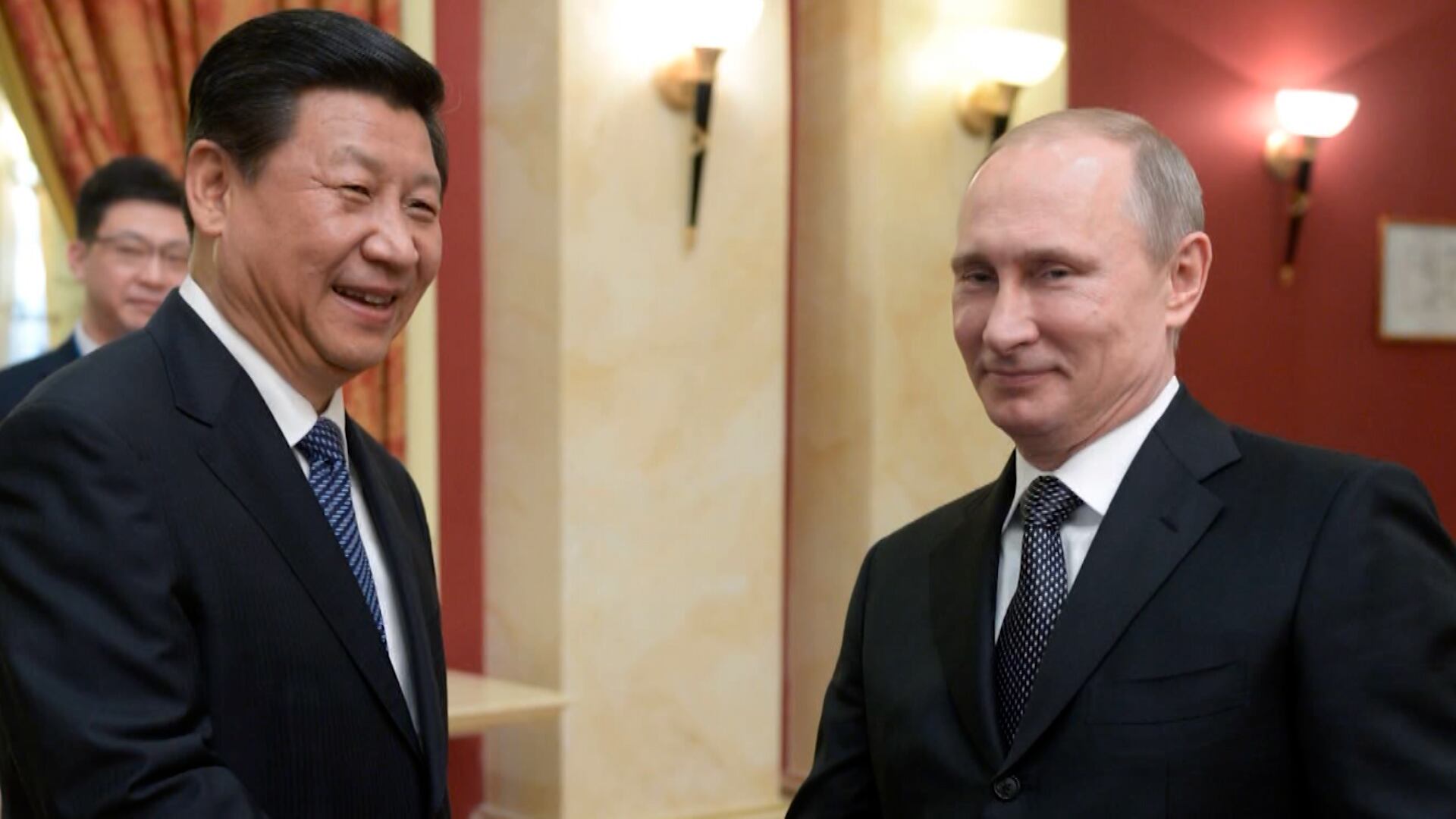
Russia may be asking China for help with its war in Ukraine, according to several reports citing unnamed U.S. officials. Russia is reportedly calling on its ally for military and economic assistance, in an attempt to avoid punishment from sanctions imposed by the U.S., Europe, and Asia, which have hammered Russia's economy. Chinese and Russian officials denied the reports. Meanwhile, top U.S. and Chinese officials are meeting today, with both countries confirming the conflict in Ukraine will be the meeting's main topic. Edward Wong, diplomatic correspondent for the New York Times, joins Cheddar News' Closing Bell to discuss.