A woman uses her phone as she passes by the ByteDance headquarters in Beijing, China, on Friday, Aug. 7, 2020. The Chinese government is complicating the U.S.-government-ordered sale of U.S. TikTok assets. China on Friday, Aug. 28, 2020 introduced export restrictions on artificial intelligence technology, seemingly including the type that TikTok uses to choose which videos to spool up to its users. That means TikTok's Chinese owner, ByteDance, would have to obtain a license to export any restricted technologies to a foreign company. (AP Photo/Ng Han Guan)
By Tali Arbel and Zen Soo
The Chinese government is complicating the U.S.-government-ordered sale of U.S. TikTok assets.
China on Friday introduced export restrictions on artificial intelligence technology, seemingly including the type that TikTok uses to choose which videos to spool up to its users. That means TikTok's Chinese owner, ByteDance, would have to obtain a license to export any restricted technologies to a foreign company.
The Trump administration has threatened to ban TikTok by mid-September and ordered ByteDance to sell its U.S. business, claiming national-security risks due to that Chinese ownership. The government worries about user data being funneled to Chinese authorities. TikTok denies it is a national-security risk and is suing to stop the administration from the threatened ban.
Prospective buyers for U.S. TikTok assets include Microsoft and Walmart and, reportedly, Oracle. Oracle has declined to comment.
On Saturday, Chinese state-owned media outlet Xinhua News Agency quoted government trade adviser and professor Cui Fan, who said that Bytedance should consider whether it should halt negotiations to sell TikTok in the U.S.
"As with any cross-border transaction, we will follow the applicable laws, which in this case include those of the U.S. and China," said ByteDance General Counsel Erich Andersen.
The Chinese government's new restrictions may be a "tactic to drive up valuation" of TikTok, said RBC Capital Markets analyst Alex Zukin, who still expects a deal announcement "relatively soon." The Wall Street Journal reported last week that ByteDance is asking for $30 billion for the U.S. operations, but has faced resistance from bidders. The Journal said in a Sunday story that deal talks had "slowed."
Microsoft and Walmart declined to comment on Monday.
White House press secretary Kayleigh McEnany, during a White House briefing, did not directly answer whether the administration would accept a sale of U.S. assets of TikTok if the deal were subject to Chinese government approval. "Negotiations are ongoing on a sale of TikTok so we are not going to get in the way of those negotiations," she said.
—
Associated Press writer Kevin Freking contributed to this report from Washington.
Tensions from the Russia-Ukraine war have spilled into space. The head of Russia's space agency has threatened to pull the country out of the International Space Station if sanctions aren't lifted on the country — but that doesn't seem to be happening any time soon. What would it mean if Russia really did leave the ISS, who would it harm the most, and what would the consequences be both for the other ISS partners, and private space travel? Casey Dreier, Chief Advocate & Senior Space Policy Adviser at The Planetary Society, joins Closing Bell to discuss.
If you've purchased groceries or ordered at a restaurant, you know that prices are going up across the board. You've probably made the switch to cheaper versions of the same products you'd normally buy in an effort to save a few dollars — but did you know that a consumer shift away from brand loyalty is closely followed by grocery chains and big brands? Both need to know where consumers are looking so they can stock shelves, lower prices, and market their products. Brian Mandelbaum, CEO of Klover, joins Closing Bell to discuss how inflation seems to be making brand loyalty disappear, why consumers aren't inclined to be loyal to certain brands or products, how this pattern impacts stores, and more.
Stocks closed near session lows Tuesday as investors digest potentially aggressive rate hikes, and a potential recession.
Both consumers and big banks are starting to think similarly on one topic: both groups think a recession is on the horizon. What does this mean for an American economy still struggling to gain its footing, and for the Federal Reserve which is just starting to implement rate hikes in an attempt to cool inflation? Sam Stovall, Chief Investment Strategist at CFRA, joined Closing Bell to discuss today's close, earnings season, whether a recession is on the horizon, and more.
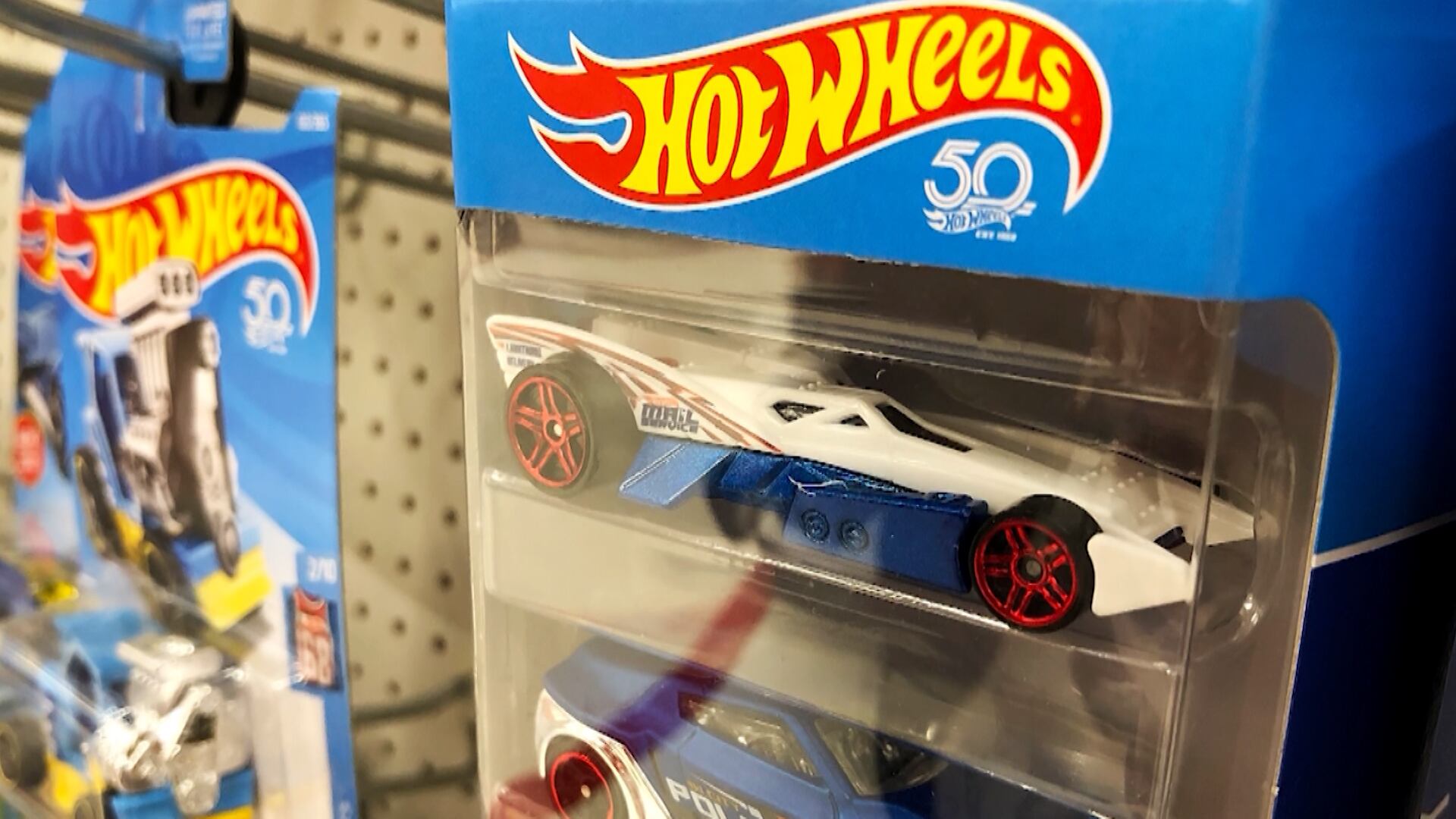
Mattel’s Hot Wheels 2022 Legend Tour will be coming to New York City after a tour of 14 countries and five continents. The company is also launching Hot Wheels into the NFT space with the Hot Wheels Garage allowing users to customize digital cars. Richard Dickson, president and COO of Mattel, joined Cheddar News to talk about the tour and the efforts the iconic brand is taking to stay relevant in the digital age. "I think as you look at what's successful brands and toy brands in particular in this particular chapter are going to be about nostalgic brands that have longevity," he said. "We're generational in the context of our portfolio."
Ghost Financial emerged from stealth to raise $2.5M from investors to provide financial tools to the growing ghost kitchens space. CEO and founder John Meyer joined Cheddar News to discuss the company's future plans as well as potentially getting former Uber CEO Travis Kalanick on board. "The one thing I can say about my time spent with Travis Kalanick is that he definitely believes in the future of Ghost kitchens, given that, he's gone all-in on Cloud Kitchens as a company," Meyer said. "So he's not an investor in us yet. We welcome it, and I'll probably reach out to him today and ask."
The pandemic has seen a historic shift in brand loyalty.
Since the beginning of COVID-19, more than 75% of shoppers have changed their buying habits, and 39% have switched brands or retailers entirely, as inflation and supply shortages have forced them to rethink their purchases, according to McKinsey. Barbara Connors, VP of Commercial Insights at 84.51°, breaks down this shift in brand loyalty and how brands are adapting to it.