A woman uses her phone as she passes by the ByteDance headquarters in Beijing, China, on Friday, Aug. 7, 2020. The Chinese government is complicating the U.S.-government-ordered sale of U.S. TikTok assets. China on Friday, Aug. 28, 2020 introduced export restrictions on artificial intelligence technology, seemingly including the type that TikTok uses to choose which videos to spool up to its users. That means TikTok's Chinese owner, ByteDance, would have to obtain a license to export any restricted technologies to a foreign company. (AP Photo/Ng Han Guan)
By Tali Arbel and Zen Soo
The Chinese government is complicating the U.S.-government-ordered sale of U.S. TikTok assets.
China on Friday introduced export restrictions on artificial intelligence technology, seemingly including the type that TikTok uses to choose which videos to spool up to its users. That means TikTok's Chinese owner, ByteDance, would have to obtain a license to export any restricted technologies to a foreign company.
The Trump administration has threatened to ban TikTok by mid-September and ordered ByteDance to sell its U.S. business, claiming national-security risks due to that Chinese ownership. The government worries about user data being funneled to Chinese authorities. TikTok denies it is a national-security risk and is suing to stop the administration from the threatened ban.
Prospective buyers for U.S. TikTok assets include Microsoft and Walmart and, reportedly, Oracle. Oracle has declined to comment.
On Saturday, Chinese state-owned media outlet Xinhua News Agency quoted government trade adviser and professor Cui Fan, who said that Bytedance should consider whether it should halt negotiations to sell TikTok in the U.S.
"As with any cross-border transaction, we will follow the applicable laws, which in this case include those of the U.S. and China," said ByteDance General Counsel Erich Andersen.
The Chinese government's new restrictions may be a "tactic to drive up valuation" of TikTok, said RBC Capital Markets analyst Alex Zukin, who still expects a deal announcement "relatively soon." The Wall Street Journal reported last week that ByteDance is asking for $30 billion for the U.S. operations, but has faced resistance from bidders. The Journal said in a Sunday story that deal talks had "slowed."
Microsoft and Walmart declined to comment on Monday.
White House press secretary Kayleigh McEnany, during a White House briefing, did not directly answer whether the administration would accept a sale of U.S. assets of TikTok if the deal were subject to Chinese government approval. "Negotiations are ongoing on a sale of TikTok so we are not going to get in the way of those negotiations," she said.
—
Associated Press writer Kevin Freking contributed to this report from Washington.
As life inches toward a post-pandemic world, many people are trying to navigate how to transition from their work-from-home look to a new back-to-office style for the first time in two years. Dina Scherer, the owner of Modnitsa Styling, joined Cheddar News to provide some styling suggestions for those returning to the office. 'I do hear this from a lot of my clients that they just have no idea how to transition from sweat pants, athleisure, into a work office environment outfit that's both appropriate and comfortable,' she noted.
Kelly Johnson, Portfolio Strategist, Charles Schwab, joins Cheddar News' Closing Bell, where he breaks down the results of the 2022 Ariel-Schwab Black Investor Survey. In doing so, he dives into why White American investing activity is at an all-time low and why more Black Americans are gravitating toward cryptocurrencies.
U.S. stocks closed Friday's session mostly lower to end the first full trading week of April. For the week, the S& 500 dropped 1.26%, the Dow fell 0.27%, and the Nasdsaq saw a more significant decline of 3.86%. Melissa Armo, founder and owner of The Stock Swoosh, joined Cheddar News' Closing Bell to discuss.
U.S. stocks saw a jump in the final hour of Thursday's session, and ultimately closed slightly higher for the day. Tim Pagliara, Chief Investment Officer of CapWealth, joined Cheddar News' Closing Bell to discuss. "The markets have had to digest a lot of action from the federal reserve this quarter and it's affecting everything from mortgage rates to how they value stocks," he said.
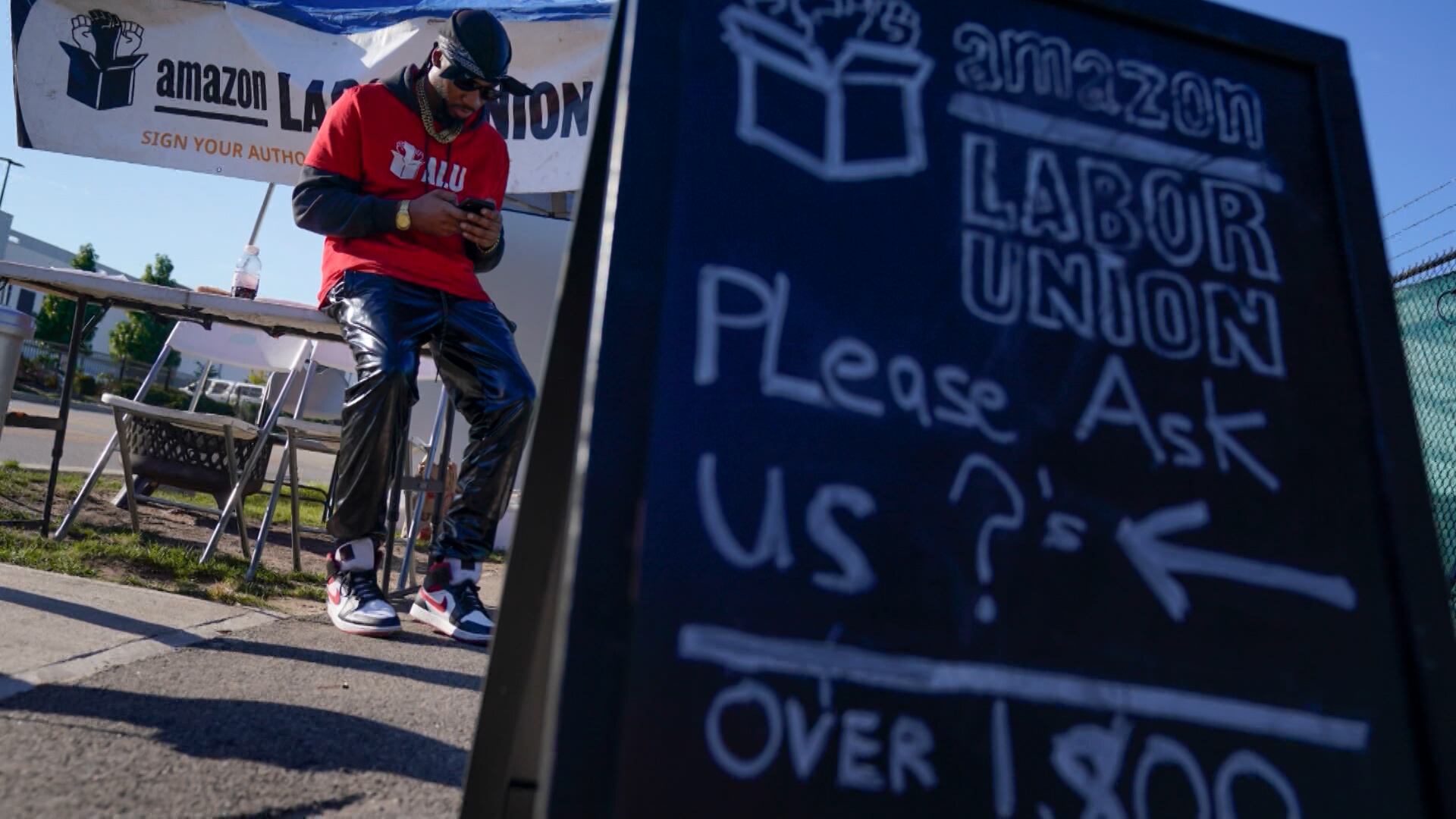
Herold Meyerson, Editor at Large of 'The American Prospect,' joined Closing Bell to discuss the recent uptick in unionization efforts across the U.S. and what it might mean for large corporations like Amazon and Starbucks, where workers are increasingly pushing to unionize.
Alma Angotti, a former SEC Enforcement Attorney and Global Regulatory Risk Leader at the consulting firm Guidehouse, joined Closing Bell to discuss the SEC probe of Amazon's business practices related to third-party seller data, and whether it will have any impact.
The month of April is also known as financial literacy month, and Investopdia marked the occasion this year by surveying 4,000 U.S. adults - 1,000 each from Generation Z, millennial, Generation X, and baby boomer generations - to try to get a better sense of where each generation stands when it comes to their understanding of all things money. The survey found that while many Americans have invested in crypto, most have much more to learn about digital currency. Investopedia Editor in Chief Caleb Silver joins Cheddar News' Closing Bell to discuss.
Michael Cassau, Founder and CEO of Grover, joins Cheddar News' Closing Bell, where he explains how Grover is establishing itself in the tech marketplace with its subscription-based offering and how he plans to deploy the $330 million in new funding.