A woman uses her phone as she passes by the ByteDance headquarters in Beijing, China, on Friday, Aug. 7, 2020. The Chinese government is complicating the U.S.-government-ordered sale of U.S. TikTok assets. China on Friday, Aug. 28, 2020 introduced export restrictions on artificial intelligence technology, seemingly including the type that TikTok uses to choose which videos to spool up to its users. That means TikTok's Chinese owner, ByteDance, would have to obtain a license to export any restricted technologies to a foreign company. (AP Photo/Ng Han Guan)
By Tali Arbel and Zen Soo
The Chinese government is complicating the U.S.-government-ordered sale of U.S. TikTok assets.
China on Friday introduced export restrictions on artificial intelligence technology, seemingly including the type that TikTok uses to choose which videos to spool up to its users. That means TikTok's Chinese owner, ByteDance, would have to obtain a license to export any restricted technologies to a foreign company.
The Trump administration has threatened to ban TikTok by mid-September and ordered ByteDance to sell its U.S. business, claiming national-security risks due to that Chinese ownership. The government worries about user data being funneled to Chinese authorities. TikTok denies it is a national-security risk and is suing to stop the administration from the threatened ban.
Prospective buyers for U.S. TikTok assets include Microsoft and Walmart and, reportedly, Oracle. Oracle has declined to comment.
On Saturday, Chinese state-owned media outlet Xinhua News Agency quoted government trade adviser and professor Cui Fan, who said that Bytedance should consider whether it should halt negotiations to sell TikTok in the U.S.
"As with any cross-border transaction, we will follow the applicable laws, which in this case include those of the U.S. and China," said ByteDance General Counsel Erich Andersen.
The Chinese government's new restrictions may be a "tactic to drive up valuation" of TikTok, said RBC Capital Markets analyst Alex Zukin, who still expects a deal announcement "relatively soon." The Wall Street Journal reported last week that ByteDance is asking for $30 billion for the U.S. operations, but has faced resistance from bidders. The Journal said in a Sunday story that deal talks had "slowed."
Microsoft and Walmart declined to comment on Monday.
White House press secretary Kayleigh McEnany, during a White House briefing, did not directly answer whether the administration would accept a sale of U.S. assets of TikTok if the deal were subject to Chinese government approval. "Negotiations are ongoing on a sale of TikTok so we are not going to get in the way of those negotiations," she said.
—
Associated Press writer Kevin Freking contributed to this report from Washington.
Jill and Carlo cover the news out of Facebook's latest earnings, Tesla's monumental day, Dave Chappelle addresses controversy and the tragedy of the climate emergency.
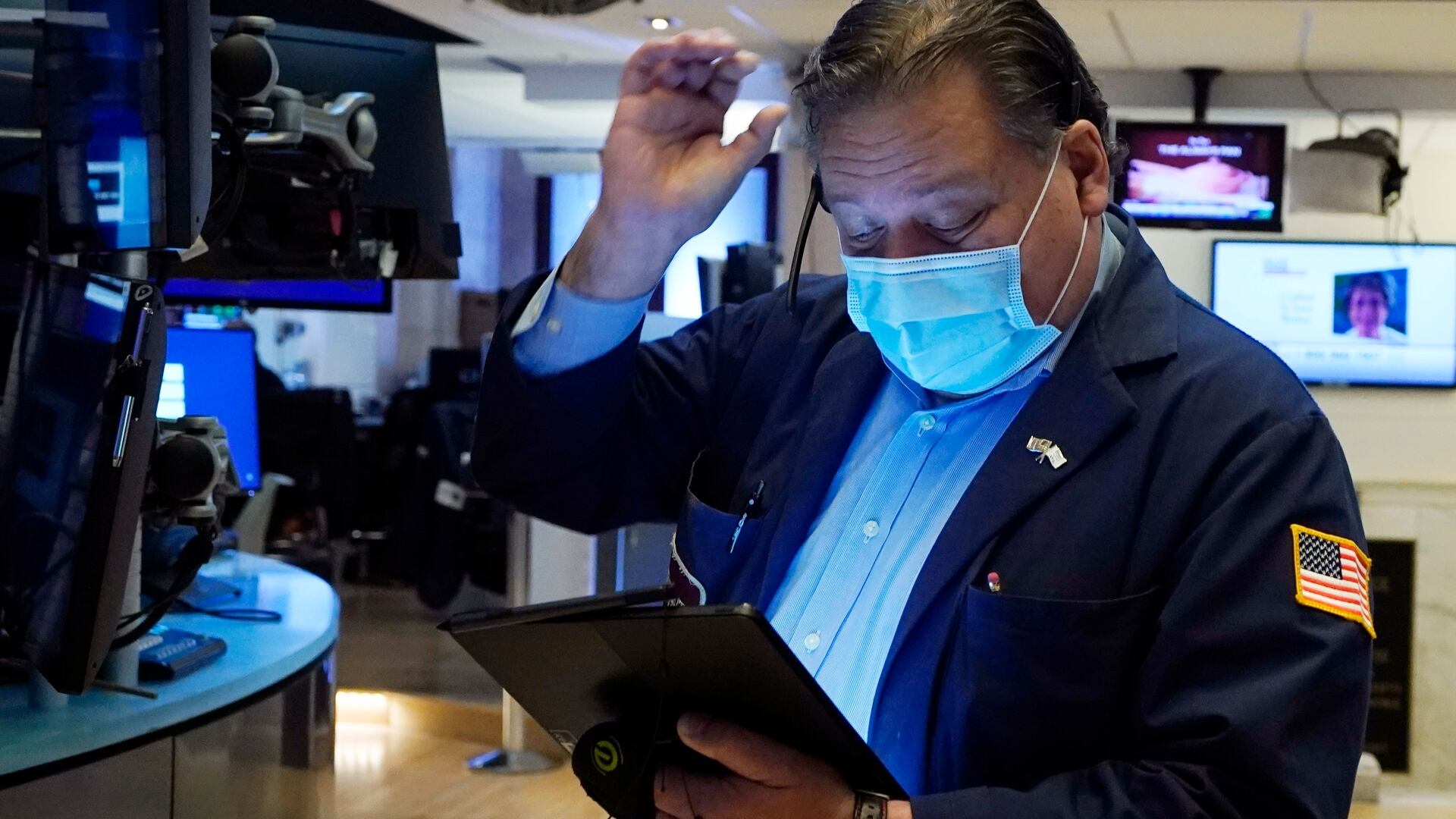
Stocks began the week on a high note, with two indexes - the Dow and the S&P 500 - each closing at a record high. Brian Levitt, Global Market Strategist at Invesco, joins Cheddar News' Closing Bell, where he explains why the conditions were in place for a jump during the session and provides insight on inflation concerns in the United States.
The price of Bitcoin hit a new all-time high last week following the Wall Street debut of ProShares Bitcoin Strategy ETF. Todd Cipperman, Founding Principal for Cipperman Compliance Services, joins Cheddar News' Closing Bell, where he explains why ProShares' ETF got off to a hot start while Valkyrie's Bitcoin Strategy ETF, which debuted just days later, did not.
Edtech startup ENTITY Academy raised $100 million in its latest round of funding. The company's platform offers tech training to women via online courses, in areas like data science and software development. The courses include mentoring and career coaching from people working in the tech industry. ENTITY Academy's founder and CEO Jennifer Schwab joined Cheddar News' Closing Bell to talk more about the company and the funding.
On Monday Microsoft reported that the same Russia-backed hackers behind the 2020 SolarWinds attack have been assailing the global technology supply chain and cloud services. The former White House CIO under President George W. Bush and CEO of the security consulting company Fortalice Solutions, Theresa Payton, joined Cheddar to discuss why cyberattackers are relentlessly focused on infiltrating tech companies and what the future holds in terms of combating them. "This will be an ever-present danger and a journey," she said. "Locking down your systems is not going to be something you do once, and then you set it and forget it. It's going to be an ongoing journey that we're all going to be on together."
Ariel Wolf, general counsel for the Self-Driving Coalition, an industry group promoting autonomous vehicles, joined Cheddar to discuss the ongoing supply chain woes partially attributed to a lack of truck drivers. "Autonomous vehicle technology has the ability to partner with that ecosystem and help alleviate this immediate problem we have and solve the problem going forward," Wolf said. As for safety, Wolf sees a future where self-driving trucks could potentially be safer than human drivers.
Rishi Bharwani, the director of partnerships and policy for nonprofit Accountable Tech, joined Cheddar to discuss the hot button topic of regulatory oversight of social media giant Facebook. Bharwani discussed the bipartisan pieces of legislation already making their way through Congress and said the body should pass stronger data privacy laws, ban surveillance advertising, and require meaningful accountability and transparency from the company. "Now I think we've reached a boiling point where congressional action is needed and inaction is no longer acceptable," he said. Bharwani also called for a concurrent investigation into Mark Zuckerberg's company.