A woman uses her phone as she passes by the ByteDance headquarters in Beijing, China, on Friday, Aug. 7, 2020. The Chinese government is complicating the U.S.-government-ordered sale of U.S. TikTok assets. China on Friday, Aug. 28, 2020 introduced export restrictions on artificial intelligence technology, seemingly including the type that TikTok uses to choose which videos to spool up to its users. That means TikTok's Chinese owner, ByteDance, would have to obtain a license to export any restricted technologies to a foreign company. (AP Photo/Ng Han Guan)
By Tali Arbel and Zen Soo
The Chinese government is complicating the U.S.-government-ordered sale of U.S. TikTok assets.
China on Friday introduced export restrictions on artificial intelligence technology, seemingly including the type that TikTok uses to choose which videos to spool up to its users. That means TikTok's Chinese owner, ByteDance, would have to obtain a license to export any restricted technologies to a foreign company.
The Trump administration has threatened to ban TikTok by mid-September and ordered ByteDance to sell its U.S. business, claiming national-security risks due to that Chinese ownership. The government worries about user data being funneled to Chinese authorities. TikTok denies it is a national-security risk and is suing to stop the administration from the threatened ban.
Prospective buyers for U.S. TikTok assets include Microsoft and Walmart and, reportedly, Oracle. Oracle has declined to comment.
On Saturday, Chinese state-owned media outlet Xinhua News Agency quoted government trade adviser and professor Cui Fan, who said that Bytedance should consider whether it should halt negotiations to sell TikTok in the U.S.
"As with any cross-border transaction, we will follow the applicable laws, which in this case include those of the U.S. and China," said ByteDance General Counsel Erich Andersen.
The Chinese government's new restrictions may be a "tactic to drive up valuation" of TikTok, said RBC Capital Markets analyst Alex Zukin, who still expects a deal announcement "relatively soon." The Wall Street Journal reported last week that ByteDance is asking for $30 billion for the U.S. operations, but has faced resistance from bidders. The Journal said in a Sunday story that deal talks had "slowed."
Microsoft and Walmart declined to comment on Monday.
White House press secretary Kayleigh McEnany, during a White House briefing, did not directly answer whether the administration would accept a sale of U.S. assets of TikTok if the deal were subject to Chinese government approval. "Negotiations are ongoing on a sale of TikTok so we are not going to get in the way of those negotiations," she said.
—
Associated Press writer Kevin Freking contributed to this report from Washington.
E-scooter company Lime is gearing up to launch an IPO after raising $523 million in debt financing. CEO Wayne Ting joined Cheddar to talk about the decision behind the future public offering citing the fundraise as a sign of investor confidence, despite a massive drop-off in ridership amid the pandemic. He noted that some of the funds will not only be used to pay down debts but to also upgrade the company's fleet of e-bikes and scooters. "We're going to be investing $20 million of this funding towards our mission to get to net-zero on carbon by 2030," he said.
Weekly grocery delivery startup MilkRun raised $6 million in Series A funding on Friday, and Julia Niiro, CEO and founder, joined Cheddar to discuss what distinguishes MilkRun's grocery delivery model from the competition, explaining the service connects customers with local farmers being able to provide items not found in the typical stores. Niiro also talked about the impact that supply chain bottlenecks have had on the business. "This was a moment when people needed local food production," she said of MilkRun seizing the opportunity to expand to other markets amid the global food distribution issues.
With vaccinated international travelers being admitted into the United States, the service and hospitality industry could experience a boom. John Geller, president of Marriott Vacations Worldwide, joined Cheddar to talk about the gradual increase in stays at Marriott properties and noted that occupancy has reached near pre-pandemic levels. Regarding the holiday season, he said, "people love to travel, so I wouldn't be surprised if, in most of our resorts, we're not pushing close to a high 90 percent occupancy."
The pandemic caused chaos in the wedding industry after ceremonies were postponed last year. But now couples face a new problem as they look toward their big day: supply chain issues. Tim Chi, CEO at The Knot, joined Cheddar to provide some additional details about the supply constraints affecting everything from venues to flowers. Chi also talked about The Knot celebrating its 25th anniversary and how the business has transformed over the years.
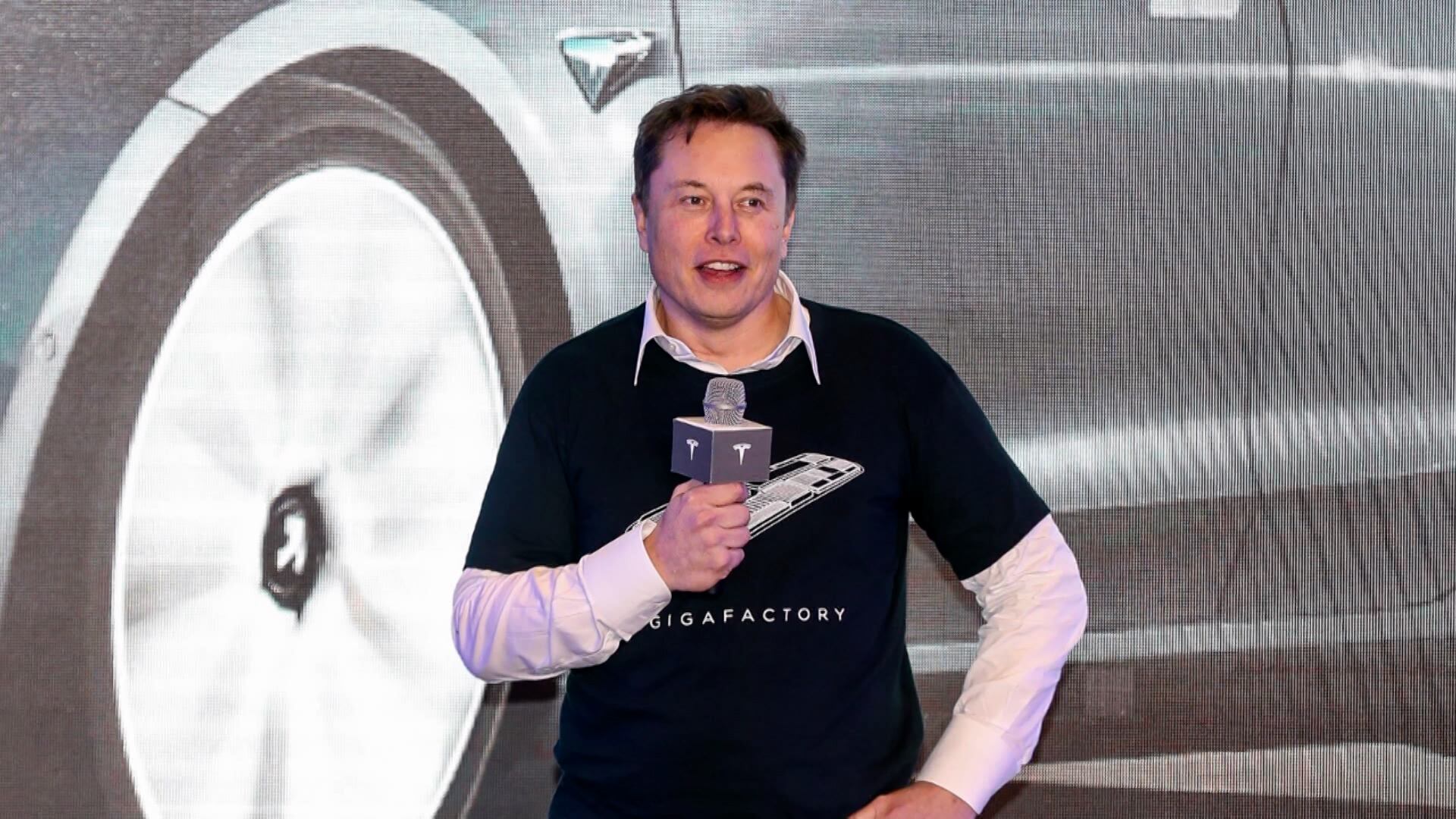
Elon Musk asked Twitter if he should sell about $20 billion worth of his Tesla stock and about 58 percent of those who answered said yes. The Tesla CEO pledged to abide by the results of the poll, whichever way it went. Arun Sundararajan, NYU Stern professor & author of "The Sharing Economy: The End of Employment and the Rise of Crowd-Based Capitalism," joined Cheddar to discuss what the Twitter poll says about America's attitude towards billionaires and the nation's tax system.
David Ewalt, Editor in Chief of Gizmodo, joins 'Fast Forward' to paint a picture of what a metaverse-driven future looks like, and how it will propel the future of work and education.
Hyperlocal social networking platform Nextdoor made its public debut on the NYSE via a SPAC merger with Khosla Ventures Acquisition Co. II on Monday. CEO Sarah Friar joined Cheddar's "Opening Bell" to talk about what drove the company to a public offering and growing the platform on a global scale. "This allows us to not go back after investing and growing the neighborhood," Friar said. She also talked about the app's pandemic success and the fact that people have stuck around as businesses reopened on a larger scale.