A woman uses her phone as she passes by the ByteDance headquarters in Beijing, China, on Friday, Aug. 7, 2020. The Chinese government is complicating the U.S.-government-ordered sale of U.S. TikTok assets. China on Friday, Aug. 28, 2020 introduced export restrictions on artificial intelligence technology, seemingly including the type that TikTok uses to choose which videos to spool up to its users. That means TikTok's Chinese owner, ByteDance, would have to obtain a license to export any restricted technologies to a foreign company. (AP Photo/Ng Han Guan)
By Tali Arbel and Zen Soo
The Chinese government is complicating the U.S.-government-ordered sale of U.S. TikTok assets.
China on Friday introduced export restrictions on artificial intelligence technology, seemingly including the type that TikTok uses to choose which videos to spool up to its users. That means TikTok's Chinese owner, ByteDance, would have to obtain a license to export any restricted technologies to a foreign company.
The Trump administration has threatened to ban TikTok by mid-September and ordered ByteDance to sell its U.S. business, claiming national-security risks due to that Chinese ownership. The government worries about user data being funneled to Chinese authorities. TikTok denies it is a national-security risk and is suing to stop the administration from the threatened ban.
Prospective buyers for U.S. TikTok assets include Microsoft and Walmart and, reportedly, Oracle. Oracle has declined to comment.
On Saturday, Chinese state-owned media outlet Xinhua News Agency quoted government trade adviser and professor Cui Fan, who said that Bytedance should consider whether it should halt negotiations to sell TikTok in the U.S.
"As with any cross-border transaction, we will follow the applicable laws, which in this case include those of the U.S. and China," said ByteDance General Counsel Erich Andersen.
The Chinese government's new restrictions may be a "tactic to drive up valuation" of TikTok, said RBC Capital Markets analyst Alex Zukin, who still expects a deal announcement "relatively soon." The Wall Street Journal reported last week that ByteDance is asking for $30 billion for the U.S. operations, but has faced resistance from bidders. The Journal said in a Sunday story that deal talks had "slowed."
Microsoft and Walmart declined to comment on Monday.
White House press secretary Kayleigh McEnany, during a White House briefing, did not directly answer whether the administration would accept a sale of U.S. assets of TikTok if the deal were subject to Chinese government approval. "Negotiations are ongoing on a sale of TikTok so we are not going to get in the way of those negotiations," she said.
—
Associated Press writer Kevin Freking contributed to this report from Washington.
Earlier this week, New York's gaming commission approved nine mobile sports platforms to operate in the market, but each respective sportsbooks' revenue will be taxed at 51%, tied for the steepest rate in the country. Eben Novy-Williams, sports business reporter for Sportico, joins Cheddar News' Closing Bell where he breaks down the challenge sportsbooks face to be profitable in the region.
Rich Rosenblum, Co-Founder and President of crypto trading firm GSR, joins Cheddar News' Closing Bell, where he explains why investors are rushing to Ethereum and breaks down the advantages it holds over other digital assets.
Earnings season continues in the week of November 15-19, with results on tap from Walmart, Home Depot, Lowe's, Target, and more. New economic data on Tuesday will provide a deeper look at the retail space when the Commerce Department releases October retail sales numbers, following this week's hot inflation data. Plus, President Biden is set to visit GM's electric vehicle factory in Michigan, where he is expected to formally introduce the plant's grand opening.
On this episode of 'Your Future Home', Chip Wade, Emmy Award-winning HGTV Host, breaks down all the ways you can avoid breaking the bank on energy costs this holiday season, especially when it comes to outfitting your home with smart tech; Dr. Wendy Osefo, Entrepreneur, Professor & Cast Member of Bravo's 'Real Housewives of Potomac', discusses her popular new Onyi Home Essentials line and how ideas of family and legacy helped shape it; Cheddar breaks down everything you need to know about how to determine your non-negotiables when purchasing a house.
One NFL team says it is using data to help it win off the field. The Seattle Seahawks say they want to be a source of inspiration for other organizations that want to reap the rewards of a data-driven culture and aim to show the unlikely role data can play in professional sports operations. Seattle Seahawks Director of Business Strategy and Analytics Paimon Jaberi joins Cheddar News' Closing Bell to discuss.
Aurora Cannabis CEO Miguel Martin joins Cheddar News' Closing Bell to discuss the company's latest earnings results, how it will achieve positive EBITDA by 2023, and the state of the cannabis industry amid potential U.S. federal legalization.
Disney saw misses on both its top and bottom lines for its fourth quarter. The entertainment giant also fell just short of Wall Street expectations for new Disney+ subscribers. CFRA Research media and entertainment analyst Tuna Amobi joined Cheddar News' Closing Bell to break down what this means for the future of Disney.
Johnson & Johnson is the latest company to announce this week it is splitting into two companies, separating its consumer operations from its pharmaceutical and medical devices unit. Electronics firm Toshiba also made a similar announcement today, and General Electric earlier this week also said it would be spinning off its aviation, healthcare, and power businesses. What does this mean for investors - and will this become a trend among conglomerates? Barron's Senior Writer Al Root joins Cheddar News' Closing Bell to discuss why Johnson & Johnson is splitting up, what this strategy means for conglomerates, and why they might pursue a break-up.
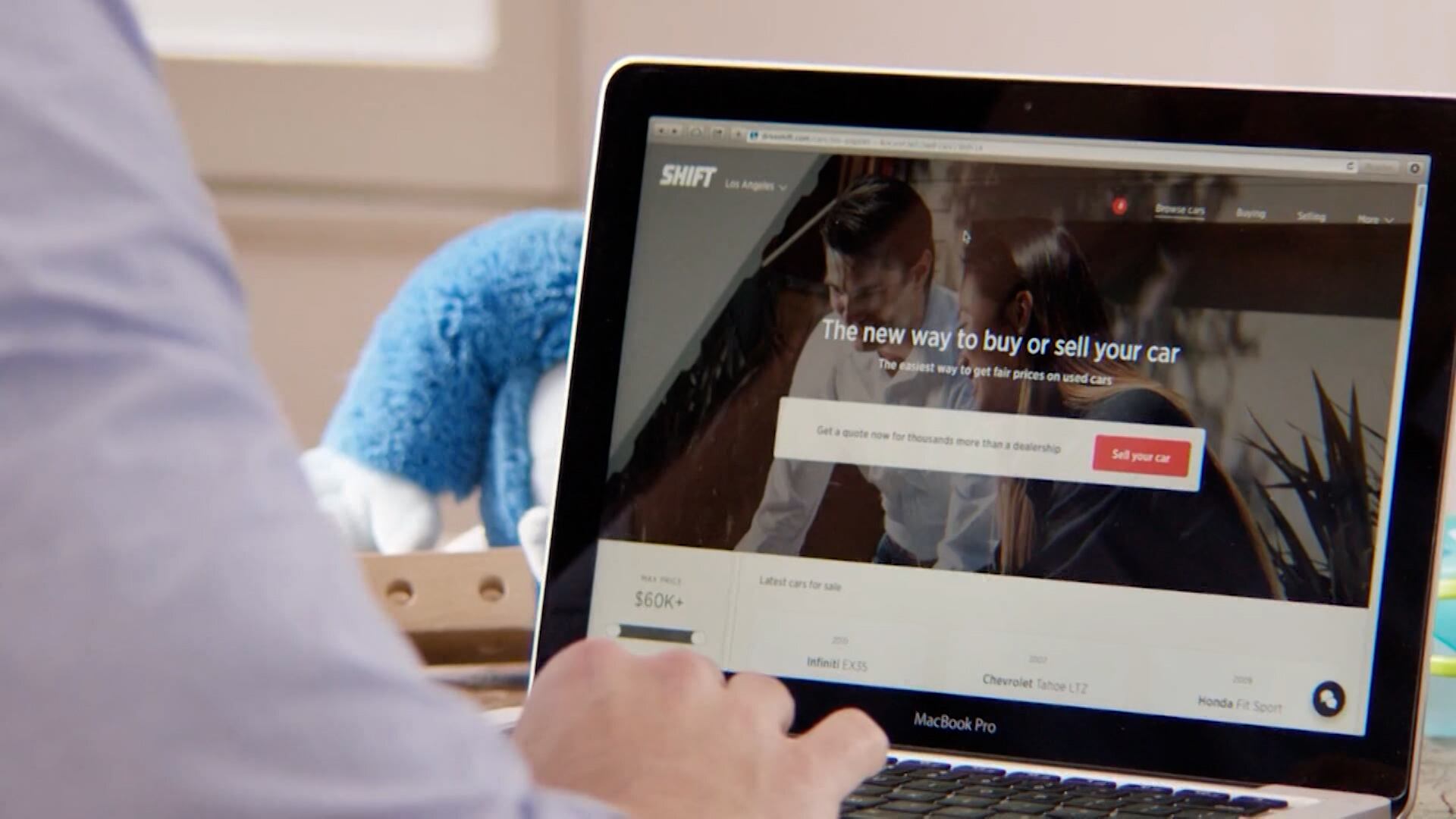
Business is booming for the used car marketplace Shift while the automotive industry as a whole struggles with demand and supply chain issues stemming from the global semiconductor shortage. Co-CEO and co-founder George Arison joined Cheddar's "Closing Bell" to talk about the company's stellar Q3 earnings and how it was able to meet demand.