A woman uses her phone as she passes by the ByteDance headquarters in Beijing, China, on Friday, Aug. 7, 2020. The Chinese government is complicating the U.S.-government-ordered sale of U.S. TikTok assets. China on Friday, Aug. 28, 2020 introduced export restrictions on artificial intelligence technology, seemingly including the type that TikTok uses to choose which videos to spool up to its users. That means TikTok's Chinese owner, ByteDance, would have to obtain a license to export any restricted technologies to a foreign company. (AP Photo/Ng Han Guan)
By Tali Arbel and Zen Soo
The Chinese government is complicating the U.S.-government-ordered sale of U.S. TikTok assets.
China on Friday introduced export restrictions on artificial intelligence technology, seemingly including the type that TikTok uses to choose which videos to spool up to its users. That means TikTok's Chinese owner, ByteDance, would have to obtain a license to export any restricted technologies to a foreign company.
The Trump administration has threatened to ban TikTok by mid-September and ordered ByteDance to sell its U.S. business, claiming national-security risks due to that Chinese ownership. The government worries about user data being funneled to Chinese authorities. TikTok denies it is a national-security risk and is suing to stop the administration from the threatened ban.
Prospective buyers for U.S. TikTok assets include Microsoft and Walmart and, reportedly, Oracle. Oracle has declined to comment.
On Saturday, Chinese state-owned media outlet Xinhua News Agency quoted government trade adviser and professor Cui Fan, who said that Bytedance should consider whether it should halt negotiations to sell TikTok in the U.S.
"As with any cross-border transaction, we will follow the applicable laws, which in this case include those of the U.S. and China," said ByteDance General Counsel Erich Andersen.
The Chinese government's new restrictions may be a "tactic to drive up valuation" of TikTok, said RBC Capital Markets analyst Alex Zukin, who still expects a deal announcement "relatively soon." The Wall Street Journal reported last week that ByteDance is asking for $30 billion for the U.S. operations, but has faced resistance from bidders. The Journal said in a Sunday story that deal talks had "slowed."
Microsoft and Walmart declined to comment on Monday.
White House press secretary Kayleigh McEnany, during a White House briefing, did not directly answer whether the administration would accept a sale of U.S. assets of TikTok if the deal were subject to Chinese government approval. "Negotiations are ongoing on a sale of TikTok so we are not going to get in the way of those negotiations," she said.
—
Associated Press writer Kevin Freking contributed to this report from Washington.
Online ad-tech company Innovid made its public debut on the New York Stock Exchange. CEO and co-founders Zvika Netter joined Cheddar's "Opening Bell" to discuss factors that drove the company to launch an IPO via a SPAC deal. He noted that the rapid growth of connected TV advertising (CTV) made it an opportune time for his business to go public. While the company is profitable, Netter also explained the various avenues it will take to increase total revenue.
Lululemon is accusing Peloton of copying a number of patented apparel designs and has filed a lawsuit. Julie Zerbo, founder and Editor-In-Chief at The Fashion Law, joined Cheddar to discuss whether or not Lululemon has a valid case. The lawsuit comes as sales for Peloton's premiere products, like its treadmills, have been slowing and it looks to provide more offerings. Zerbo also discussed a co-branding partnership between the two companies that ended amicably earlier this year and how it could play into the outcome of the case.
Airbnb has come under fire after an Axios report found that the rental company has properties available in China's Xinjiang region where the nation has been accused of committing genocide against Uyghur Muslims, demolishing their homes, and replacing them with tourist attractions.
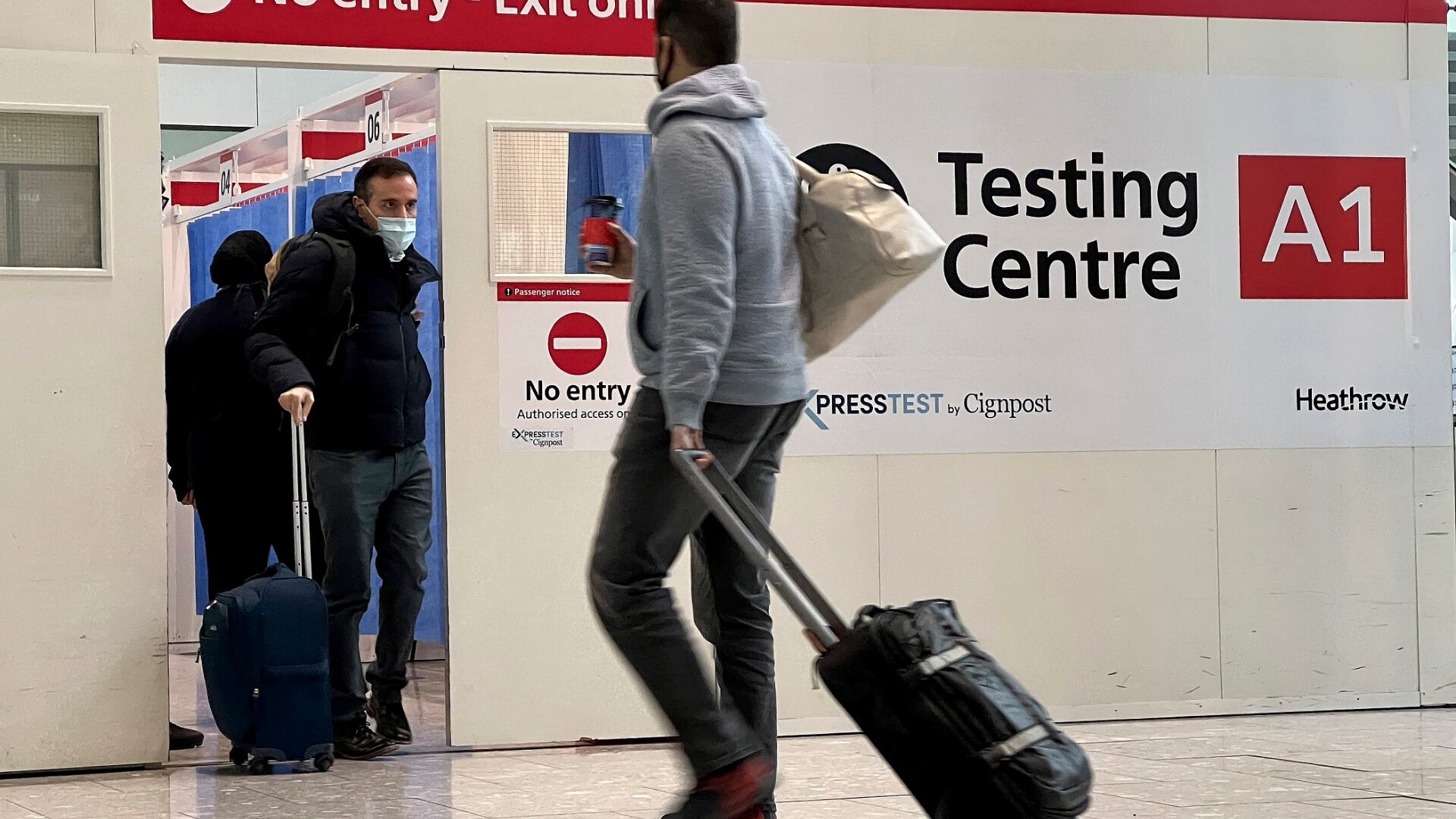
With the emergence of the omicron variant, the U.S. is considering tightening international travel guidelines. The CDC said it might reduce the window for foreign travelers to submit a negative COVID-19 test from three days prior to one day before allowing entry.
Following the recent emergence of the Omicron variant, markets are still attempting to recover after high sell-offs over the past few days. CEO and founder of Asymmetric ETF’s Darran Schuringa reacted to the further dive in markets following Fed Chairman Jerome Powell's announcement that the central bank is discussing speeding up the taper of its bond-buying program.
Black Friday and Cyber Monday are over, but even early bird shopper could find themselves with gifts in time this holiday season due to potential delivery delays as traditional mail services such as the UPS and Fedex work to get packages from mail rooms to front doors. Kassidy Bird, Senior Director of Marketing at Convey by Project44 gives an in depth look into how savvy shoppers can navigate around potential shipping issues this holiday season.
Reese Mozer, CEO and co-founder of American Robotics, joins Cheddar News to discuss innovations in edge computing and how drone technology can maximize its potential.