A woman uses her phone as she passes by the ByteDance headquarters in Beijing, China, on Friday, Aug. 7, 2020. The Chinese government is complicating the U.S.-government-ordered sale of U.S. TikTok assets. China on Friday, Aug. 28, 2020 introduced export restrictions on artificial intelligence technology, seemingly including the type that TikTok uses to choose which videos to spool up to its users. That means TikTok's Chinese owner, ByteDance, would have to obtain a license to export any restricted technologies to a foreign company. (AP Photo/Ng Han Guan)
By Tali Arbel and Zen Soo
The Chinese government is complicating the U.S.-government-ordered sale of U.S. TikTok assets.
China on Friday introduced export restrictions on artificial intelligence technology, seemingly including the type that TikTok uses to choose which videos to spool up to its users. That means TikTok's Chinese owner, ByteDance, would have to obtain a license to export any restricted technologies to a foreign company.
The Trump administration has threatened to ban TikTok by mid-September and ordered ByteDance to sell its U.S. business, claiming national-security risks due to that Chinese ownership. The government worries about user data being funneled to Chinese authorities. TikTok denies it is a national-security risk and is suing to stop the administration from the threatened ban.
Prospective buyers for U.S. TikTok assets include Microsoft and Walmart and, reportedly, Oracle. Oracle has declined to comment.
On Saturday, Chinese state-owned media outlet Xinhua News Agency quoted government trade adviser and professor Cui Fan, who said that Bytedance should consider whether it should halt negotiations to sell TikTok in the U.S.
"As with any cross-border transaction, we will follow the applicable laws, which in this case include those of the U.S. and China," said ByteDance General Counsel Erich Andersen.
The Chinese government's new restrictions may be a "tactic to drive up valuation" of TikTok, said RBC Capital Markets analyst Alex Zukin, who still expects a deal announcement "relatively soon." The Wall Street Journal reported last week that ByteDance is asking for $30 billion for the U.S. operations, but has faced resistance from bidders. The Journal said in a Sunday story that deal talks had "slowed."
Microsoft and Walmart declined to comment on Monday.
White House press secretary Kayleigh McEnany, during a White House briefing, did not directly answer whether the administration would accept a sale of U.S. assets of TikTok if the deal were subject to Chinese government approval. "Negotiations are ongoing on a sale of TikTok so we are not going to get in the way of those negotiations," she said.
—
Associated Press writer Kevin Freking contributed to this report from Washington.
Stocks closed lower on Friday as investors continue to worry over rate hikes. John Lynch, CIO of Comerica Wealth Management, joins Cheddar News' Closing Bell, where he says value is back in play with investors. Lynch also believes the market has overreacted to the latest Fed minutes, suggesting a bounce-back at some point.
Private equity firms in 2021 spent $401.71 billion in U.S. tech investments — doubling 2020's level of $196.34 billion. As tech becomes increasingly interwoven into our lives amid the pandemic, investors grow bullish on the sector, especially software-as-a-service companies. How will 2022 stack up to 2021, and is there potential for parts of the tech sector to sink this year? John Jannarone, Editor in Chief at IPO-Edge, joins Cheddar News' Closing Bell to discuss 2021's record year of deals, how potential interest rate hikes will impact tech investments in 2022, the fastest-growing IPOs, and more.
Bed Bath & Beyond delivered disappointing fiscal third-quarter results for 2022. Shares initially dove more than 9% in premarket trading on the news but finished the day up nearly 8%. Bed Bath & Beyond has been a meme-stock target for online investors in the past -- so was meme-stock mania a factor in the recent stock movement for the company? Jaime Rogozinski, the founder of the subreddit WallStreetBets, joins Cheddar News' Closing Bell for more, as his forum helped spark the meme stock phenomena. He also discussed some decentralized finance services and trends for the retail investor to watch for in 2022.
College athletes scored big in 2021 when they were finally allowed to begin earning money based off of their name, image, and likeness, known as NIL. But how can young athletes best manage their money so they can set themselves up for years of success? Nicole Pullen Ross, Head of Goldman Sachs Sports and Entertainment Solutions, joins Cheddar News' Closing Bell to discuss why financial management for college athletes is important, common pitfalls they could run into, and more.
December's jobs report was weaker than expected: the economy only added 199,000 nonfarm payrolls compared to an estimate of 422,000. However, the unemployment rate hit a new pandemic-era low of 3.9%, beating expectations. One thing to consider is the fact that the impact of the COVID-19 omicron variant is not factored into these results as the read is taken around the middle of the month. So — how might the variant impact job reports over the next few months? Mark Zandi, Chief Economist at Moody's Analytics, joins Cheddar News' Closing Bell to discuss December's jobs numbers, his 2022 labor market outlook, how COVID-19 will continue to impact the labor market, and more.
Digital medical care provider Pear Therapeutics rang the closing bell on the Nasdaq Friday and President and CEO Dr. Corey McCann, joined Cheddar to talk about how the company plans to grow the business of software-based therapeutics and how the first FDA authorized prescription digital therapeutics company will go about treating illnesses like insomnia and addiction. "These really are pieces of software. In many cases, they're apps and in the cases of our addiction products, these are based on something called cognitive behavioral therapy or CBT," he said. "These products change the patient's brain circuitry to help them be abstinent, to help them stay in treatment, and that's exactly what we see in randomized clinical trials and that's what we see in the real world." He also addressed the ongoing mental health crises brought on by the pandemic. **copy updated to remove IPO information as Pear Therapeutics went public in December**
Gamestop shares were up on The Wall Street Journal report that the video game retail company plans to enter the NFT and crypto space. Adam Hollander, the founder of Hungry Wolves NFT, joined Cheddar to break down how it could be a lifeline for the struggling meme stock darling. "They're not resigning themselves to becoming the next Blockbuster story, and so while people may not be buying as many video games in a retail environment anymore, NFTs, in particular, people are starting to expect more gaming utility on the backend — at least for a variety of projects — and I personally think its a very smart move for them to do this," Hollander told Cheddar.
On Saturday, New York will join neighboring New Jersey and Connecticut in authorizing mobile sports betting. Matt Kalish, president and co-founder of Draftkings North America, joined Cheddar to talk about the landmark change that is estimated to rake in $500 million in annual tax revenue on a potential billion-dollar market. Kalish also addressed the possibility that legalized sports betting in the Empire State could cannibalize his company's revenues in the bordering states. "It's pretty inconvenient, you know, to go across the border to make a bet. And people were doing it, but I think it really stifled a lot of the opportunity," he said. "So while there's some of that going on, I think really a tremendous amount, like a giant percent, of New York will be very incremental."
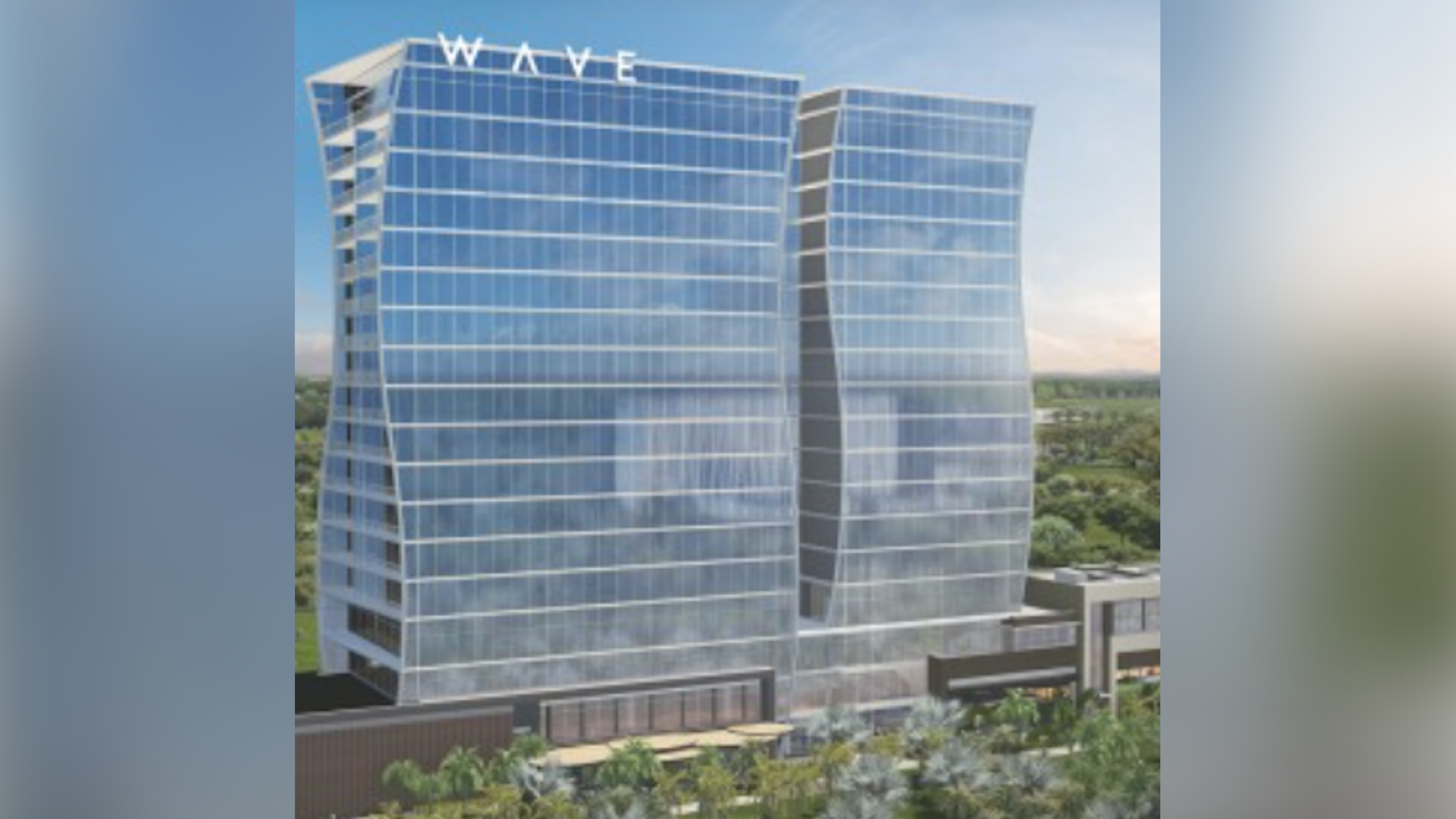
James Tattersall, director of sales and marketing for Lake Nona Wave Hotel, talks about the hotel's initiatives to foster diversity and how these amenities champion inclusivity in the Orlando area.
Desmond Howard, former NFL wide receiver and Modelo college football playoff ambassador, joins Cheddar News to talk about the Modelo sweepstakes honoring the 30th anniversary of his iconic punt return.