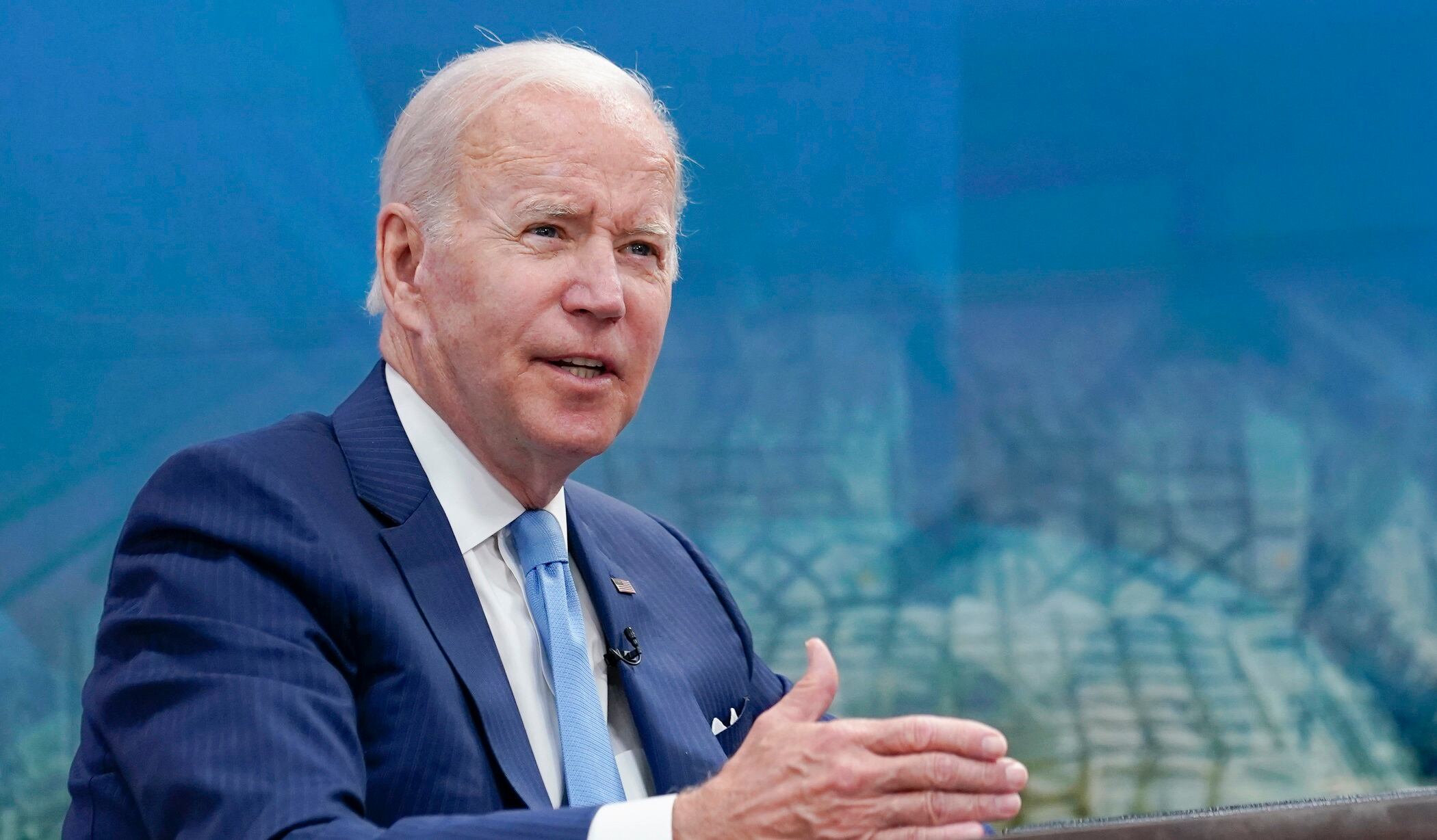
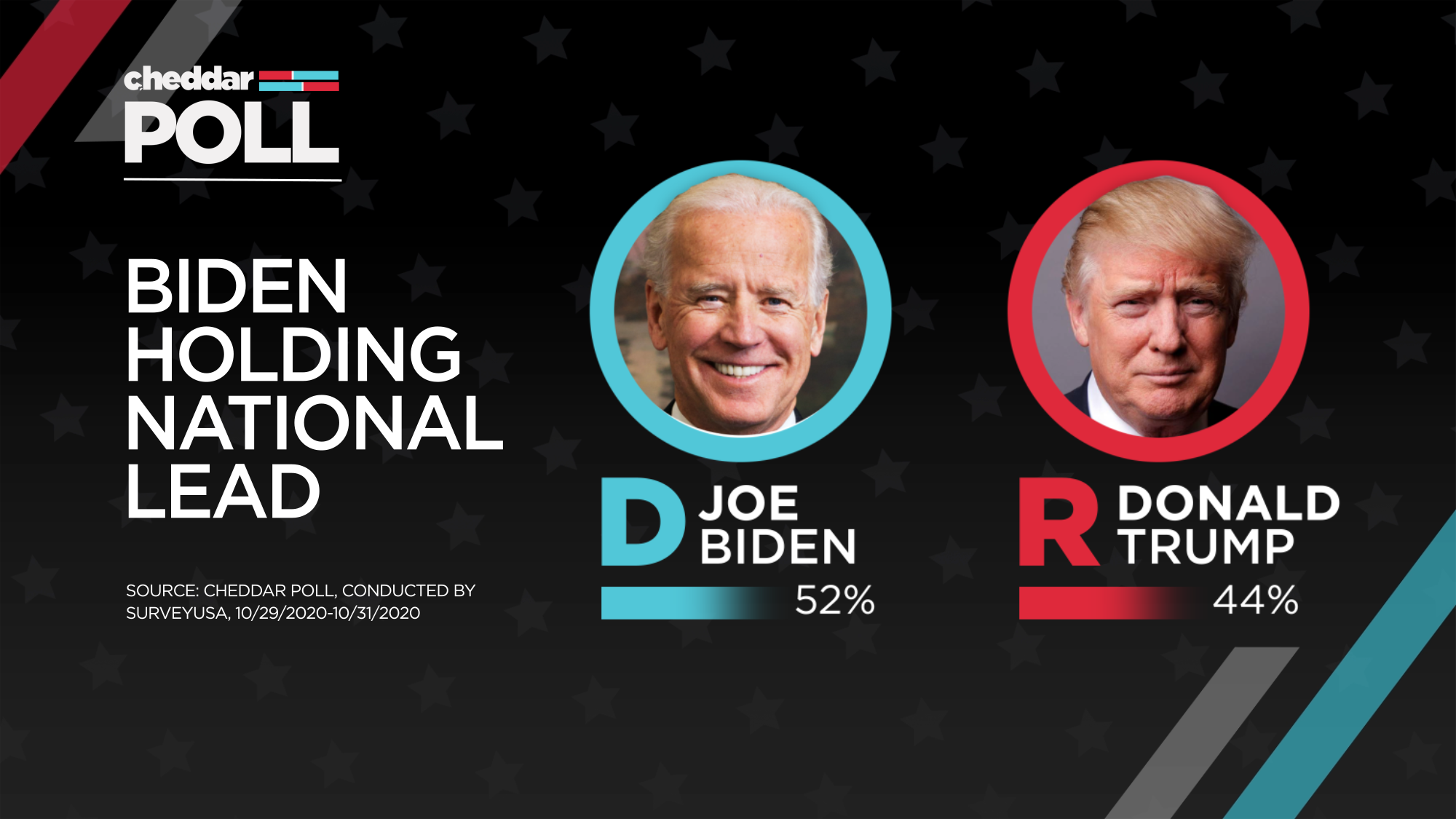
On the eve of Election Day, Democratic presidential nominee Joe Biden maintains a strong lead nationally, though his margin is narrowing in the final days of this race.
According to a new Cheddar poll, conducted exclusively by SurveyUSA, in a head-to-head matchup against incumbent Republican President Donald Trump, Biden sees 52 percent support, versus 44 percent for Trump, among likely voters.
In the past two rounds of national polling conducted by Cheddar and SurveyUSA, Biden’s lead remained consistent at 10 points. While it has narrowed slightly, with such a large lead, Biden is almost certain to win the popular vote.
But in an election that is not decided by who gets the most votes nationally, but by the Electoral College, Biden and Trump are not taking any votes for granted. Both have spent the final days on the campaign trail in key states making a final pitch to voters.
Even though this is an election unlike any other, in which nearly 100 million people have already voted according to the U.S. Elections Project, there are still millions of votes to be cast.
Of likely voters who have not yet voted, 57 percent plan to vote in person on Election Day. That could drive turnout far above 2016 numbers as an energized voting base heads to the polls, despite fears about the coronavirus.
Those fears are very much driving this election. When asked about the most important issue facing the country in advance of this election, COVID-19 topped the list for all age groups and far outpaced the economy. When this question was polled previously, COVID-19 and the economy were just narrowly separated. That gap has widened significantly as cases of coronavirus continue to rise around the country.

Whoever is elected president on November 3 will inherit a country that is still wrestling with a pandemic, 10 months after the first case was diagnosed in the U.S., that shows no signs of slowing down.
How COVID-19 will change the race will ultimately be held to the results. But it is possible to glean insight into how voters may be deciding.
Among likely voters who rate COVID-19 as the most important issue, those people break for Biden by a 3 to 1 margin. A quarter of likely voters who listed the economy as their top issue say they support Trump.
Voters who report knowing someone who has had coronavirus or died from the illness break for Biden though Trump does have an edge among people who have had the virus themselves.
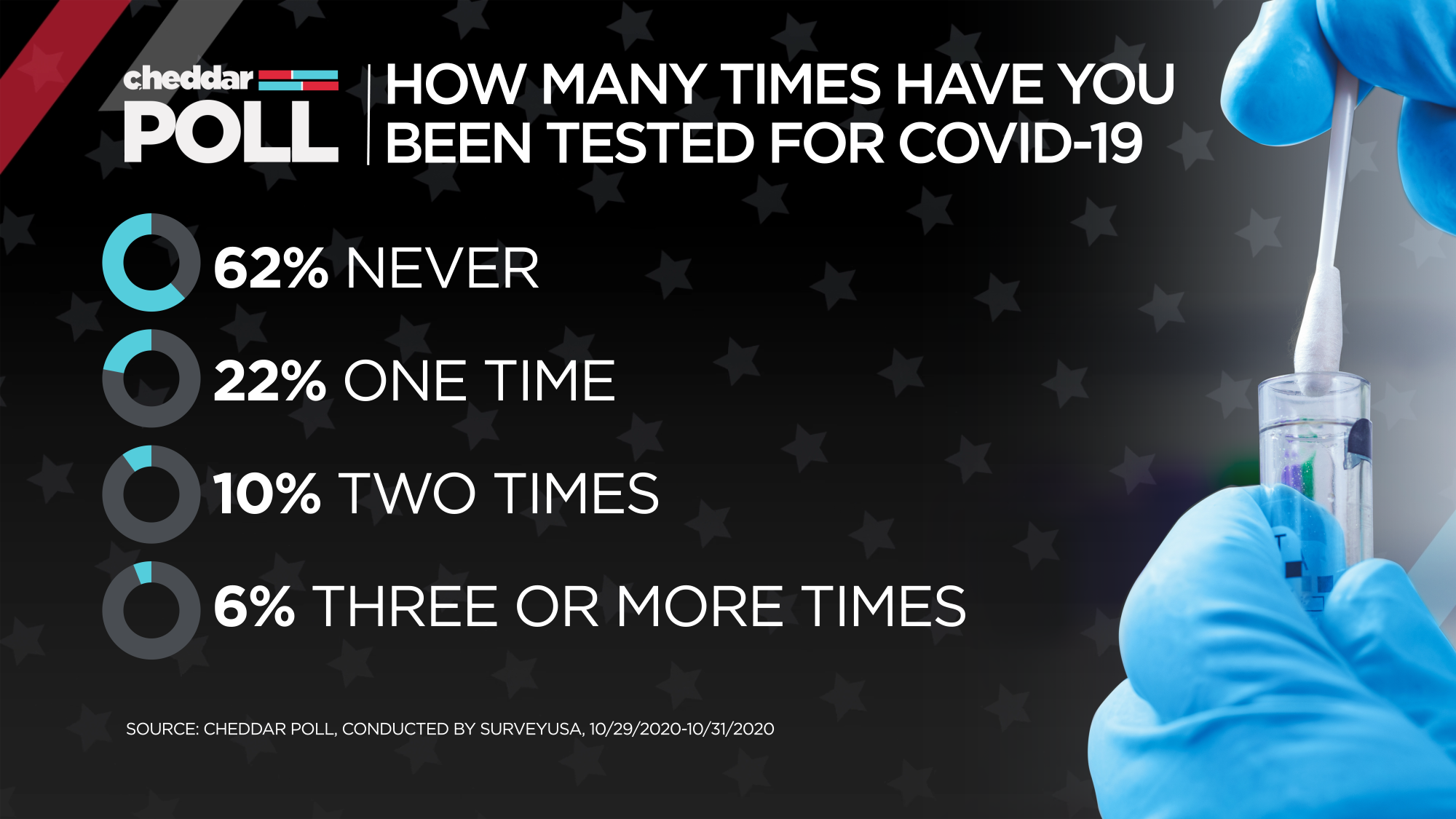
At a time when coronavirus is top of mind for many Americans — including many voters — the vast majority of Americans still have never had a COVID-19 test. Nearly two-thirds of people (62 percent) say they have never been tested for coronavirus. A very small portion of Americans, just 6 percent, have been tested more than three times.
The president’s response to COVID-19 is broadly seen as responsible for his falling shares of support in some key battleground states where coronavirus cases are rising sharply. It is also blamed for falling support with seniors and suburban women, based on our recent polling versus exit polls, both groups he won handily four years ago.
For the president, building upon his support in 2016 has proven difficult. Despite earlier signs that men, specifically suburban men, might break away from Trump in this election, final polling shows that they will likely back the president, including suburban men who just a month ago did not support his reelection. Among likely voters, 46 percent of suburban men plan to vote for the president, versus 45 percent for Biden. Among all male voters, Trump holds a strong edge with 50 percent support to Biden’s 45 percent.
Trump has held steady with Hispanic voters, enjoying the support of about 4 in 10 of this key demographic, with 56 percent saying they favor Biden. Hispanic voters make up large voting blocks in the swing states of Florida, Arizona, and Texas, and the president has wooed them in his bid for reelection.
The president has also seen increases in support from gun owners and white voters who do not have a college degree and he holds a double-digit lead over Biden among those groups.
Still, Biden holds an edge in a key demographic that the president won in 2016: suburban women. Nearly two-thirds (65 percent) of suburban women back Biden, versus just 32 percent for Trump.
Support from those suburban women has evaded Trump, even though he won it in 2016. Now these “housewives”, as the president has referred to them in the past, could have the strength of numbers to decide the election this year.
Biden has also widened the gap with Black voters, where he now sees 91 percent of voters backing his bid for the White House. Trump sees just 6 percent support from those voters, down from 10 percent a month ago.
As election officials work to accurately count the millions of votes pouring in — and make Election Day run smoothly — perhaps the most important metric is the question asking whether voters have confidence that their vote will count.
When asked a month ago, 79 percent of voters said they had confidence that their vote would count. Today, that number has jumped slightly to 84 percent, showing more confidence in the electoral process despite attempts by the president to cast doubt on the legitimacy of U.S. elections.
This poll was conducted between October 29 and October 31 exclusively for Cheddar by SurveyUSA.