CEO of A.I.-Driven Insurance Start-Up Lemonade Says Mockery Is the Highest Form of Flattery
*By Conor White*
Lemonade, the insurance startup that uses A.I. and chatbots to pay claims within seconds, saw exponential growth in the U.S. in 2018, but the company is setting its sights on Europe for its next phase of expansion.
"We've decided that if people in Berlin, and Tokyo, and New York are using Spotify ($SPOT), and Netflix ($NFLX), and Uber, why not Lemonade?" CEO and co-founder Daniel Schreiber asked in an interview on Cheddar.
The burgeoning company's tech-driven approach has caught the attention of some of its more traditional competitors. That includes State Farm, which [released an ad in October](https://youtu.be/KIWfc9aI1YI) poking fun at artificial intelligence and robots, a not-so-thinly veiled dig at the startup. But Schreiber said he didn't mind the mockery.
"We found it remarkable that ... the largest insurance company in the nation, that \[is\] a thousand times bigger than Lemonade, would spend millions of dollars taking us on," Schreiber said. "I really found that interesting and deeply flattering honestly."
The company even took the unusual step of paying to promote the ad online.
"They're mocking us," Schreiber explained, "but I really think it's a bit of a boomerang that comes back and hurts them much more than it hurts us."
The CEO highlighted some of Lemonade's 2018 accomplishments, including $57 million in sales and increasing the number of homes it insures by more than 300,000.
But Schreiber said he is proudest of his company's reputation with customers.
"You go now to any of the consumer ratings sites, and you'll find that USAA and Lemonade compete for the number one spot in terms of customer satisfaction," he said.
"Growing fast is fabulous," he said, "but if you do it at the expense of customer satisfaction, that's a price not worth paying."
For full interview [click here](https://cheddar.com/videos/lemonade-insurance-plans-european-expansion).
Apple on Tuesday unveiled a new version of its budget-priced iPhone that’s capable of connecting to ultrafast 5G wireless networks, an upgrade that has been available on the company’s upscale models for more than a year.
Cheddar's Michelle Castillo looks into the growth in cigar smoking that took place during the pandemic, and how supply chain woes have come to hurt this industry as well.
From doughnut shops to Christmas tree growers, small businesses are as unique as their founders. In this episode of The Deep End, Cheddar News examines how social media helped small businesses survive the coronavirus pandemic, how an e-bike company is solving the last mile solution, and how a cannabis speakeasy is preparing for legalization in New York.
Whether you like to admit it or not, we’ve all indulged in a bit of retail therapy. In this episode, Cheddar News is exploring the shopping sphere, from toy store giants mounting a brick and mortar come back to weed superstores. We’re taking a look at how e-commerce companies are helping entrepreneurs, and how one magical franchise is creating a flagship for muggles.
Frances Newton Stacy, Director of Strategy at Optimal Capital, breaks down how skyrocketing commodity prices are impacting markets and what the Fed should be doing in order to avoid stagflation.
Adam Lampe, Co-Founder & CEO Mint Wealth Management, discusses the rising oil and commodities space and how the Fed will approach interest rate hikes amid the stellar February jobs report.
As Western companies cut ties with Russia over its invasion of Ukraine, there's a possibility their Chinese rivals could move in and fill the void. Major corporations such as Apple, Samsung, Dell, and more have halted sales in Russia in hopes of encouraging Putin to back down, but now it seems those sanctions could be presenting a unique opportunity for China. Michael Friedson, Co-founder and Executive Editor of The Media Line News Agency, joined Cheddar's Opening Bell to discuss how these Western boycotts are reshaping geopolitical alignments, the global economy, and international trade.
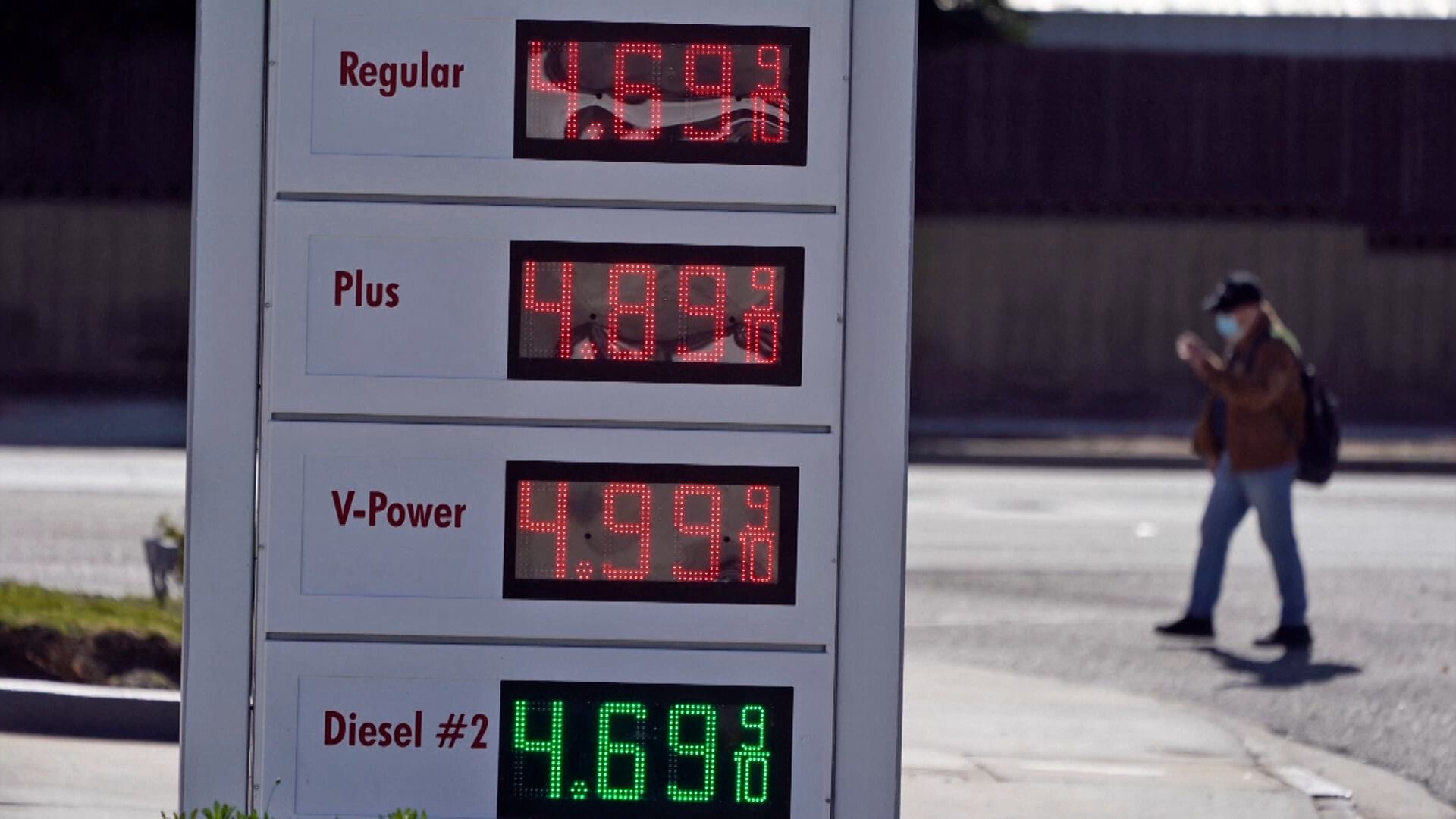
Gas prices have reached their highest level since 2008, topping an average of $4 across the country. The surge comes as Russia's invasion of Ukraine triggers supply concerns in what was already an extremely tight oil market. Jay Hatfield, Chief Investment Officer at ICAP, breaks down why costs at the pump are so high right now, and just how high they could go.
For Fadia Kader, the global head of strategic and media partnerships at social audio app Clubhouse, it's about pushing culture forward and connecting people with the biggest and brightest stars in music and entertainment.