CEO of A.I.-Driven Insurance Start-Up Lemonade Says Mockery Is the Highest Form of Flattery
*By Conor White*
Lemonade, the insurance startup that uses A.I. and chatbots to pay claims within seconds, saw exponential growth in the U.S. in 2018, but the company is setting its sights on Europe for its next phase of expansion.
"We've decided that if people in Berlin, and Tokyo, and New York are using Spotify ($SPOT), and Netflix ($NFLX), and Uber, why not Lemonade?" CEO and co-founder Daniel Schreiber asked in an interview on Cheddar.
The burgeoning company's tech-driven approach has caught the attention of some of its more traditional competitors. That includes State Farm, which [released an ad in October](https://youtu.be/KIWfc9aI1YI) poking fun at artificial intelligence and robots, a not-so-thinly veiled dig at the startup. But Schreiber said he didn't mind the mockery.
"We found it remarkable that ... the largest insurance company in the nation, that \[is\] a thousand times bigger than Lemonade, would spend millions of dollars taking us on," Schreiber said. "I really found that interesting and deeply flattering honestly."
The company even took the unusual step of paying to promote the ad online.
"They're mocking us," Schreiber explained, "but I really think it's a bit of a boomerang that comes back and hurts them much more than it hurts us."
The CEO highlighted some of Lemonade's 2018 accomplishments, including $57 million in sales and increasing the number of homes it insures by more than 300,000.
But Schreiber said he is proudest of his company's reputation with customers.
"You go now to any of the consumer ratings sites, and you'll find that USAA and Lemonade compete for the number one spot in terms of customer satisfaction," he said.
"Growing fast is fabulous," he said, "but if you do it at the expense of customer satisfaction, that's a price not worth paying."
For full interview [click here](https://cheddar.com/videos/lemonade-insurance-plans-european-expansion).
With more companies offering employees flexibility in work schedules, Airbnb is looking to accommodate flexible travel plans. Chief Strategy Officer Nathan Blecharczyk joined Cheddar to discuss the growing trend of people staying in Airbnbs for longer periods of time. "In December over the holidays, in North America, we are seeing a 68 percent increase in the demand for month-long stays relative to years past," he said.
Asad Hussain, lead mobility analyst at data company PitchBook, joined Cheddar to discuss the blockbuster Rivian IPO. The electric truck maker's valuation jumped to more than $90 billion, signaling progress in the "multi-decade transformation in mobility," according to Hussain. He noted that electric automakers like Rivian, Tesla, and Lucid, will continue to lead electrification in being free to innovate and lacking the legacy issues facing traditional, combustion engine carmakers.
Coinbase reported third quarter earnings yesterday and revenue did not at all meet estimates, with the company saying that it also saw a staggering decrease of about 1.4 million customers in comparison to the previous quarter. This comes in the same week where bitcoin and ethereum, two of its most important digital assets hit record highs. Martin Gaspar, research analyst at CrossTower explains how a soft crypto trading quarter contributed to the less-than-ideal revenue outcome.
John Jannarone, Editor-In-Chief at IPOedge.com, joined Wake Up With Cheddar to discuss Riivian ahead of its public debut on the Nasdaq, as investors gear up for the biggest IPO for a U.S. company since Facebook.
DoorDash is set to acquire European-based food delivery company Wolt in an $8.1 billion deal. Ann Berry, chief investment officer at media platform Wheelhouse, joined Cheddar to discuss how this positions DoorDash in the prepared food and potentially the grocery delivery space. "I do think that what DoorDash is trying to be thoughtful about now is how to take that there's been a shift in consumer behavior in terms of mobile ordering and delivery and try and apply it to other categories," she said, also pointing to its partnership with beauty supply company Ulta.
Amazon founder Jeffrey Bezos took to the stage at the U.N.'s COP26 Climate Summit to unveil a new plan to combat climate change, but some say it might do more harm than good. Justine Calma, Science Reporter at The Verge, joined Cheddar to discuss.
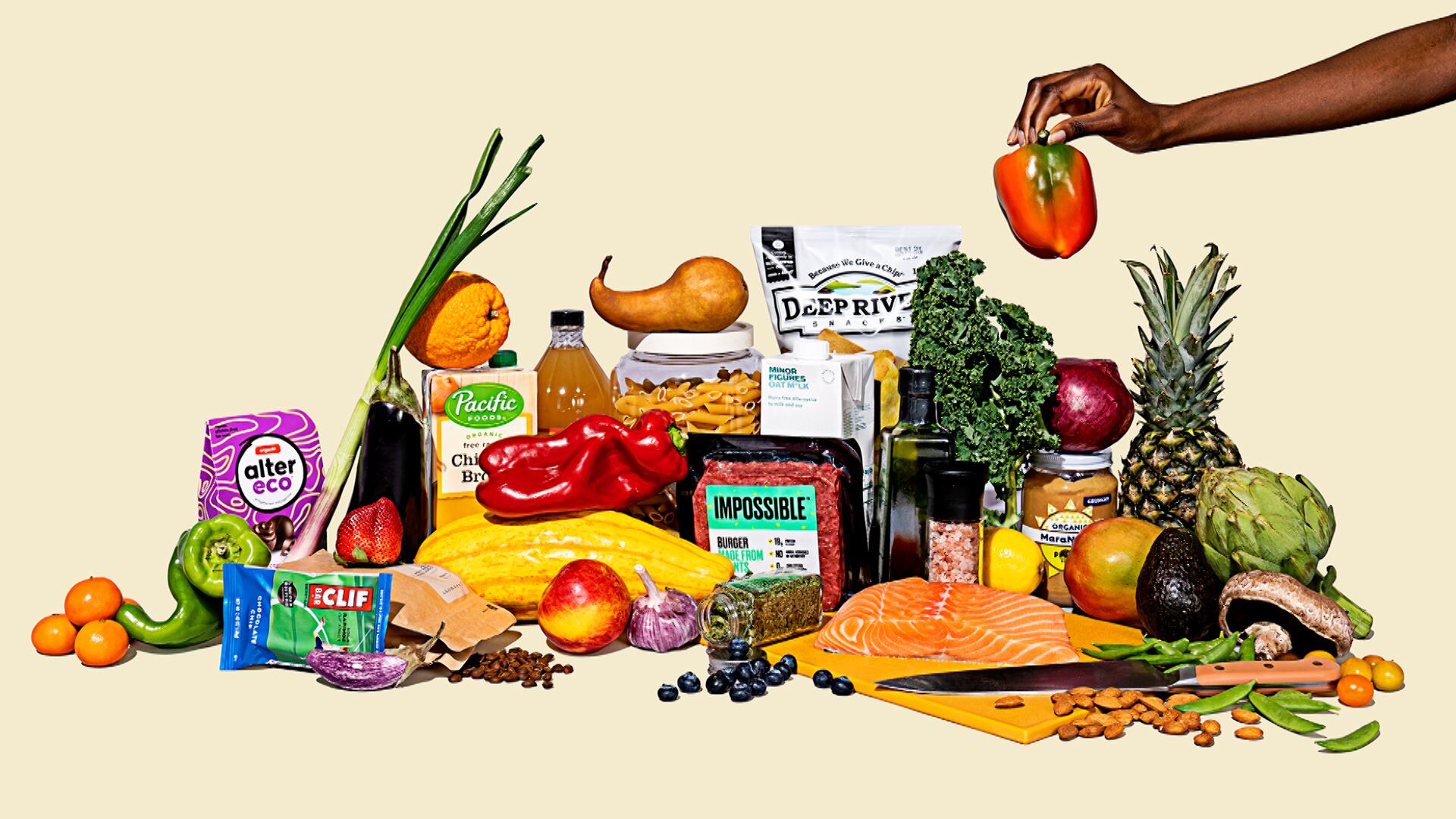
Misfits Market, the grocery delivery company that capitalizes on curbing food waste, expanded into California for the first time on Wednesday. Abhi Ramesh, founder and CEO, joined Cheddar to discuss the launch in the Golden State, after the company's beginnings in Philadelphia and experiencing a wave of growth amid the pandemic. He noted that the expansion was an opportunity to provide West Coast communities with fresh produce as "one in five California households are in food deserts and don't have access to fresh, healthy food."
George Seay, CEO of Annandale Capital, talks about the supply chain issues and labor shortages impacting the tech sector, and where to hedge as inflation rises.
The Justice Department has filed a lawsuit to block Penguin Random House from acquiring its rival Simon & Schuster. The DOJ hopes this will block the merger, which it says would ultimately hurt authors and consumers nationwide. Barry C. Lynn, executive director of the Open Markets Institute, joined Cheddar to explain what the lawsuit signals about the Biden administration's approach to cracking down on antitrust, and why Amazon might be next.
Bryan Freeman, Executive Chairman of Real Good Foods, discusses the need for healthy meal choices in the frozen food space and what expansion for the company looks like.