The Centers for Disease Control and Prevention (CDC) on Monday warned that a deadly fungus called Candida auris (C. auris) is spreading at an "alarming rate" in the U.S. healthcare facilities.
“The rapid rise and geographic spread of cases is concerning and emphasizes the need for continued surveillance, expanded lab capacity, quicker diagnostic tests, and adherence to proven infection prevention and control,” said CDC epidemiologist Dr. Meghan Lyman, lead author of the paper, in a press release.
Adding to the agency's concerns, the number of infections that were resistant to echinocandins, which is the antifungal medicine most commonly used to treat C. auris infections, tripled in 2021.
The CDC classified C. auris as an "urgent antimicrobial resistance (AR) threat," meaning "it is often resistant to multiple antifungal drugs, spreads easily in healthcare facilities, and can cause severe infections with high death rates."
Between 2016, when C. auris was first reported, and 2021, there have been a total of 3,270 clinical cases reported and 7,413 screening cases.
The agency said "poor general infection prevention and control (IPC) practices in healthcare facilities" are responsible for the spread. However, expanded efforts to detect cases is also responsible for the jump in reported cases.
President Joe Biden is calling on global leaders to join him in sharing coronavirus vaccines with struggling nations around the world.
The NFL will spend up to $1 million funding up to five studies that will examine how to better help players ease their pain and find alternatives to opioids.
Turkey’s president has promised to rescue the Marmara Sea from an outbreak of “sea snot” that is alarming marine biologists and environmentalists.
Flights fell 55% in April 2020 compared to April 2019. So, it was shocking to a lot of people that the tiny Ted Stevens Anchorage Airport was bustling.
Government health officials have approved the first drug that they say may help slow Alzheimer’s disease.
California's reservoirs are shrinking quickly as a drought grips the western United States.
A new U.S. government report fails to give a definitive explanation of UFOs spotted by military pilots. It finds no evidence they are linked to aliens — but doesn't deny the possibility either.
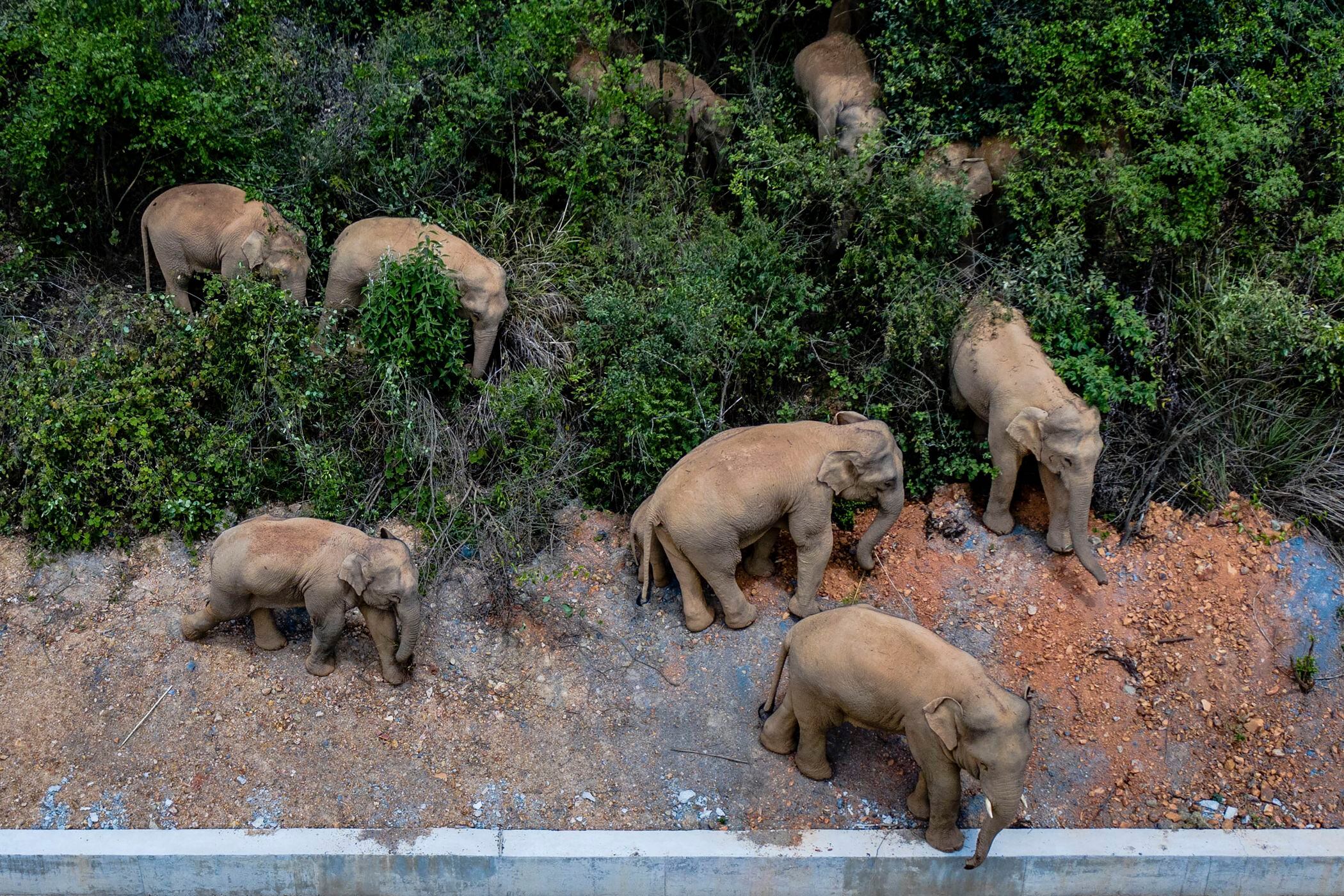
A wandering herd of 15 elephants have been journeying in southwestern China's Kunming, Yunnan Province as local authorities try to keep them away from populated areas.
Critics of bitcoin's energy use argue that its carbon footprint is way out of proportion with its social value, while supporters assert that bitcoin is no different than the rest of the financial system.
NASA is returning to sizzling Venus, our closest yet perhaps most overlooked neighbor, after decades of exploring other worlds.