Cheddar's CannaBiz explores the latest trends, and news in this expanding market of recreational, and medicinal marijuana. Cheddar's Hope King and Baker Machado speak with start-up founders about how they are capitalizing on cannabis.
Legal technology platform CannaRegs is on a mission to make sense of the legal landscape of marijuana for stakeholders in this growing space. The company's founder and CEO Amanda Ostrowitz explains the regulatory landscape for marijuana, and why she was inspired to launch this start-up.
"I realized the only solution to my problem was to build it," says Ostrowitz. "It's actually kind of influencing the way law is being made because we've been able to track it to such a level where the first time a city government even talks about cannabis--we've tracked it."
Colorado Marijuana sales hit $1.5 Billion in 2017, generating nearly $250 million in taxes and fees for the state. The Cannabist's Marijuana Policy and Business Reporter Alicia Wallace explains why the state sales could face a plateau, and lessons other states could learn from Colorado.
"In Colorado the slowing growth is more of an indicator of a mature market," says Wallace. "We're the guinea pig on this, and we've been able to learn a lot of lessons really quick as this industry came out of nowhere here."
Sensi Products recently underwent a complete redesign to make the transition to solely medical marijuana edibles to consumer products for recreational use. The company's co-founder Lisa Tollner explains how her company made this switch, and her outlook for this expanding market in California.
"For the most part it was a pretty straight forward maneuver for us," explains Tollner. "We saw this coming. I would say as early as five or six years ago we felt it was just a matter of time."
Cheddar's CannaBiz airs every Tuesday from 3:30 to 4:00 p.m.
Facebook parent Meta’s miss on Q4 earnings raised alarm bells amongst investors. The tech giant lost users for the first time as it invests a lot into the metaverse, its virtual realm, in the hopes that consumers will move their social media consumption there. The stock dropped around 25 percent on the report, and CEO Mark Zuckerberg chalked it up to people flocking toward apps like TikTok, even as his own platform attempts to make a big pivot to the metaverse future. "It's gonna take a long time to develop and it's gonna take a long time to bring to fruition," Rebecca Walser, president of Walser Wealth Management told Cheddar. "In the meantime, the world is moving on. We have a very short attention span, especially on social media, and we want the short little videos. And Tiktok has just taken off."
Wall Street saw another volatile day after the Federal Reserve left rates unchanged for now, with plans to raise rates in March at its next meeting in order to ease inflation. Fed Chair Jerome Powell said the Fed has not made decisions on the size of rate increases, adding that the Fed is not trying to get inflation below two-percent. Ken Johnson, CFA and Investment Strategy Analyst explains why Powell thinks that high inflation is a significant threat to the labor market.
Ed Butowsky, managing partner at Chapwood Investments, joined Wake Up With Cheddar to break down the disappointing takeaways from Spotify's Q4 earnings report, which sent the stock plunging.
Anu Gaggar, global investment strategist for Commonwealth Financial Network, joined Cheddar News to discuss how global supply chains could be disrupted even further by an armed conflict in Ukraine.
Google parent company Alphabet saw yet another successful quarter reporting its final earnings report for 2021 on Tuesday. The tech giant beat Wall Street expectations across the board with much of that success owed to not only the growth of its cloud business, but also its multi-platform advertising. Joanna O'Connell, Principal Analyst at Forrester explains why advertising may be one of the keys to Alphabet’s future success.
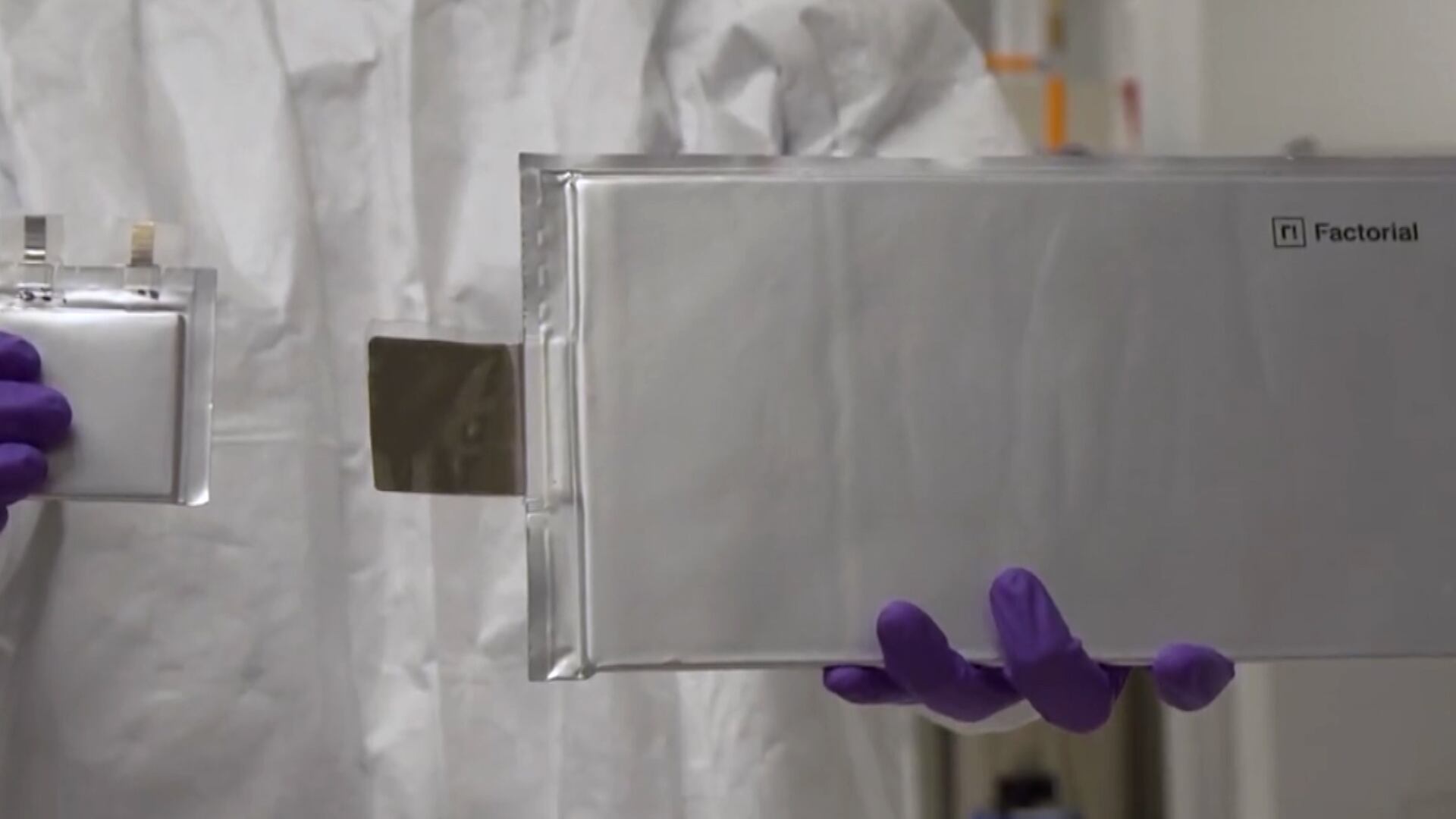
Solid-state battery maker Factorial Energy recently raised $200 million in a Series D round led by Mercedes-Benz and Stellantis. Factorial says the funding will be used to accelerate commercial production and deployment of its solid-state battery technology, which the company says is safer, and offers up to 50% more driving range than current lithium-ion technology. Factorial also has joint development agreements (announced in late 2021) with Mercedes-Benz, Stellantis, and Hyundai, three of the top 10 global automotive manufacturers, to commercialize its batteries. Factorial CEO Siyu Huang joined Cheddar News' Closing Bell to discuss.