By John Seewer, Michael Rubinkam, and Geoff Mulvihill
The crew operating a freight train that derailed in East Palestine, Ohio, did not receive a critical warning about an overheated axle until just before dozens of cars went off the tracks, federal safety investigators said in a report Thursday as U.S. Transportation Secretary Pete Buttigieg made his first visit to the crash site.
An engineer slowed and stopped the train after getting a “critical audible alarm message," according to a preliminary report by the National Transportation Safety Board. The crew then saw fire and smoke and alerted dispatch of a possible derailment, the report said.
The axle investigators are focused on had been heating up as the train went down the tracks, but did not reach the threshold for stopping the train and inspecting it until just before the derailment, the report said. The train was going about 47 mph (75 kph) at the time, just under the speed limit of 50 mph (80 kph), according to safety investigators.
Ohio Republican Lt. Gov. Jon Husted told CNN ahead of the report's release that its findings had the potential to form the basis of a criminal referral from the state. He also said railroad company Norfolk Southern should temporarily relocate people who continue to feel unsafe, or even consider buying their property.
“This is the railroad’s responsibility, and it’s up to the government officials at the federal, state and local levels to hold them accountable and do right by the citizens of East Palestine,” Husted said.
Pennsylvania Gov. Josh Shapiro's administration has already made a criminal referral of Norfolk Southern to the state attorney general’s office.
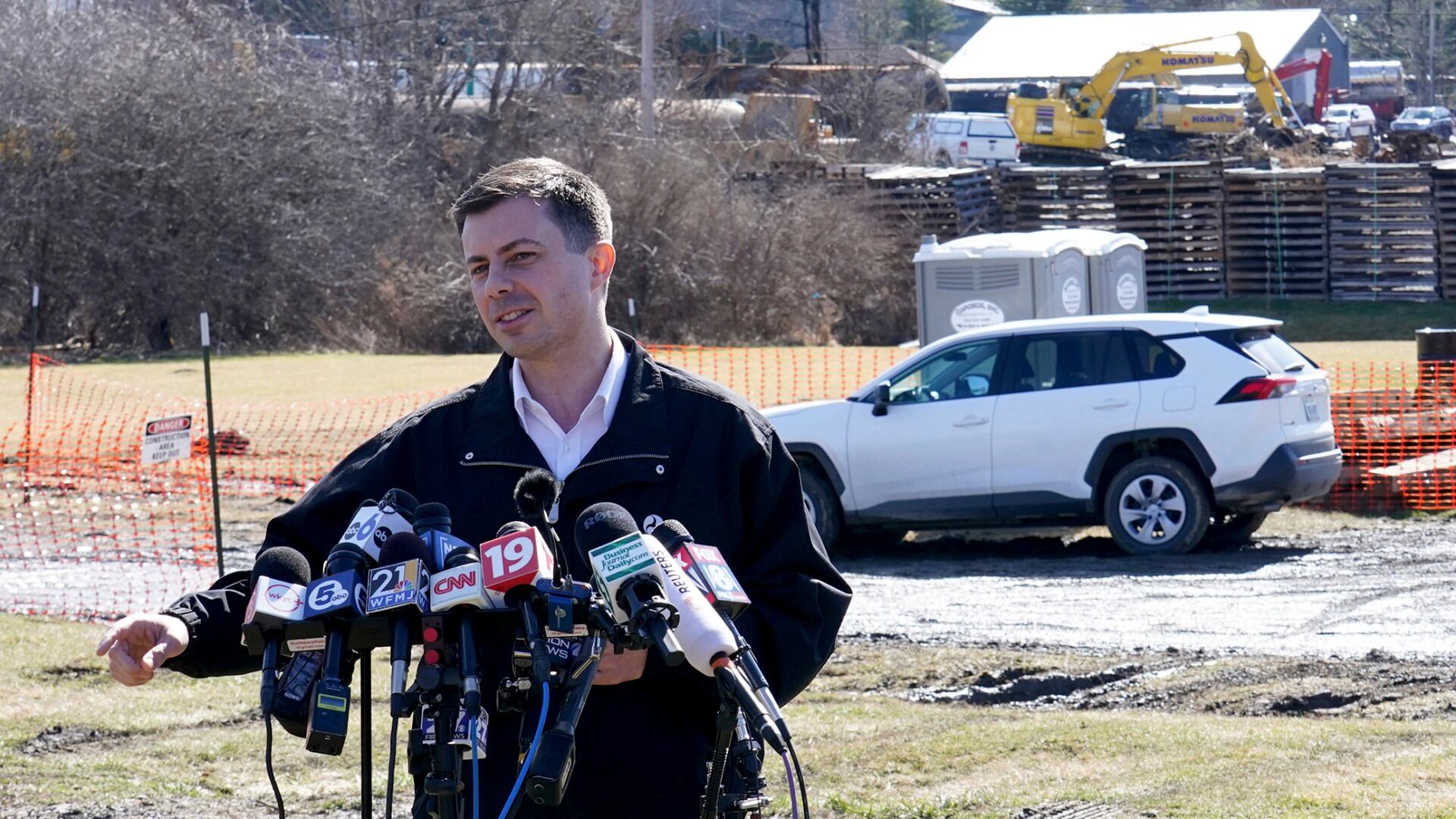
NTSB released its preliminary findings as Buttigieg went on a tour of the crash site Thursday after getting criticized for not coming sooner, and amid mounting criticism of the overall federal response to the Feb. 3 derailment.
Speaking to reporters afterward, Buttigieg said he was “trying to strike the right balance” between showing support on the ground and allowing the safety board to take the lead in the early going.
He praised “the resilience, the resolve and the decency" of the community amid the impact of the disaster itself and the crush of media and political attention.
The Biden White House has defended its response to the train derailment, saying officials from the Environmental Protection Agency, the transportation safety board and other agencies were at the rural site within hours of the derailment. The White House says it has also offered federal assistance and FEMA has been coordinating with the state emergency operations center and other partners.
Another Biden administration official, EPA Administrator Michael Regan, has been to East Palestine multiple times, most recently Tuesday as the EPA ordered Norfolk Southern to pay for the cleanup.
Among those criticizing Buttigieg was former President Donald Trump, who came to Ohio on Wednesday. The Department of Transportation said Buttigieg is visiting now that the EPA has declared the emergency phase of the crash to be over and the start of long-term cleanup efforts is underway.
Asked Thursday about the Trump visit, Buttigieg said that if the former president felt strongly about increased rail safety efforts, "one thing he could do is express support for reversing the deregulation that happened on his watch."
He slammed Norfolk Southern and other freight rail companies for fighting regulations he said would "hold them accountable and the other railroad companies accountable for their safety record. What we’ve seen is the industry goes to Washington and gets their way.” He pressed Congress to act.
Heather Bable, who lives two blocks from the derailment site, said she’s relieved the government’s top brass is finally showing up.
“We need that attention because we weren’t getting it. They should have been here all along,” said Bable, who was among the throngs of residents lining the streets in pouring rain to welcome Trump on Wednesday.
The reception for Buttigieg was decidedly more muted, with little fanfare around the village of just under 5,000 residents. Trump won nearly 72% of the vote in this heavily Republican region in the 2020 election.
Buttigieg's visit came nearly three weeks after more than three dozen freight cars — including 11 carrying hazardous materials — derailed on the East Palestine outskirts, near the Pennsylvania state line, prompting an evacuation as fears grew about a potential explosion of smoldering wreckage.
Officials seeking to avoid an uncontrolled blast intentionally released and burned toxic vinyl chloride from five rail cars, sending flames and black smoke high into the sky. That left people questioning the potential health effects even as authorities maintained they were doing their best to protect people.
As remediation of the site continued, Norfolk Southern announced late Wednesday it had agreed to excavate the soil under two tracks. Ohio Gov. Mike DeWine had called out the railroad company's failure to address the contaminated soil underneath its tracks before repairing them and running freight again.
“Our original plan would have effectively and safely remediated the soil under our tracks. As I listened to community members over the past two weeks, they shared with me their concerns about that approach. I appreciate the direct feedback, and I am addressing it," Norfolk Southern President and CEO Alan H. Shaw said in a written statement.
Democratic U.S. Rep. Chris Deluzio, whose Pennsylvania district borders the East Palestine disaster site, asked Norfolk Southern to expand the boundaries of the geographic zone in which it is providing financial assistance and testing. He asserted the current zone excludes many affected Pennsylvania residents and businesses, and said the company should commit to cleaning up soil and water up to 30 miles (48 kilometers) beyond it.
“Norfolk Southern is failing to show any commitment to rebuilding lost trust in our community,” Deluzio wrote in a letter to Shaw. Providing additional resources “would help your company restore the sense of security that the Norfolk Southern train derailment and its aftermath destroyed.”
The president of the Ohio Senate, meanwhile, announced a public hearing on the derailment next week to hear testimony from state officials.
___
Rubinkam reported from northeastern Pennsylvania and Mulvihill reported from Cherry Hill, New Jersey. Associated Press writer Julie Carr Smyth in Columbus, Ohio, contributed to this report.
Updates with comments by Buttigieg. Rewrites headline. Adds photos. With AP Photos. EDITS: Recasts lead. Minor editing.