By Danica Kirka
The British Museum said Wednesday that a member of its staff has been dismissed after items dating back as far as the 15th century B.C. were found to be missing, stolen or damaged.
The museum said it has also ordered an independent review of security and a ‘‘vigorous program to recover the missing items.″
The stolen artifacts include gold jewelry and gems of semi-precious stones and glass dating from the 15th century B.C. to the 19th century A.D. Most were small items kept in a storeroom and none had been on display recently, the museum said.
“Our priority is now threefold: first, to recover the stolen items; second, to find out what, if anything, could have been done to stop this; and third, to do whatever it takes, with investment in security and collection records, to make sure this doesn’t happen again,″ said George Osborne, the museum’s chair.
“This incident only reinforces the case for the reimagination of the museum we have embarked upon," Osborne said.
The museum said legal action would be taken against the dismissed staff member and that the matter was under investigation by London’s Metropolitan Police Service.
The 264-year-old British Museum is a major London tourist attraction, drawing visitors from around the world who come to see a vast collection of artifacts ranging from the Rosetta Stone that unlocked the language of ancient Egypt to scrolls bearing 12th century Chinese poetry and masks created by the indigenous people of Canada.
But the museum has also attracted controversy because it has resisted calls from communities around the world to return items of historical significance that were acquired during the era of the British Empire. The most famous of these disputes include marble carvings from the Parthenon in Greece and the Benin bronzes from west Africa.
Hartwig Fischer, the director of the British Museum, apologized and said the institution was determined to put things right.
“This is a highly unusual incident,'' said Fischer said. “I know I speak for all colleagues when I say that we take the safeguarding of all the items in our care extremely seriously.''
These are the headlines you Need 2 Know for Monday, Jan. 14, 2019.
From Wall Street to Silicon Valley, these are the top stories that moved markets and had investors, business leaders, and entrepreneurs talking this week on Cheddar.
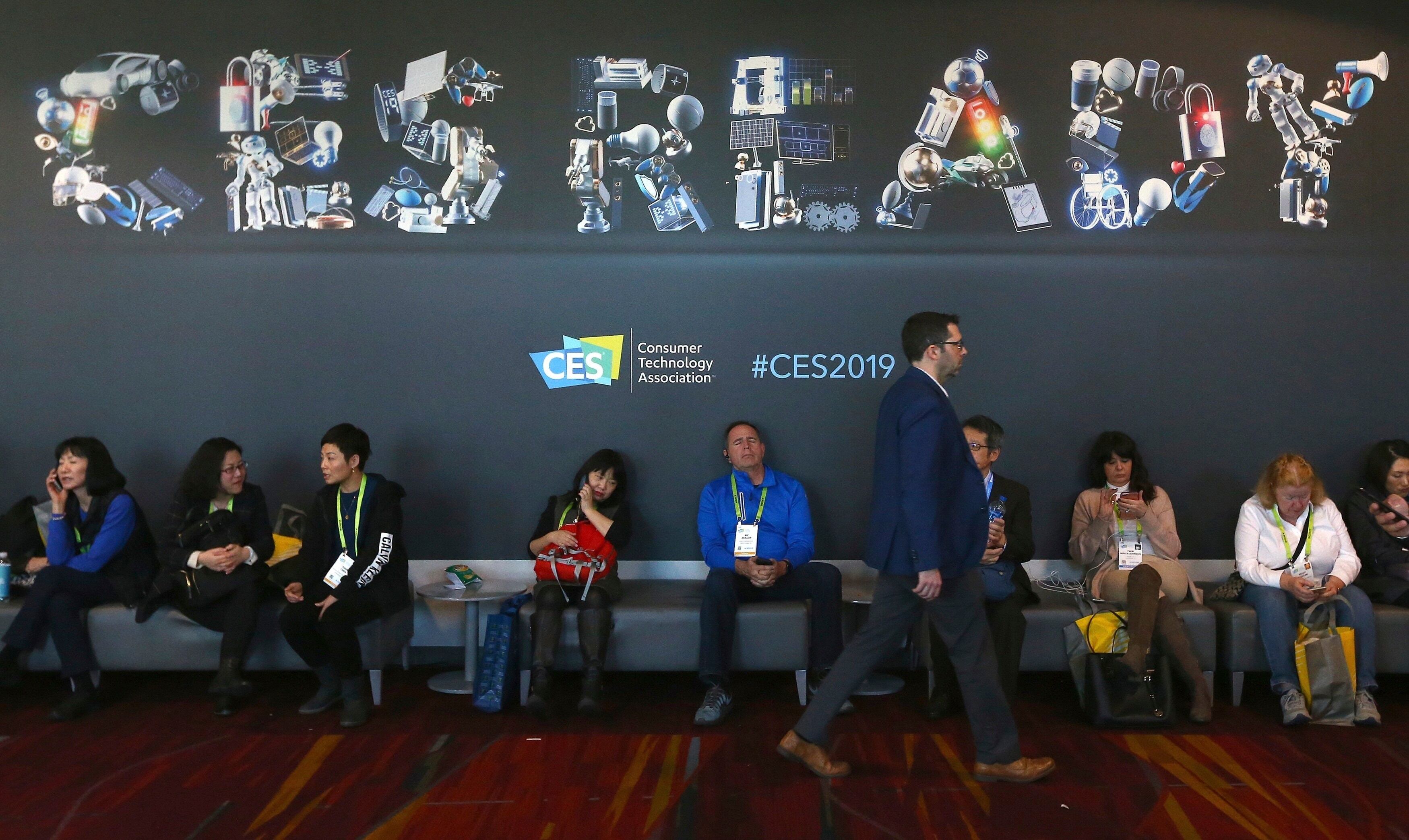
Cheddar's Hope King looks back at her first trip to the Consumer Electronics Show in Las Vegas.
Self-driving innovators need to earn the trust of drivers ー and that starts with transparency, said Jack Weast, chief systems architect for Autonomous Driving Solutions at Intel. "We feel the industry has a responsibility to be more open and transparent about how the technology works, especially when it comes to decision- making, which is really at the heart of what it means to drive safely," Weast told Cheddar's Tamara Warren from the floor of the CES convention in Las Vegas.
The future is all-electric ー at least for General Motors, the carmaker's Chairwoman and CEO Mary Barra said on Cheddar Friday. "At General Motors, we believe in an all-electric future," Barra told Betty Liu, executive vice chairman for the New York Stock Exchange, through a special partnership between Cheddar and NYSE. "We believe that's the path forward, and that's why we are dedicating resources to build on the Chevrolet Volt first and second generations, now the Chevrolet Bolt EV."
The housing market is slowing down ー and that's not necessarily a bad thing. So says Tendayi Kapfidze, chief economist for LendingTree, who told Cheddar Friday what to expect from the housing market this year.
These are the headlines you Need 2 Know for Friday, Jan. 11, 2019.
Bitcoin's rebound over the $4,000 mark was short-lived, tumbling on Thursday below the $4,000 price level for the first time since Jan. 6. "I think it is a good chance we are going to retest 3,000 as a low and there is a good chance it will probably break through that ー if it hits that low," said Civic CEO Vinny Lingham in an interview with Cheddar. "The market is definitely trying to find a bottom, and I don't think we've found one yet."
Adoption of new technology won't necessarily cause jobs to disappear ー even if that technology is a humanoid robot, said Steve Carlin, the chief strategy officer of SoftBank Robotics America. "I think the incorrect assumption is simply because you're employing technology, that therefore a job has to go away," Carlin told Cheddar's Hope King on Thursday.
The 61st annual GRAMMYs awards show is just weeks away, carrying the new slogan "Let's Hear It." Evan Greene, CMO of the GRAMMYs and the Recording Academy, explains what the motto means ahead of the big night.