By Stan Choe and Alex Veiga
Bond yields fell to more record lows as investors continue to demand safety and unload stocks. The yield on the 10-year Treasury note sank as low as 0.66 percent as investors worried that economic damage from the spreading virus outbreak will be worse than previously thought. Major indexes ended down 1 percent or more after clawing back much larger losses earlier in the day. The topsy-turvey trading came in the third week of market convulsions as traders try to assess how bad and how long the economic fallout will last. The price of oil plunged 10 percent, its worst drop in more than five years.
THIS IS A BREAKING NEWS UPDATE. AP's earlier story follows below:
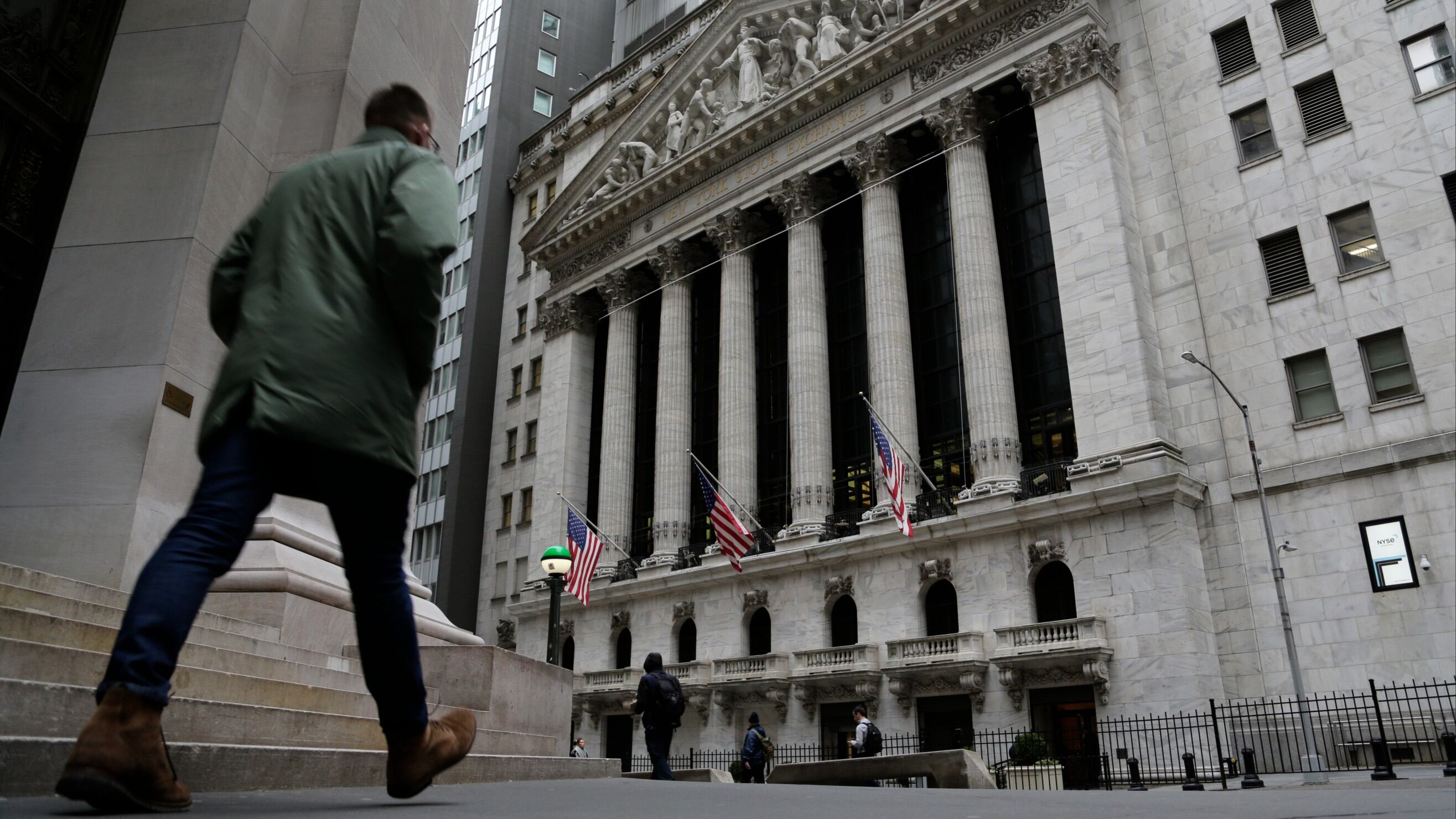
Stocks kept falling Friday, and bond yields took more breathtaking drops as a brutal, dizzying couple weeks of trading showed no sign of letting up.
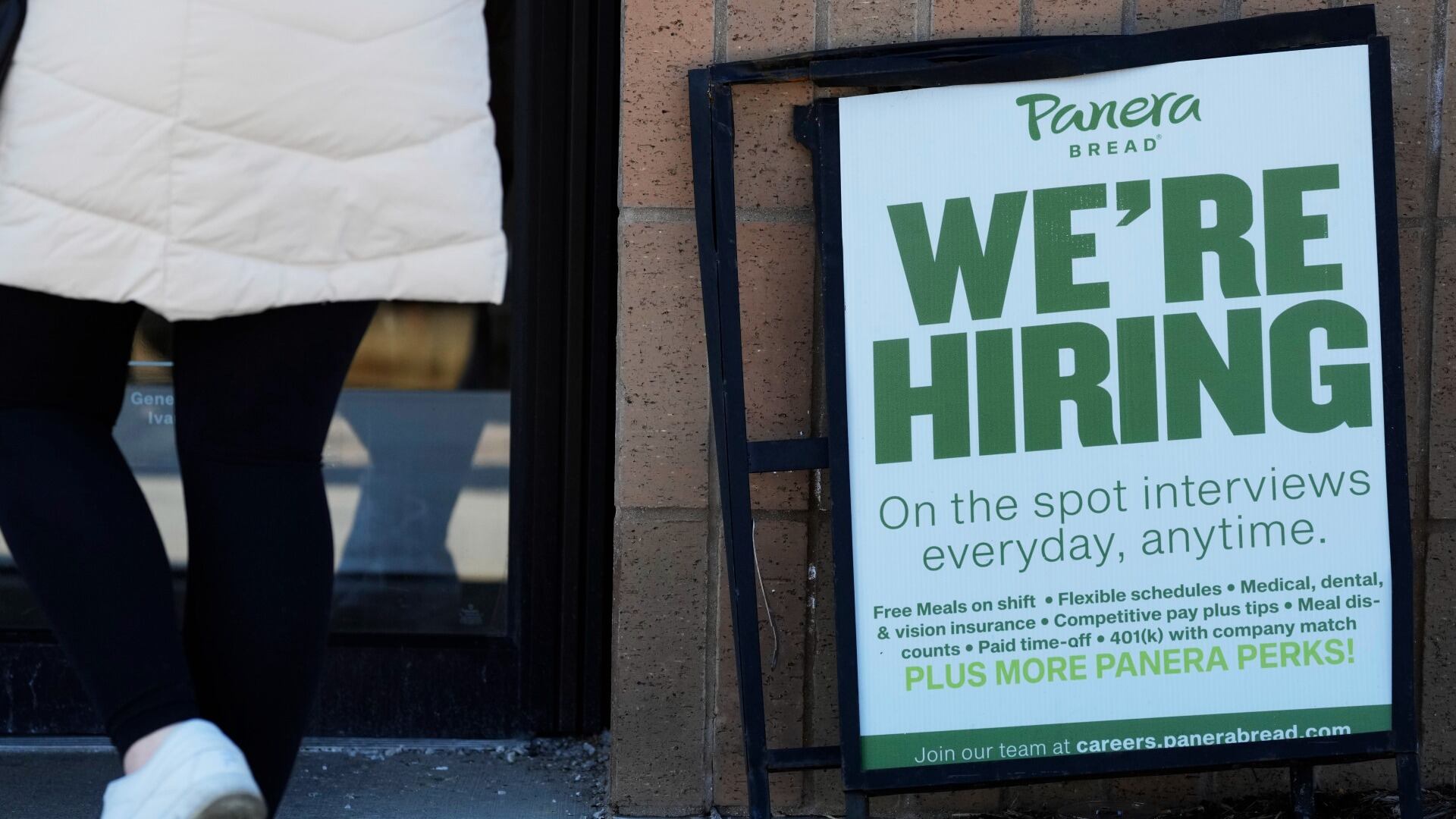
Even a better-than-expected report on U.S. jobs wasn't enough to pull markets from the undertow. It's usually the most anticipated piece of economic data each month, but investors looked past February's solid hiring numbers because they came from before the new coronavirus was spreading quickly across the country.
Fear coursed across borders and across markets. The lowlight was another plunge in Treasury yields to record lows. The 10-year yield falls when investors are worried about a weaker economy and inflation, and it sank below 0.70 percent. Earlier this week, it had never in history been below 1 percent. It was at 1.90 percent at the start of the year, before the virus fears took hold.
"The bond market says the monster under the bed is much bigger and scarier than anyone expects right now," said Ryan Detrick, senior market strategist at LPL Financial.
U.S. stock indexes slumped more than 3 percent in afternoon trading, following 3 percent losses for Europe and 2 percent losses for Asia. Crude oil lost 10 percent for its worst day in five years on worries that producers won't cut supplies enough to match the falling demand from a virus-weakened economy. A measure of fear in the U.S. stock market shot up 20 percent.
At the heart of the drops is the fear of the unknown. The virus usually causes only mild to moderate symptoms. But because it's new, experts aren't sure how far it will spread and how much damage it will ultimately do, both to health and to the economy.
At first, economists expected the virus to impact mostly China, causing just a short-term disruption with a quick rebound. That's what happened when SARS hit China and Hong Kong in 2003.
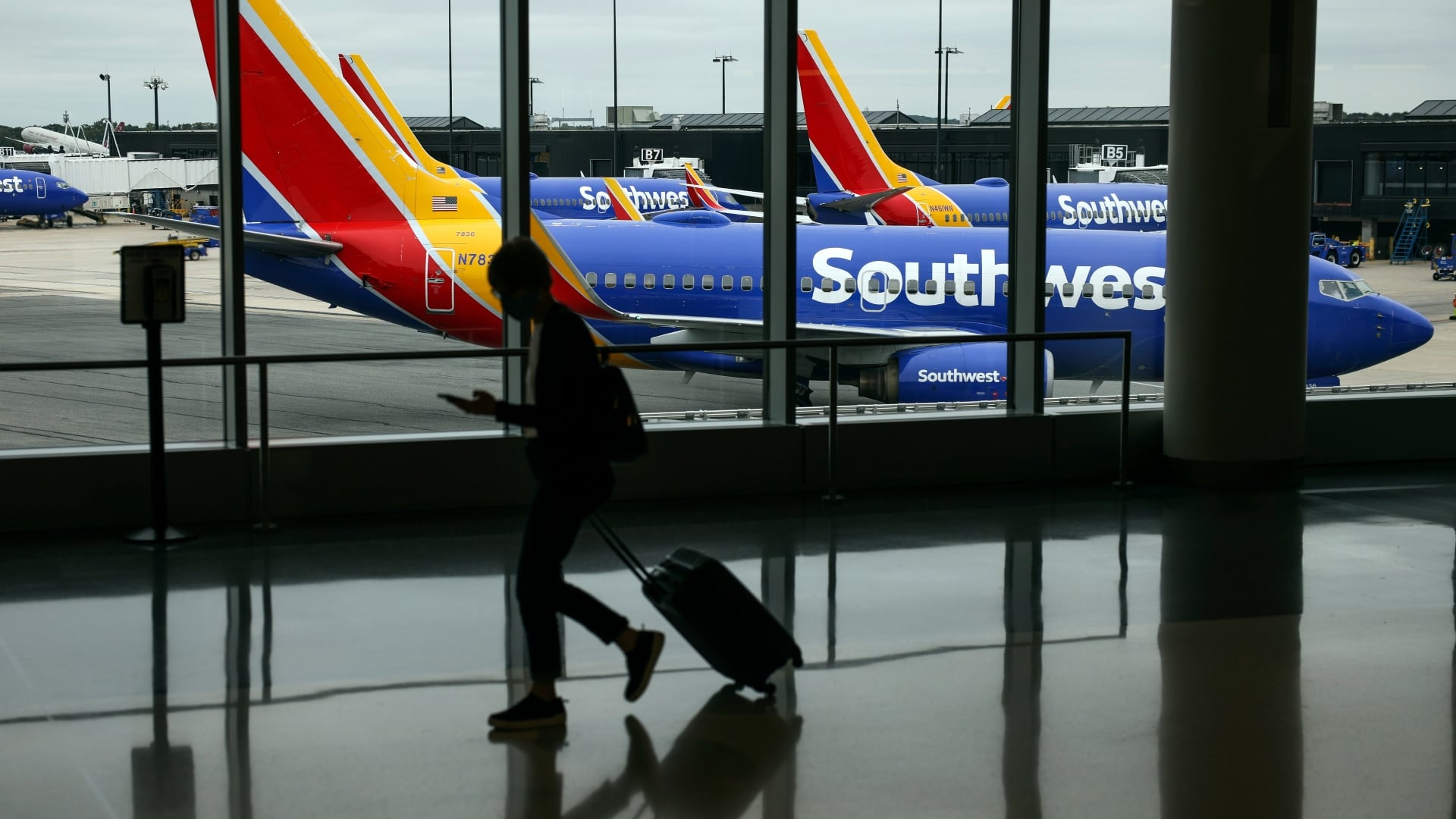
But the virus broke out of China, the number of infections has topped 100,000 worldwide and businesses are reporting hits to their earnings. Apple has said slowdowns in manufacturing iPhones in China is hurting its sales, and an airline industry group says the outbreak could erase as much as $113 billion in revenue.
The Organization for Economic Cooperation and Development this week cut its forecast for 2020 global economic growth to 2.4 percent from 2.9 percent.
Not knowing how bad the outbreak will ultimately get, some investors are simply selling. Many analysts and professional investors say they expect the market's sharp swings to continue as long as the number of new cases accelerates.
The S&P 500 was down 3.8 percent, as of 2:55 p.m. Eastern time, the latest swing in a remarkably turbulent week. It started off with a 4.6 percent jump on Monday, then fell 2.8 percent, rose 4.2 percent and fell 3.4 percent.
"At this point no one can really explain why the markets behave the way they do, and what may be next," said Ipek Ozkardeskaya, a senior analyst at Swissquote Bank. "The only thing we can say is this high volatility is bad."
The S&P 500 is on pace to swing more than 2 percent in either direction over five straight days for the first time since December 2008. That was during the depths of the financial crisis.
It was only two weeks ago that the S&P 500 set a record high, on Feb. 19. It's lost nearly 14 percent since then.
Some investors at the time warned the market was too expensive. They said corporate profits would need to jump in 2020 to justify record prices. Wall Street was indeed forecasting a solid rise for this year, but the virus has put that under threat.
The bond market sounded the alarm on the effects of the virus long before the stock market, and yields fell further Friday.
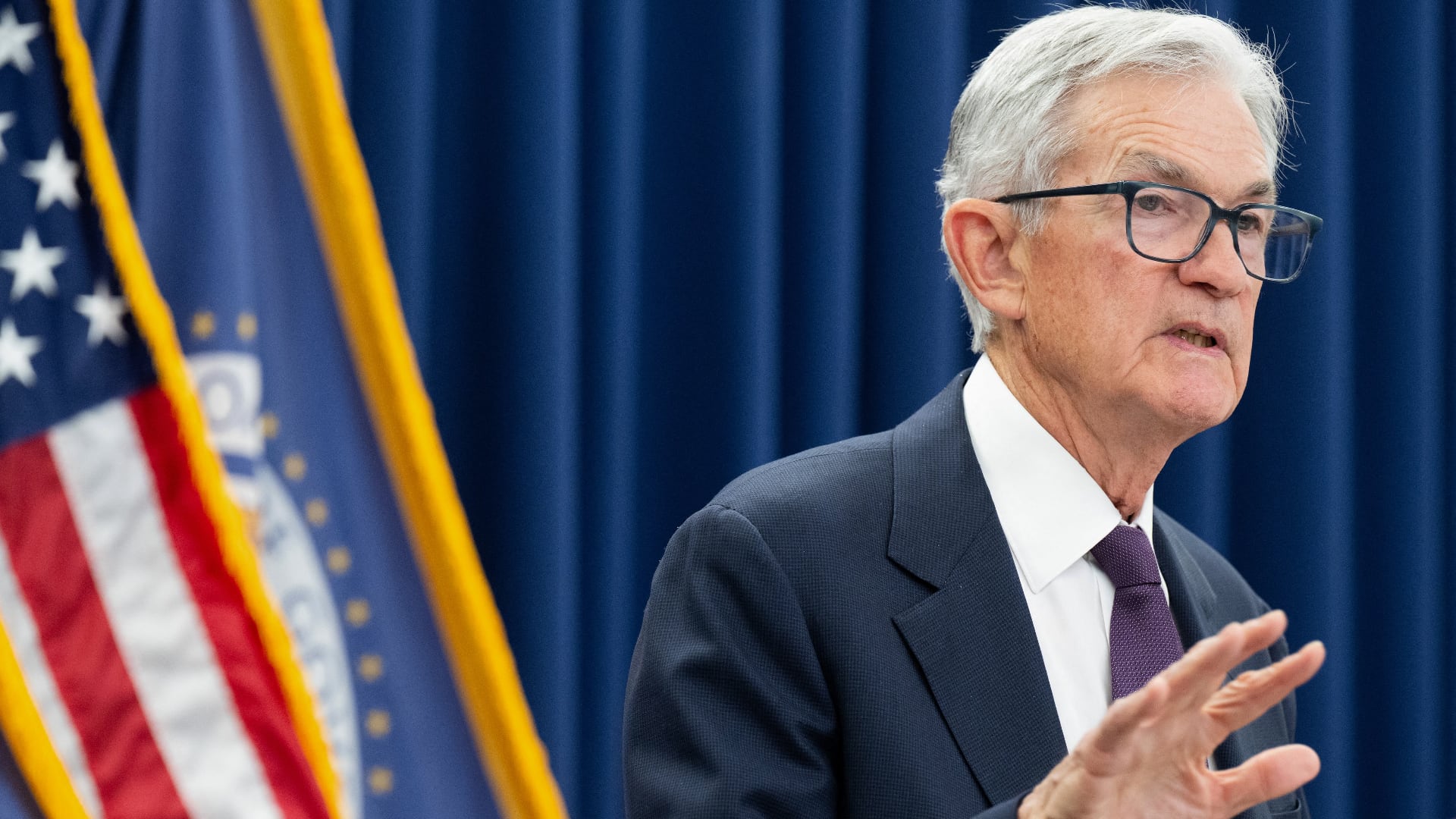
The Fed surprised the market earlier this week by cutting interest rates half a percentage point. Investors expect other central banks around the world to follow suit in hopes of supporting markets.
"If you have everybody stimulating at the same time, it will help global trade," said Paul Christopher, head of global market strategy for Wells Fargo Investment Institute.
At the same time, doubts are high about how much effect lower rates can have. Cheaper loans may encourage people and businesses to make big purchases, but they can't get workers back into factories if they're out on quarantine.
A boost for stocks came earlier this week after Congress agreed on an $8.3 billion bill to combat the coronavirus, which President Donald Trump signed Friday. But investors say a slowdown in the economy seems inevitable, and they need infection rates to slow before turning more optimistic.
"As the market tries to find its bottom, it's going to go up and down, up and down, until it has a reason to steadily change in one direction or the other," said Adam Taback, chief investment officer for Wells Fargo Private Bank.
"We're waiting on data that won't be out for a while," he said. "We're waiting to see the number of coronavirus cases go down, and they're still going up, in the United States especially."
MARKET ROUNDUP:
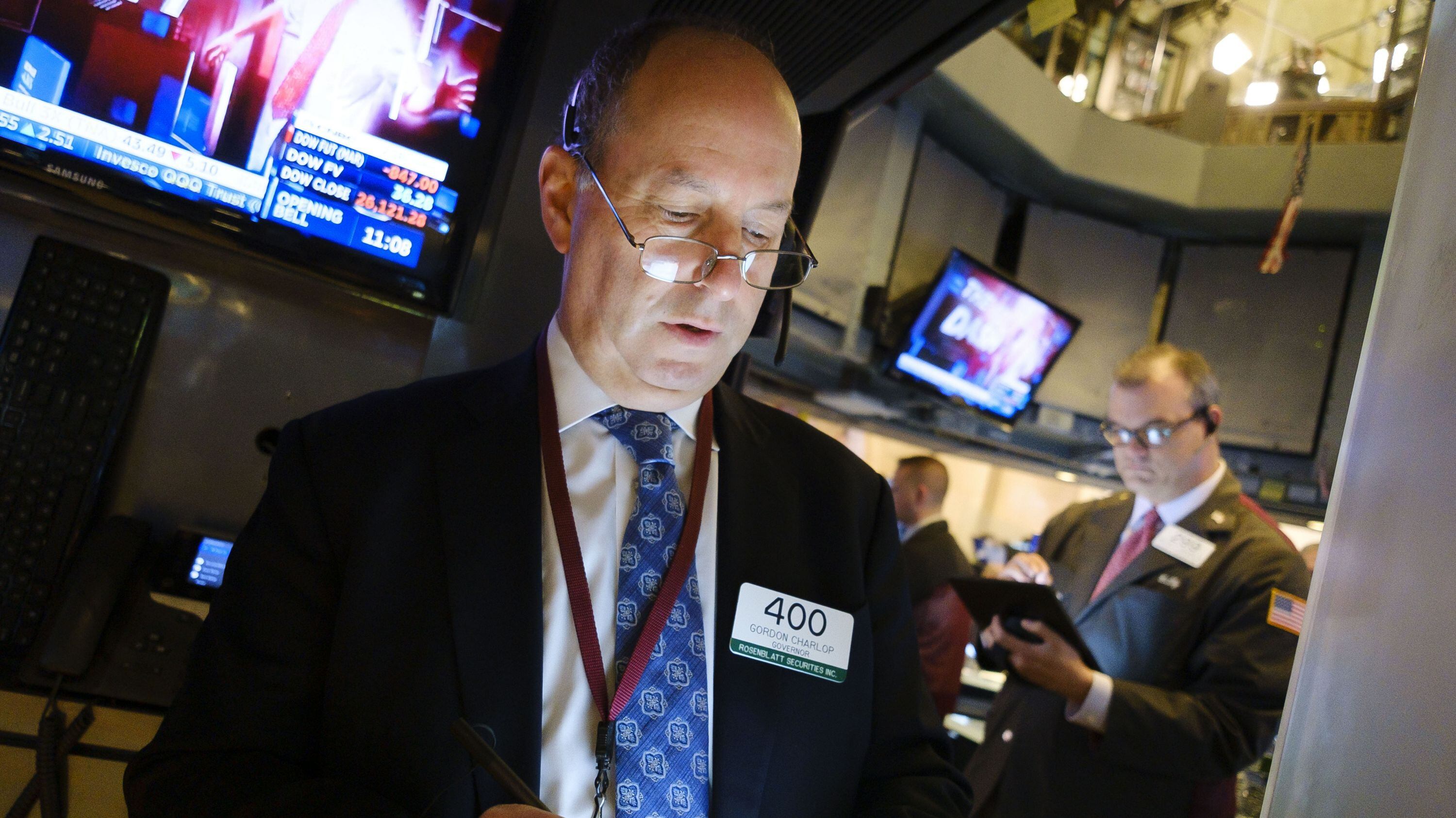
The Dow Jones Industrial Average lost 792 points, or 3 percent, to 25,329. The Nasdaq fell 3.8 percent.
The yield on the 10-year Treasury dropped to 0.69 percent from 0.92 percent late Thursday.
Benchmark U.S. crude tumbled $4.62, or 10.1 percent, to settle at $41.28 per barrel. Brent crude, the international standard, dropped $4.72, or 9.4 percent, to $45.27.
In Europe, the French CAC 40 dropped 4.1 percent, and the German DAX lost 3.4 percent. The FTSE 100 in London fell 3.6 percent.
Japan's Nikkei 225 fell 2.7 percent, South Korea's Kospi lost 2.2 percent and stocks in Shanghai dropped 1.2 percent.
Gold rose $4.40 to settle at $1,672.40 per ounce. Silver fell 13 cents to $17.26 an ounce, and copper slipped 1 cent to $2.56 a pound.
Wholesale gasoline fell 13 cents to $1.39 a gallon, heating oil fell 10 cents to $1.39 a gallon and natural gas lost 6 cents to $1.71 per 1,000 cubic feet.
___
AP Economics Writer Paul Wiseman and AP Business Writers Damian J. Troise and Yuri Kageyama contributed.