By Lisa Mascaro and Alan Fram
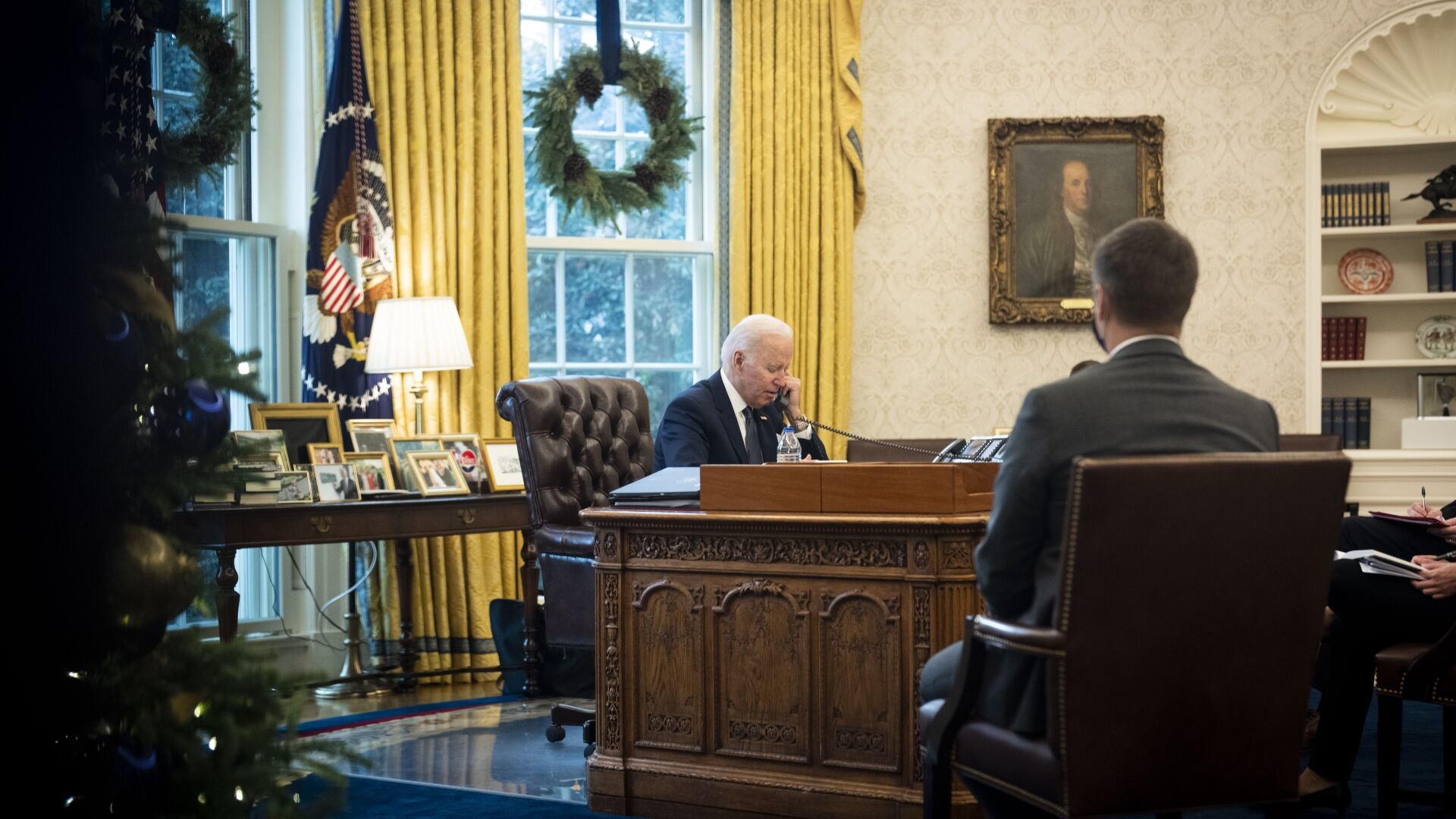
Pressure mounting, President Joe Biden and Democrats in Congress strained Tuesday to trim back his $3.5 trillion government overhaul to win support from two key holdout senators ahead of make-or-break deadlines for votes.
Child care subsidies could be offered for several years, or just a few. Funding to expand dental, vision and hearing care for seniors is likely to start later. Tax hikes on corporations and the wealthy may be adjusted. And provisions to fight climate change or curb prescription drug prices could change.
With Republicans solidly opposed and no votes to spare, Democrats are struggling to adjust the tax proposals and spending goals to meet the overall size demanded by party colleagues Joe Manchin of West Virginia and Kyrsten Sinema of Arizona. The two say Biden's plan is too big but are publicly quiet about a number they can live with.
The president was meeting separately with them seeking agreement before a Thursday test vote.
Assuming nothing, House Speaker Nancy Pelosi told reporters at the Capitol, “In the next day or so we hope to come to a place where we can all move forward."
The stakes are as high as ever as Biden and his party try to accomplish a giant legislative lift, promising a vast rewrite of the nation's tax priorities and spending goals with an oh-so-slim majority in Congress.
Biden is under pressure to close the deal with Manchin and Sinema who are seen as linchpins for the final package. The two centrist senators have said they can't support the proposed price tag and are now being pressed to say how high they are willing to go.
And it's not just Biden's fellow Democrats in the Senate. A small number of House Democrats also are bristling at the far-reaching scope of Biden's domestic agenda and demanding changes before agreeing to vote yes.
“We’re obviously at a very sensitive time,” said White House press secretary Jen Psaki.
The president, she said, is “not going to tell anyone what to do. He’s going to have a discussion, have an engagement.”
The closed-door talks come after Republican senators for a second time blocked a bill to keep the government operating past Thursday and allow federal borrowing, risking a federal shutdown and devastating debt default — though both seem highly unlikely.
Democrats said they will try again before Thursday’s deadline to pass a bill funding government operations past the Sept. 30 fiscal year-end, likely stripping out the more-heated debate over the debt limit for another day, closer to a separate October deadline.
Taken together, it's all putting the entire Biden agenda perilously closer to collapse, with consequences certain to shape his presidency and the lawmakers' political futures.
Treasury Secretary Janet Yellen told Congress in a letter Tuesday that Oct. 18 is a critical date — when the Treasury Department will likely exhaust all of its “extraordinary measures” being taken to avoid a default on the government’s obligations.
Yellen urged Congress to “protect the full faith and credit of the United States by acting as soon as possible” to either raise the debt limit or suspend it.
Meanwhile, the behind the scenes action over the $3.5 trillion measure is testing Biden's grip on his party, as he seeks a once-in-a-generation reworking of the nation’s balance sheets.
Applying pressure, progressives are unwavering so far in their refusal to go along with a vote expected Thursday on a companion bill, a $1 trillion public works measure that they say is too meager without Biden's bigger package assured.
Rep. Pramila Jayapal, D-Wash., the chair of the Congressional Progressive Caucus, said they have the votes to derail the smaller bill unless it comes with Biden's broader one — tacit pressure on the holdouts to arrive at a deal.
“This agenda is not some fringe wish list: it is the president’s agenda, the Democratic agenda, and what we all promised voters,” she said in a statement.
With all Republicans opposed to the big bill, Democratic leaders can’t spare a single vote in the 50-50 Senate, relying on Vice President Kamala Harris to break a tie to pass the eventual package.
Physically holding up the 2,000-plus page bill, Republican Sen. John Barrasso of Wyoming warned it was nothing but “big government socialism.”
“This bill represents Bernie Sanders' socialist dream. It is a nightmare for American taxpayers,” he said.
Biden insists the price tag actually will be zero because the expansion of government programs would be largely paid for with higher taxes on corporations and the wealthy — businesses earning more than $5 million a year, and individuals earning more than $400,000 a year, or $450,000 for couples.
To lower the price tag and win over centrist Democrats, it’s not necessary that any specific programs be get axed, those familiar with the process have said.
Rather, lawmakers are eyeing ways to adjust the scope and duration of some of Biden’s proposals.
For example, instead of immediately launching the massive expansion of the Medicare program for seniors by allowing them to qualify for vision, dental and hearing aid benefits, changes might be spaced out to save money.
The corporate tax hikes, proposed to spike from 21% to 26.5% under the House's version of Biden's bill, could shift again in talks with the Senate Democrats.
Failing to fund all the program expansions indefinitely could well be seen as a loss for Democrats. But some see the built-in deadlines as a chance to revisit the issues again — likely during election years when both sides can argue their cases to voters.
Tensions are flaring at the Capitol as the contours of Biden's big agenda come into focus at the same time as a Democrat-Republican standoff over normally routine votes to fund the government and prevent a federal debt default.
For a second day on Tuesday, Senate Republicans rejected an effort to ease the nation's debt limit to avoid a dangerous default on its payments for past bills.
Republican leader Mitch McConnell grew testy with reporters when asked about Yellen's warning that Congress must swiftly resolve the issue.
“Of course the debt ceiling has to be raised,” he said. But he insisted Democrats shoulder the unpopular vote on their own.
On Monday, Republicans had rejected the Democrats' effort to link the debt ceiling vote to the must-pass funding bill to keep government running.
An exasperated Senate Majority Leader Chuck Schumer said, "It is clear insanity and disaster are now the Republican party line."
___
Associated Press writers Kevin Freking, Zeke Miller, Ricardo Alonso-Zaldivar and Darlene Superville contributed to this report.