By Chris Megerian and Seung Min Kim
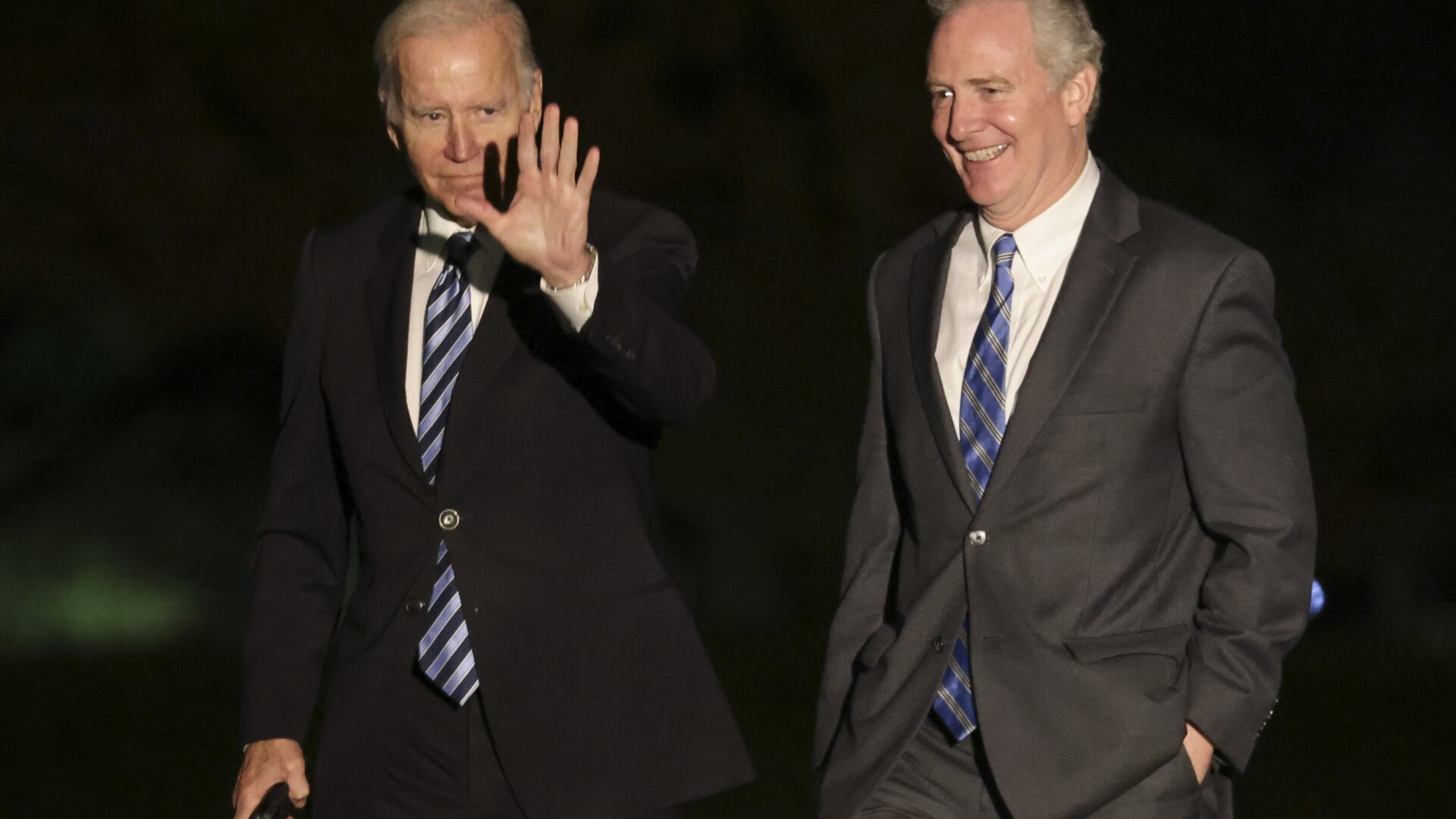
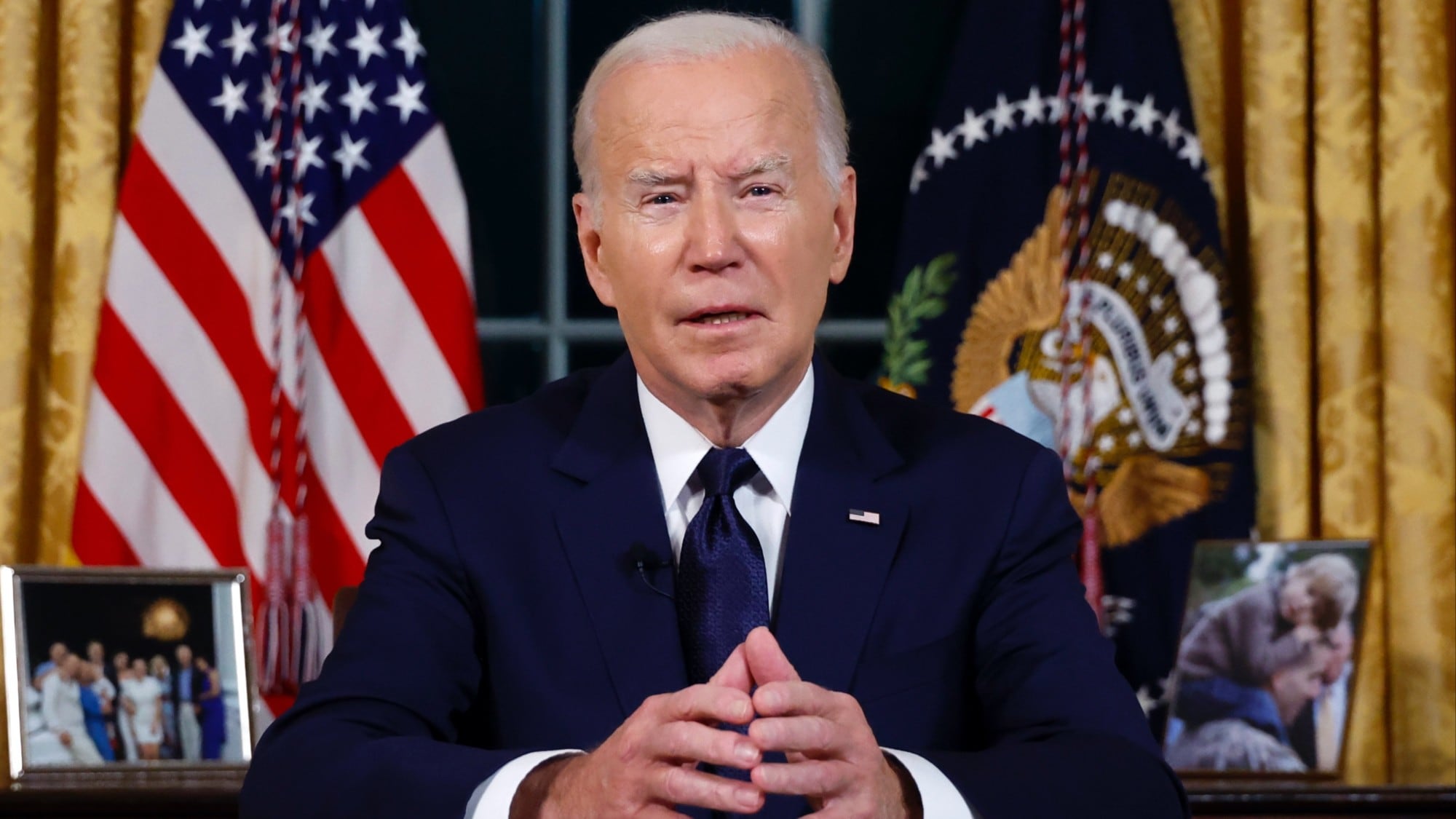
Declaring that U.S. leadership "holds the world together,” President Joe Biden told Americans on Thursday night the country must deepen its support of Ukraine and Israel in the middle of two vastly different, unpredictable and bloody wars.
Acknowledging that “these conflicts can seem far away,” Biden insisted in a rare Oval Office address that they remain “vital for America’s national security" as he prepared to ask Congress for billions of dollars in military assistance for both countries.
“History has taught us when terrorists don’t pay a price for their terror, when dictators don’t pay a price for their aggression, they cause more chaos and death and more destruction,” Biden said. “They keep going. And the cost and the threat to America and the world keep rising.”
Biden’s speech reflected an expansive view of U.S. obligations overseas at a time when he faces political resistance at home to additional funding. He's expected to ask for $105 billion on Friday, including $60 billion for Ukraine, much of which would replenish U.S. weapons stockpiles provided earlier.
There’s also $14 billion for Israel, $10 billion for unspecified humanitarian efforts, $14 billion for managing the U.S.-Mexico border and fighting fentanyl trafficking and $7 billion for the Indo-Pacific region, which includes Taiwan. The proposal was described by three people familiar with the details who insisted on anonymity before the official announcement.
“It’s a smart investment that’s going to pay dividends for American security for generations,” Biden said.
He hopes that combining all of these issues into one piece of legislation will create the necessary coalition for congressional approval. His speech came the day after his high-stakes trip to Israel, where he showed solidarity with the country after the Oct. 7 attack by Hamas and pushed for more humanitarian assistance to Palestinians.
With Israel continuing to bombard the Gaza Strip and preparing a ground invasion, Biden placed an increased emphasis on the deadly toll that the conflict has had on civilians there, saying he's “heartbroken by the tragic loss of Palestinian life."
“Israel and Palestinians equally deserve to live in safety, dignity and peace,” Biden said. He also warned about a rising tide of antisemitism and Islamophobia in the U.S., noting the killing of Wadea Alfayoumi, a 6-year-old Palestinian-American boy.
“To all you hurting, I want you to know I see you. You belong," Biden said. "And I want to say this to you. You're all Americans.”
The White House said that after his speech, the president and first lady Jill Biden spoke over the phone with Wadea’s father and uncle to express their “deepest condolences" and share their prayers for the recovery of the boy's mother, who was also stabbed.
Biden included in his remarks a warning to Iran's leaders, who have supported Hamas in Gaza and Russia's invasion of Ukraine, and said the U.S. “will continue to hold them accountable.”
As Biden seeks a second term in a campaign that will likely hinge on voters' feeling about the economy, he was careful to emphasize that the spending will create jobs for U.S. workers, referencing the construction of missiles in Arizona and artillery shells in Pennsylvania, Ohio and Texas.
And he worked in a nod to one of his political heroes, Franklin Delano Roosevelt, by saying that “just as in World War II,” the country is “building the arsenal of democracy and serving the cause of freedom.”
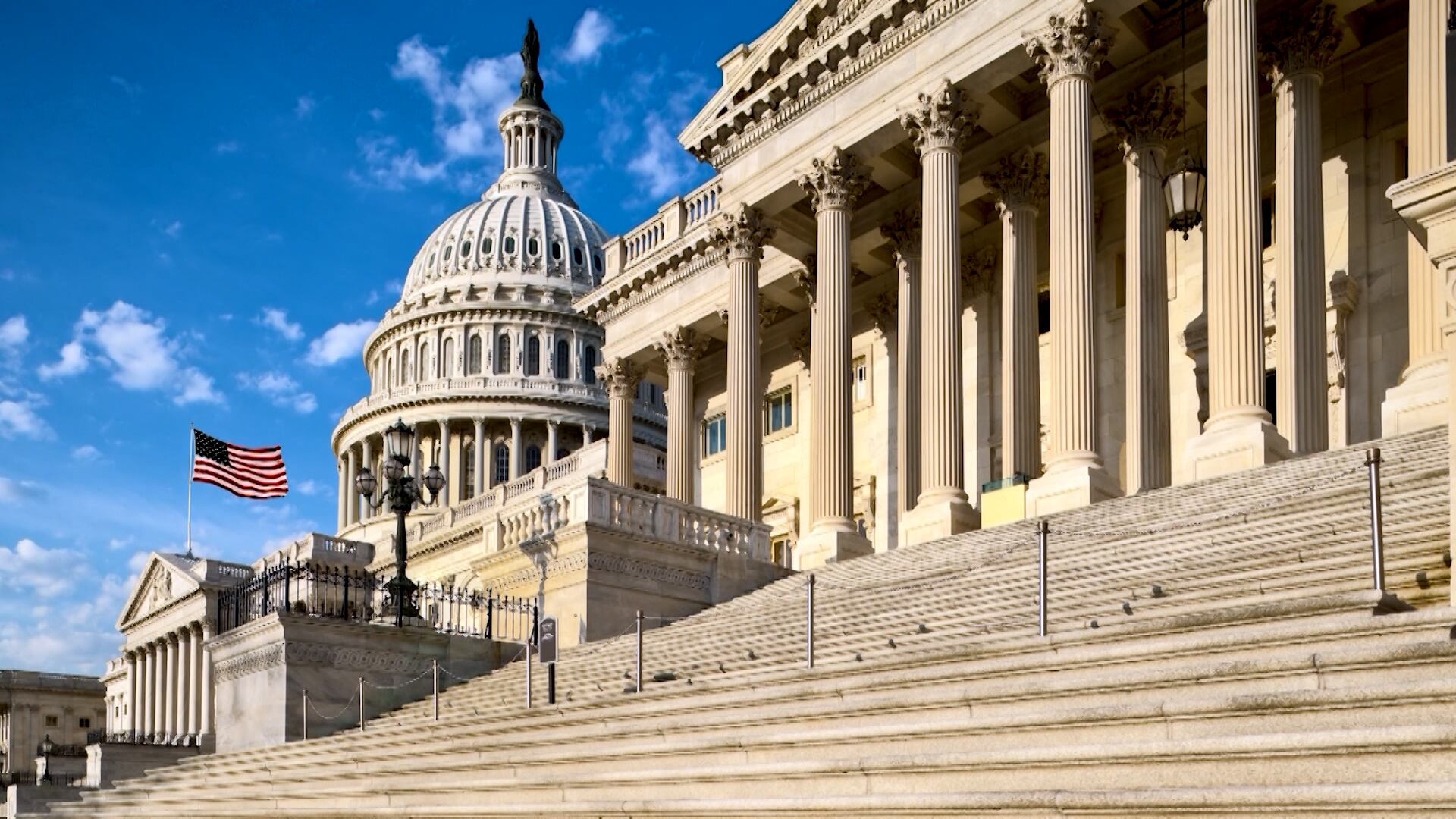
Biden faces an array of steep challenges as he tries to secure the money. The House remains in chaos because the Republican majority has been unable to select a speaker to replace Rep. Kevin McCarthy, who was ousted more than two weeks ago.
In addition, conservative Republicans oppose money for sending more weapons to Ukraine as its battle against the Russian invasion approaches the two-year mark. Biden's previous request for funding, which included $24 billion to help with the next few months of fighting, was stripped out of budget legislation last month despite a personal plea from Ukrainian President Volodymyr Zelenskyy.
There will be resistance from some on the other side of the political spectrum when it comes to military assistance for Israel, which has been bombarding the Gaza Strip in response to the Hamas attack on Oct. 7.
Critics have accused Israel of indiscriminately killing civilians and committing war crimes by cutting off essential supplies including food, water and fuel.
Bipartisan support for Israel has already eroded in recent years as progressive Democrats have become more outspoken in their opposition to the country's decades-long occupation of Palestinian territory, which is widely viewed as illegal by the international community.
There are rumbles of disagreement within Biden's administration as well. Josh Paul, a State Department official who oversaw the congressional liaison office dealing with foreign arms sales, resigned over U.S. policy on weapons transfers to Israel.
“I cannot work in support of a set of major policy decisions, including rushing more arms to one side of the conflict, that I believe to be short-sighted, destructive, unjust and contradictory to the very values that we publicly espouse,” he wrote in a statement posted to his LinkedIn account.
A speech from the Oval Office is one of the most prestigious platforms that a president can command, an opportunity to try to seize the country’s attention at a moment of crisis. The major television networks broke into regular programming to carry the address live.
Biden has delivered only one other such speech during his presidency, after Congress passed bipartisan budget legislation to avert a default on the country’s debt.
The White House and other senior administration officials, including Office of Management and Budget Director Shalanda Young, have quietly briefed key lawmakers in recent days about the contours of the planned supplemental funding request.
The Democratic Senate plans to move quickly on Biden’s proposal, hoping that it creates pressure on the Republican-controlled House to resolve its leadership drama and return to legislating.
However, there are disagreements within the Senate, too, on how to move forward. Eight Republicans, led by Kansas Sen. Roger Marshall, said they did not want to combine assistance for Ukraine and Israel in the same legislation.
“These are two separate and unrelated conflicts and it would be wrong to leverage support of aid to Israel in an attempt to get additional aid for Ukraine across the finish line,” they wrote in a letter.
North Dakota Sen. Kevin Cramer said he was fine with the proposal as long as there was also a fresh effort to address border issues. But he said "it’s got to be designed to secure the border, not to facilitate travel through the border.”
Although there was a lull in migrant arrivals to the U.S. after the start of new asylum restrictions in May, illegal crossings topped a daily average of more than 8,000 last month.
Sen. Chris Murphy, a Connecticut Democrat who leads a Senate panel that oversees funding for the Department of Homeland Security, was wary of any effort to overhaul border policy during a debate over spending.
"How are we going to settle our differences over immigration in the next two weeks?” Murphy said. “This is a supplemental funding bill. The minute you start loading it up with policies, that sounds like a plan to fail.”
Biden's decision to include funding for the Indo-Pacific in his proposal is a nod toward the potential for another international conflict. China wants to reunify the self-governing island of Taiwan with its mainland, a goal that could be carried out through force.
Although wars in Europe and the Middle East have been the most immediate concerns for U.S. foreign policy, Biden views Asia as the key arena in the struggle for global influence.
The administration's national security strategy, released last year, describes China as “America’s most consequential geopolitical challenge.”
Associated Press writers Matthew Lee, Mary Clare Jalonick, Kevin Freking and Darlene Superville and AP media writer David Bauder contributed to this report.
Updated at 5:36 a.m. Oct. 20 with speech details.