By Zeke Miller and Jonathan Lemire
President Joe Biden said Thursday that the U.S. will have enough supply of the COVID-19 vaccine by the end of the summer to inoculate 300 million Americans.
Biden made the announcement at the sprawling National Institutes of Health complex just outside Washington as he visited some of the nation's leading scientists on the frontlines of the fight against the disease. He toured the Viral Pathogenesis Laboratory that created the COVID-19 vaccine now manufactured by Moderna and being rolled out in the U.S. and other countries.
The U.S. is on pace to exceed Biden’s goal of administering 100 million vaccine doses in his first 100 days in office, with more than 26 million shots delivered in his first three weeks.
“That’s just the floor,” Biden said. "Our end goal is beating COVID-19.”
Biden announced on Thursday that the U.S. had secured contractual commitments from Moderna and Pfizer to deliver the 600 million doses of vaccine by the end of July — more than a month earlier than initially anticipated.
“We’re now on track to have enough supply for 300 million Americans by the end of July," he announced.
The pace of injections could increase further if a third coronavirus vaccine from drugmaker Johnson & Johnson receives approval from the Food and Drug Administration.
Speaking with Dr. Anthony Fauci, the nation's top infectious-disease specialist, Biden emphasized that his administration is doing everything possible to increase the vaccine supply and the country's capacity to deliver injections into arms.
“It’s been a hell of a learning process," Biden said.
Biden, wearing a mask, used his remarks to criticize President Donald Trump, saying he inherited “no plan to vaccinate most of the country.”
“It is no secret that the vaccination program was in much worse shape than my team and I anticipated,” he said.
To date, the Biden administration has deployed active-duty troops to help stand up mass vaccination sites in several states, as it looks to lay the groundwork for increasing the rate of vaccinations once more supply is available.
The Viral Pathogenesis Laboratory is led by Dr. Barney Graham, whose team made critical discoveries years ago that laid the groundwork for rapid development of that and other COVID-19 vaccines. Before the pandemic erupted, one of Graham’s research fellows, Dr. Kizzmekia Corbett, had been using those earlier findings to develop a vaccine for MERS, a cousin of COVID-19.
On the tour, Biden was shown the lab bench where researchers sequenced the virus and developed the precursor of the Moderna vaccine.
Armed with their prior research, Corbett and Graham had a head start when Chinese scientists shared the genetic map of the new coronavirus in January 2020. They already knew how to make spike proteins, which coat the surface of the new coronavirus and its MERS relative, that were stable enough to be used as a key vaccine ingredient.
Within days, the NIH had sent instructions to Moderna to brew up doses, and Corbett and her colleagues were setting up the key lab and animal tests that would eventually prove they were on the right track.
Associated Press Medical Writer Lauran Neergaard in Washington contributed to this report.
Netflix stock is surging after the company reported first-quarter earnings, disclosing that the company added 7.4 million subscribers in the first three months of this year. Netflix now has 125 million subscribers globally. This year, Netflix plans to spend $8 billion on developing original content.
Goldman Sachs reported earnings on Tuesday, soaring past Wall Street estimates. The firm said its quarterly revenue hit $10 billion, an increase of 27%. Goldman's successful first quarter is due in large part to the recent surge in trading and market volatility.
Plus, we talk artificial intelligence with Sam Mantle, managing director of digital enterprise at Luxoft. The company recently announced a partnership with Softbank Robotics America to improve technology in "Pepper" the robot. Mantle digs into how Pepper can be used across industries from travel, to retail, to hospitality, noting that developers are just starting to learn how expansive and beneficial artificial intelligence can be.
The fallout from Facebook's latest data scandal continues to intensify. The Weinstein Co. officially files for bankruptcy protection after many attempts to sell the company failed. Josh Sternberg, tech editor for AdWeek, joins us to discusses how Uber moves forward after one of its driverless cars killed a pedestrian in Tempe, Arizona. And Bri Bauer from Dairy Queen brings ice cream cones to the trading floor to celebrate the company's National Cone Day. On the first day of spring, Dairy Queen gives customers free vanilla ice cream cones.
One of Nike's top executives is stepping down over misconduct allegations. Airbnb is making it easier for people with disabilities to find rentals on its platform. We dive into the Theranos fraud scandal with the Wall Street Journal reporter who initially reported that something was off with the start-up blood testing company. And Tim Stenovec chats with Neil Patrick Harris about season two of his Netflix show "A Series of Unfortunate Events."
For now, the disgraced founder and CEO of Theranos says she plans to stay on in that role at the company. But a criminal investigation is still ongoing, and indictments could follow, says John Carreyrou, the investigative reporter at The Wall Street Journal who saw through the hype early.
A lot of the media hyped up the technology of Theranos. But when they asked probing questions, they were given "convoluted or confusing" statements.
In celebration of "Pi Day", Curiosity.com editor and podcast host Ashley Hamer looked at the history of the geometric ratio. She told Cheddar that back in 1897, one amateur mathematician almost convinced the Indiana state legislature to pass a law saying 𝜋 is actually equal to 3.2!
"Weed the People" seeks to raise awareness of the impact cannabis has on cancer patients and to depict how the chemicals in the plant can be life-saving.
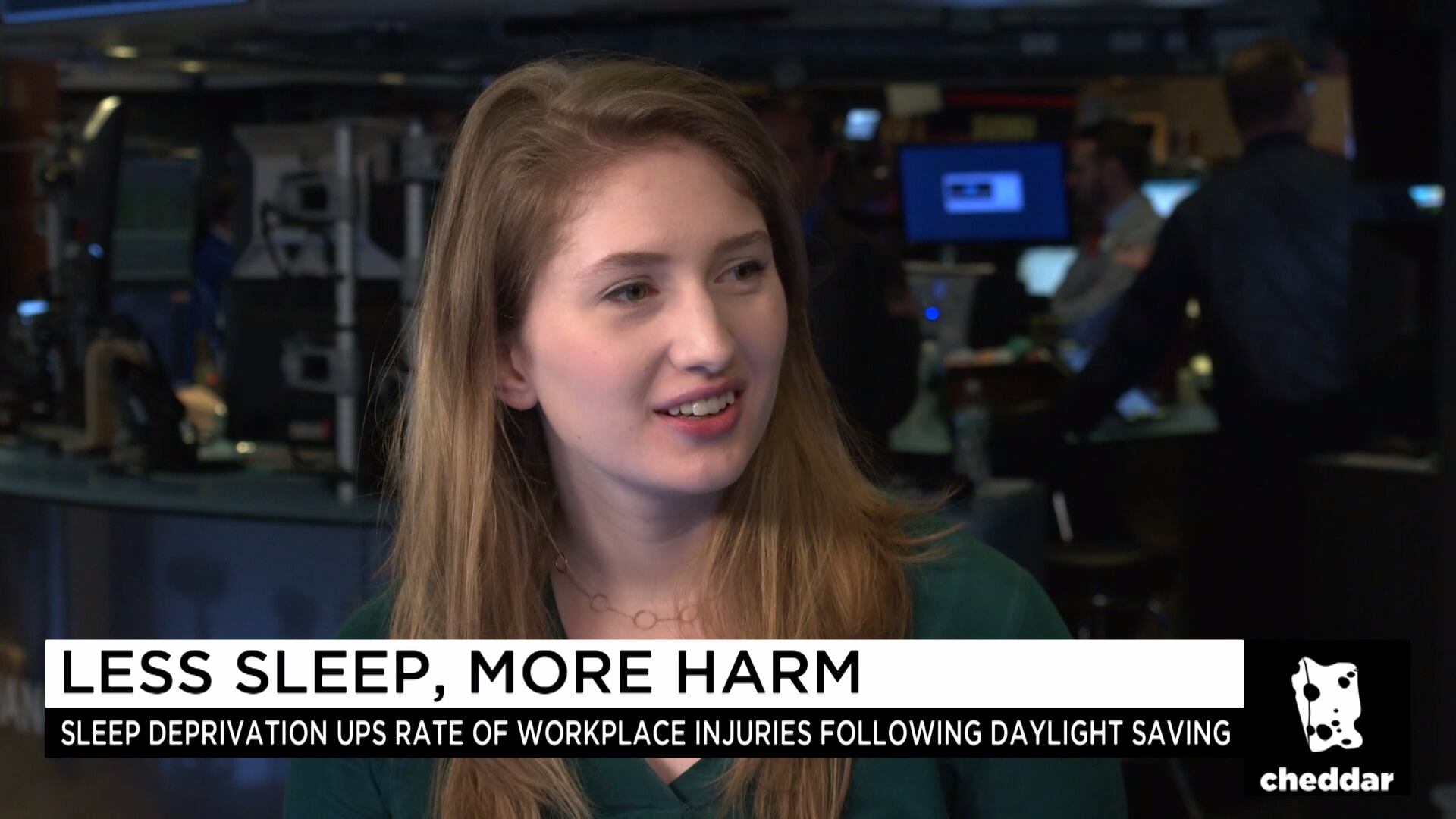
Sara Chodosh, assistant editor at Popular Science, discusses how Daylight Saving Time affects your health. We talk about the rise in fatal car accidents due to sleep deprivation, as well as the negative effects to your health like an increased rate of heart attacks.
Sangita Patel, CEO at LeVar Burton Kids, says that as an Indian child she didn't see herself represented on TV, and she wants to change that for the upcoming generation.
A new study finds fakes news travels 6 times faster on Twitter than real news. The head of Goldman Sachs responds to reports he is leaving his post. Florida Governor Rick Scott signs a gun safety bill. The bull market celebrates its 9th birthday. The Nasdaq hits a record high.