By Darlene Superville
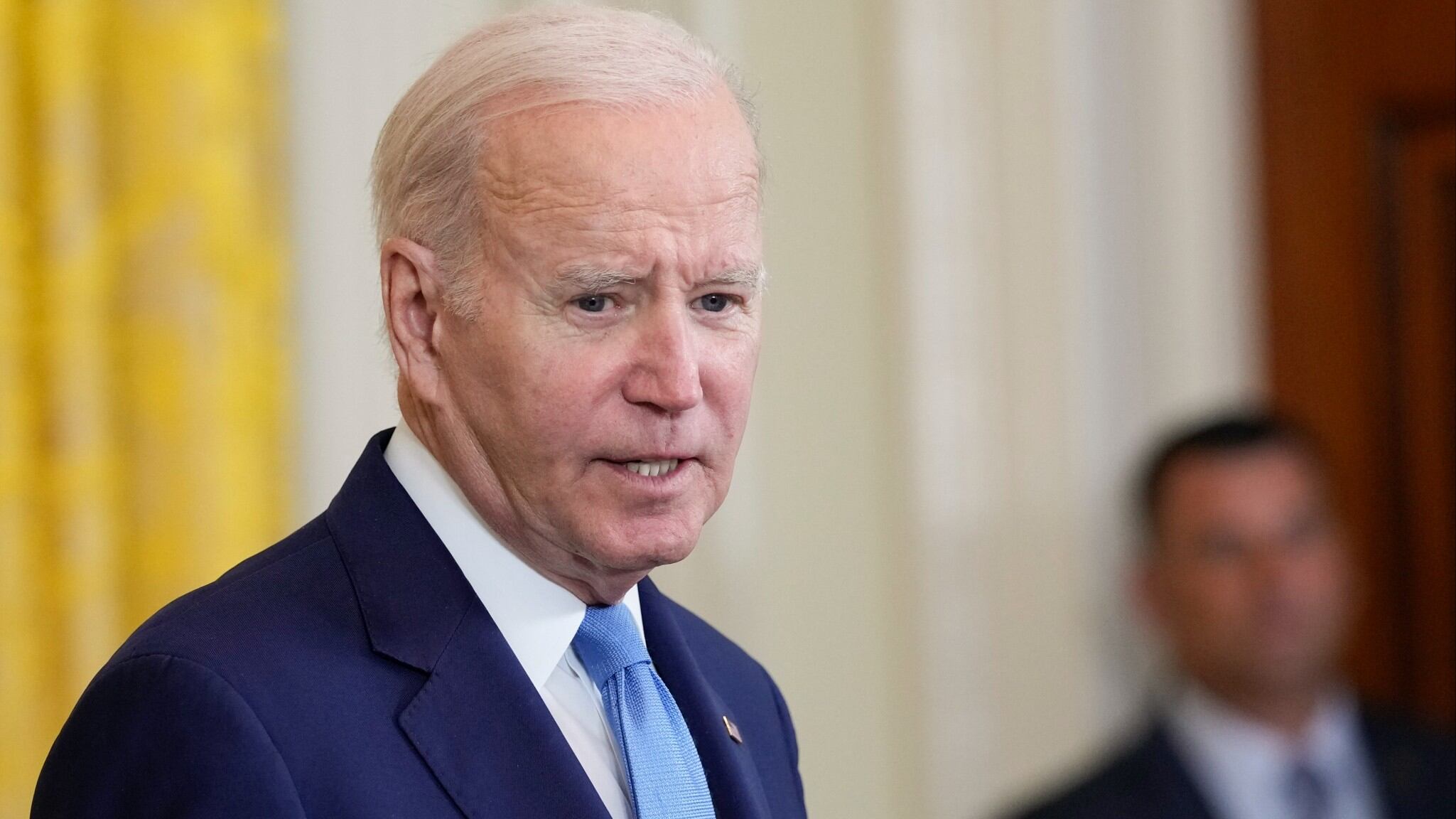
President Joe Biden on Thursday condemned a wave of “cruel” and “callous” state legislation curbing the rights, visibility and health care access of LGBTQ+ people, while causing the community to feel under attack for being who they are.
“These are our kids. These are our neighbors. It's cruel and it's callous,” Biden said at a White House news conference with British Prime Minister Rishi Sunak. “It matters a great deal how we treat everyone in this country.”
Biden commented hours after the White House postponed a large Pride Month celebration with thousands of guests Thursday night on the South Lawn because of poor air quality from hazardous air flowing in from Canadian wildfires.
He called on lawmakers to pass legislation protecting the civil rights of LGBTQ+ individuals.
“Congress must pass, must pass the Equality Act and send it to my desk,” Biden said of a legislative measure he had named a top priority during his 2020 campaign.
The president then spoke directly to LGBTQ+ Americans, especially children. “You're loved, you're heard and this administration has your back,” he said.
Biden also described new initiatives the administration announced Thursday to protect LGBTQ+ communities from attack, help young people with mental health issues and homelessness, and counter book bans, though the effects may be limited.
Thousands of guests had been invited from around the country for an evening filled with food, games and other activities on the South Lawn. Queen HD the DJ was handling the music, and singer Betty Who was on tap to perform.
But the nation’s capital by late morning Thursday was under a “code purple” air quality alert, the fifth-highest level on the six-level U.S. air quality index, with authorities recommending that everyone limit their exposure to the hazardous smoke wafting south from Canada. District of Columbia schools canceled all outdoor activities for a second day Thursday, and the National Zoo also closed.
The White House initially resisted altering its plans for the celebration, saying there were no changes, even as the air quality steadily worsened along the East Coast on Wednesday and into Thursday.
Karine Jean-Pierre, the first openly gay White House press secretary, said Wednesday that Biden, Vice President Kamala Harris and their spouses are strong supporters of the LGBTQ+ community and think a celebration is an important way to “lift up” their accomplishments and contributions. She said LGBTQ+ people need to know Biden “has their back” and “will continue to fight for them. And that’s the message that we want to make sure that gets out there.”
The Human Rights Campaign, the nation's largest advocacy organization for lesbian, gay, bisexual, transgender or queer individuals, earlier this week declared a state of emergency for LGBTQ+ individuals in the United States and released a guidebook outlining laws it deems discriminatory in each state.
Just a few days into June's Pride Month, the campaign said it acted in response to an “unprecedented and dangerous” spike in discriminatory laws sweeping statehouses this year, with more than 525 anti-LGBTQ+ bills introduced and more than 70 signed into law so far — more than double last year’s number.
Kelley Robinson, the campaign's president, called for a “swift and powerful” response by people in power, including in government, business and education.
"This is a full-out crisis for our communities that demands a concerted response," she said in an interview with The Associated Press. “I think this is kind of a national call to action and a call to arms to stand up and fight back.”
Biden, a Democrat, announced that the Department of Homeland Security, working with the Justice and Health and Human Services departments, will partner with LGBTQ+ community organizations to provide safety resources and training to help thwart violent attacks.
Separately, HHS and the Department of Housing and Urban Development will provide resources to help LGBTQ+ young people with mental health needs, support in foster care and homelessness.
To confront a spike in book bans, the Department of Education's civil rights office will appoint a new coordinator to work with schools to address that threat. The White House said banning books erodes democracy, deprives students of material needed for learning and can contribute to the stigma and isolation that LGBTQ+ youth feel because books about them are often the ones that are prohibited.
The White House points to Biden's support for lesbian, gay, bisexual, transgender and queer individuals. He has appointed many to prominent positions in the White House, such as Jean-Pierre, and throughout the federal government. He signed legislation to protect marriage equality and continues to urge Congress to send him the Equality Act, which would add civil rights protections for LGBTQ+ individuals to federal law.
Polls show public support for the rights of people who are gay and lesbian has expanded dramatically over the last two decades, with about 7 in 10 U.S. adults in polling by Gallup saying that marriages between same-sex adults should be legally valid and that gay and lesbian relationships are morally acceptable.
But attitudes toward transgender people are complex: In polls conducted in 2022 by KFF and the Washington Post and by the Pew Research Center, majorities said they support laws prohibiting discrimination against transgender people in areas such as housing, jobs and schools.
At the same time, both polls found that a majority of Americans think that whether someone is a man or a woman is determined by sex assigned at birth, and many also support restrictive policies aimed at people who are transgender, for example preventing transgender women and girls from participating in sports teams matching their gender identity, along with restrictions on access to medical treatment like puberty blockers and hormone treatment for transgender teens and children.
Associated Press writers Emily Swanson in Washington and Hannah Schoenbaum in Raleigh, N.C., contributed to this report.