By Josh Boak
The Treasury Department said Monday that 39 million families are set to receive monthly child payments beginning on July 15.
The payments are part of President Joe Biden's $1.9 trillion coronavirus relief package, which expanded the child tax credit for one year and made it possible to pre-pay the benefits on a monthly basis. Nearly 88% of children are set to receive the benefits without their parents needing to take any additional action.
“This tax cut sends a clear and powerful message to American workers, working families with children: Help is here,” Biden said in remarks at the White House.
Qualified families will receive a payment of up to $300 per month for each child under 6 and up to $250 per month for children between the ages of 6 and 17. The child tax credit was previously capped at $2,000 and only paid out to families with income tax obligations after they filed with the IRS.
But for this year, couples earning $150,000 or less can receive the full payments on the 15th of each month, in most cases by direct deposit. The benefits total $3,600 annually for children under 6 and $3,000 for those who are older. The IRS will determine eligibility based on the 2019 and 2020 tax years, but people will also be able to update their status through an online portal. The administration is also setting up another online portal for non-filers who might be eligible for the child tax credit.
The president has proposed an extension of the increased child tax credit through 2025 as part of his $1.8 trillion families plan. Outside analysts estimate that the payments could essentially halve child poverty. The expanded credits could cost roughly $100 billion a year.
Updated on May 17, 2021, at 2:06 p.m. ET with the latest details.
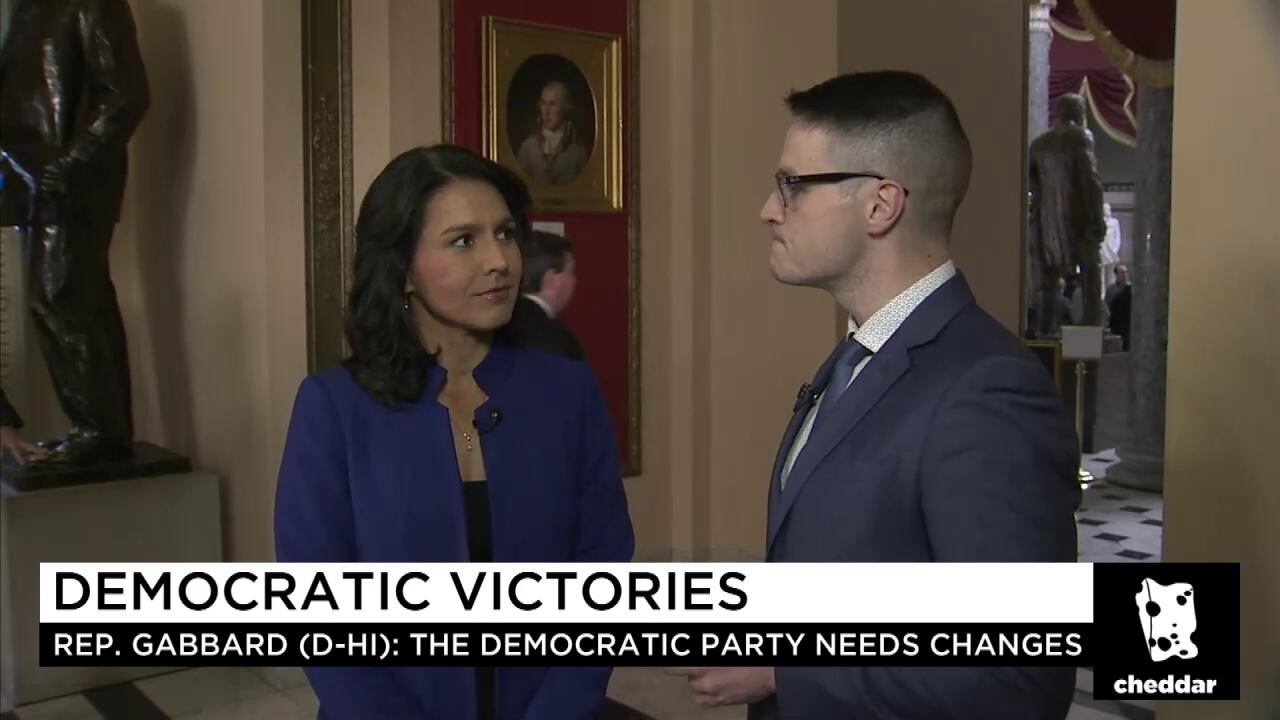
The congresswoman told Cheddar that the party's win in Alabama highlights that Democrats need to get back to their political roots.
The intersection of Washington DC, Wall Street and Silicon Valley and the egos at play in each.
Kristen Scholer, Hive editor Jon Kelly, and the VF Hive panel discuss the top five stories of the week in technology, politics in business. Nick Bilton reports on his story about Donald Trump's threats to devalue the social media platforms that gave him his rise.
Between Bells brings you the latest political, business, and culture news. Plus, we're full of gift ideas this holiday season!
Between Bells brings you the days top stories from Google, Instagram, Twitter, and McDonald's.
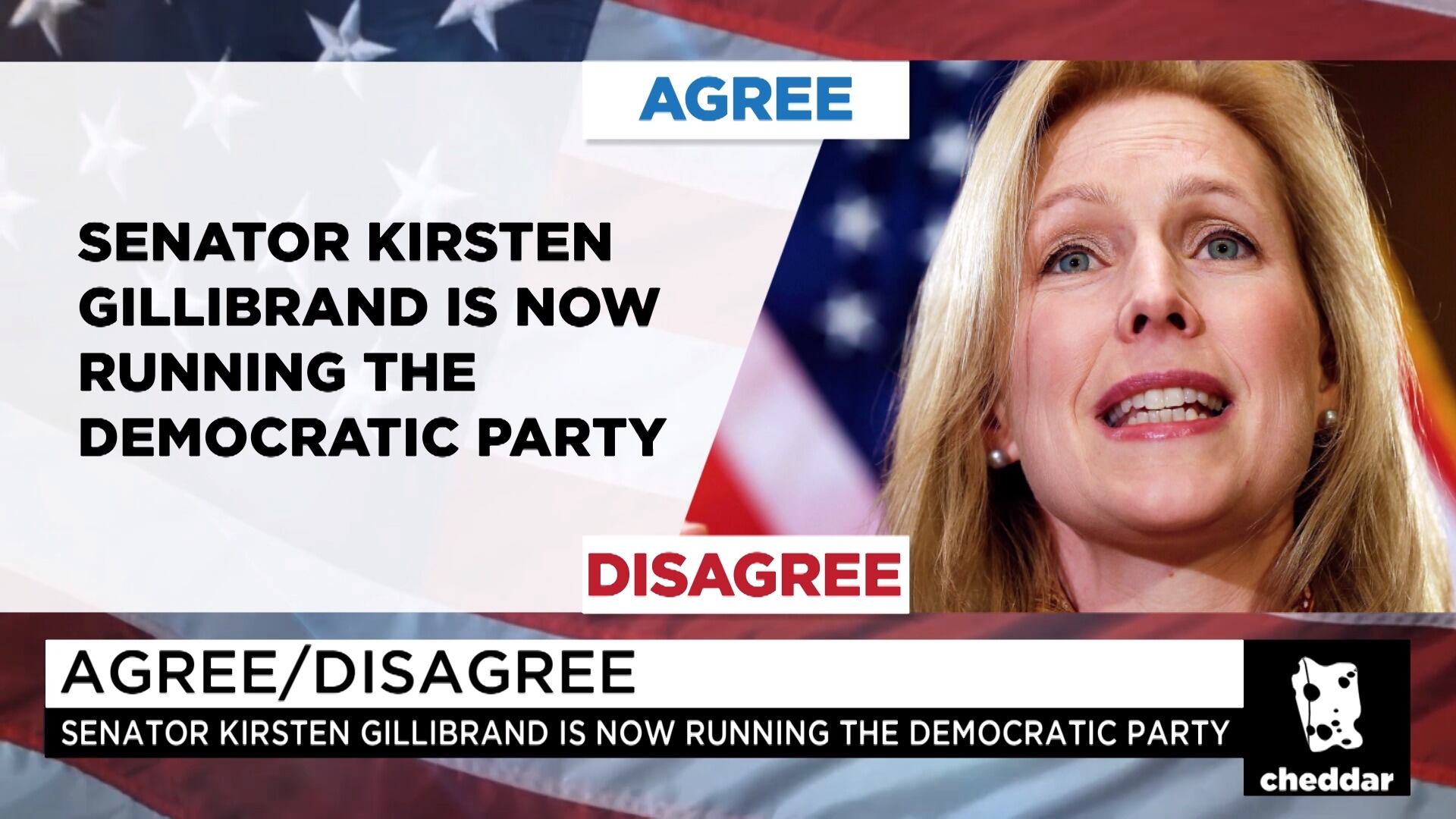
Doug Jones' election caps off the month that the #MeToo movement made its way to Washington. Bustle's Erin Delmore joins Cheddar to discuss how Senator Kirsten Gillibrand became the face of the new wave that's beginning to enter the political arena.
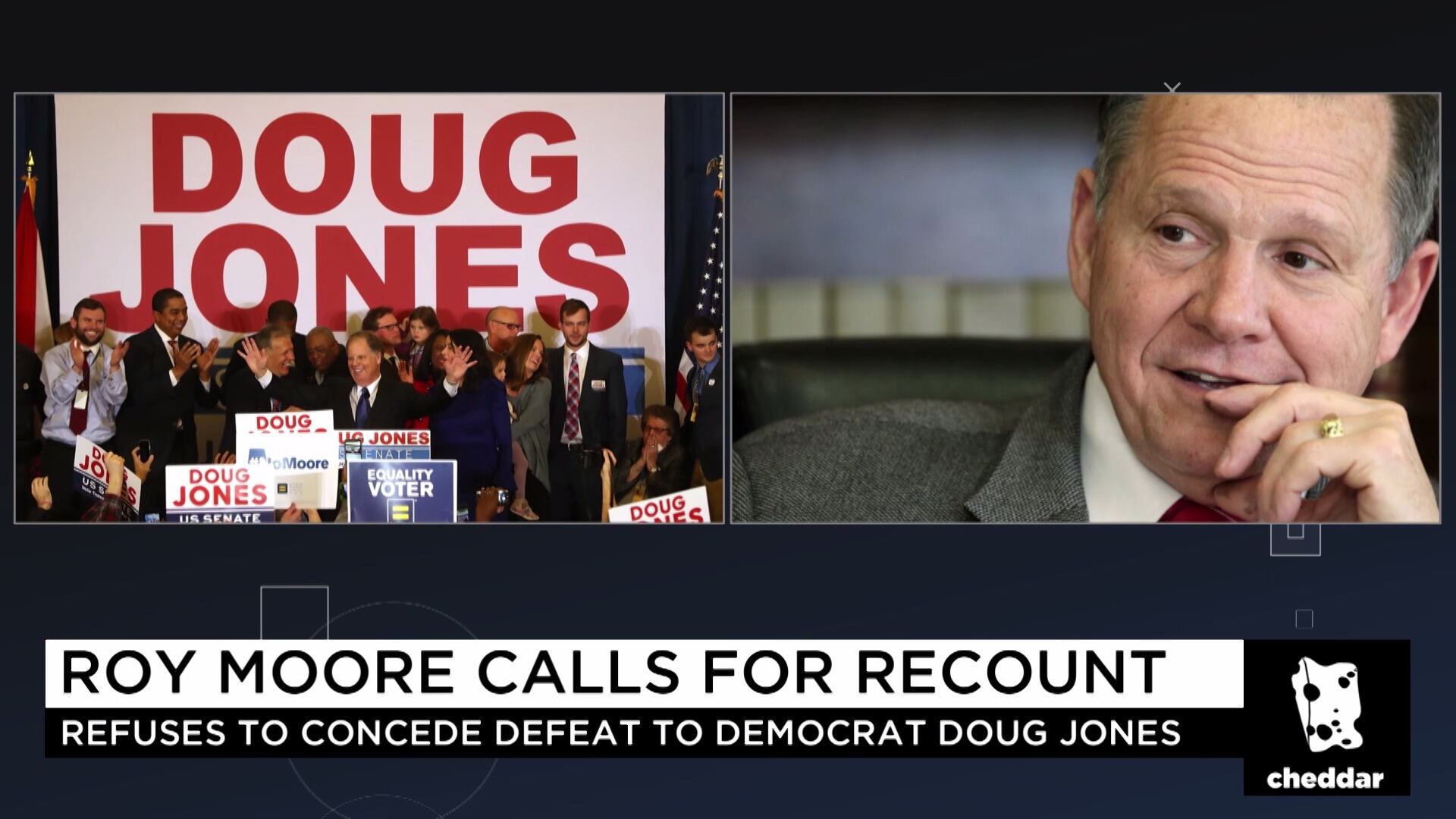
Democrat Doug Jones upset Republican Roy Moore in one of the most-followed U.S. Senate campaigns in recent political history. The Young Turks' John Iadarola explains how Jones pulled off his unexpected victory.
President Trump is ramping up his attacks on the media. Did the White House time his latest barrage against the press to match up with the Senate election in Alabama? Our round table debates that topic and more in today's edition of "Agree to Disagree."
Todd Johnson, Managing editor at The Grio, and Jack Hunter, editor for Rare Politics, discuss the accusations of sexual harassment and assault against President Trump, as his accusers speak out for the second time.
For the past couple of months, there has been a windfall of sexual harassment and assault allegations coming out of Hollywood, Washington, the media, and more. Sue Jacobson is the co-founder of Jacobson Strategic Communications, and she joins Cheddar to explain why responding quickly in these situations is so important.