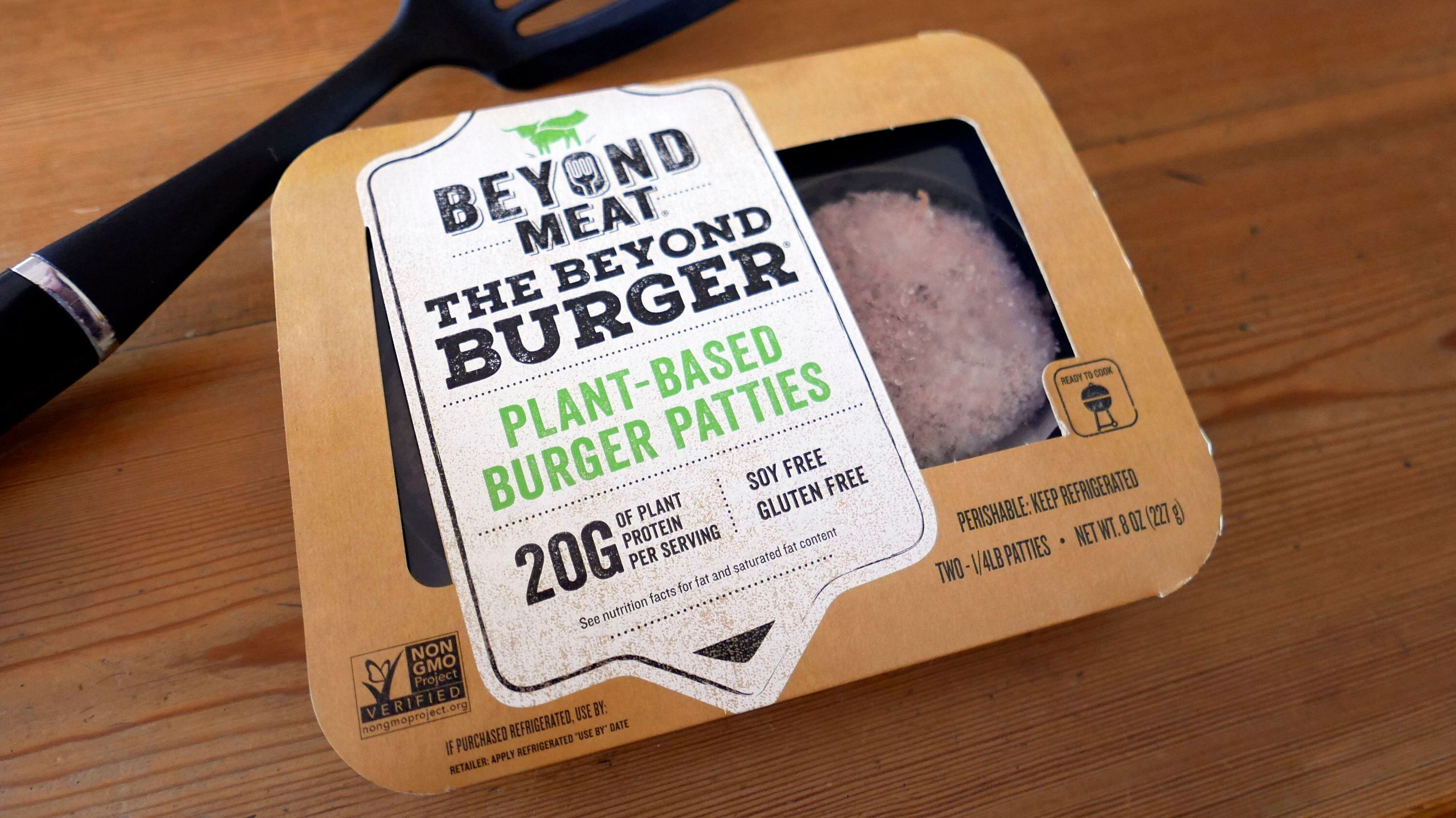
Beyond Meat stocks plummeted after Monday’s closing bell when the company released its second-quarter earnings report, despite trading up for shorter periods.
Concerning investors first was news that the company lost 24 cents in revenue-per-share, far more than the 8 cents anticipated by the financial markets data firm Refinitiv. Then the company announced that it would pursue a secondary offering, selling more shares in the company from common and company-owned stock.
On the positive side, the company’s revenues came in nearly $15 million more than expected, at $67.3 million. That growth constituted a 287 percent jump in revenue from the same period in 2018.
The company has now raised annual revenue guidance from $210 million to $240 million.
Earlier this year, Beyond Meat ($BYND) saw one of the most successful public offerings in 2019.
“The main reason that Beyond Meat is up 800 percent since day one of the IPO is not earnings-per-share, but revenue growth. The plant-based meat sector still has 1 percent market share of the overall meat market,” said Jason Rotman, the director of EverPlus Capital.
“If Beyond Meat could even capture 1 to 2 percent of the overall meat purchases of the consumers, this stock could literally be many multiples higher than it is now over the next few years.”
The company has clung to its first-mover advantage as competitor Impossible Foods, with about $700 million raised in fundraising, has opted to stay private.
Beyond Meat, unlike Impossible Foods, has typically focused first on introducing its product in retail.
But the company has recently racked up several major deals with fast-casual and fast food chains, including, most recently, Dunkin’.
Stephen Kates, Financial Analyst at Bankrate, joins to discuss the Fed’s 25-basis-point rate cut, inflation risks, and what it all means for consumers and marke
Big tech earnings take center stage as investors digest results from Alphabet, Meta, Microsoft, Amazon, and Apple, with insights from Gil Luria of D.A. Davidson
Disney content has gone dark on YouTube TV, leaving subscribers of the Google-owned live streaming platform without access to major networks like ESPN and ABC. That’s because the companies have failed to reach a new licensing deal to keep Disney channels on YouTube TV. Depending on how long it lasts, the dispute could particularly impact coverage of U.S. college football matchups over the weekend — on top of other news and entertainment disruptions that have already arrived. In the meantime, YouTube TV subscribers who want to watch Disney channels could have little choice other than turning to the company’s own platforms, which come with their own price tags.
President Donald Trump said he has decided to lower his combined tariff rates on imports of Chinese goods to 47% after talks with Chinese leader Xi Jinping on curbing fentanyl trafficking.
Universal Music Group and AI platform Udio have settled a copyright lawsuit and will collaborate on a new music creation and streaming platform. The companies announced on Wednesday that they reached a compensatory legal settlement and new licensing agreements. These agreements aim to provide more revenue opportunities for Universal's artists and songwriters. The rise of AI song generation tools like Udio has disrupted the music streaming industry, leading to accusations from record labels. This deal marks the first since Universal and others sued Udio and Suno last year. Financial terms of the settlement weren't disclosed.