By Lisa Mascaro and Kevin Freking
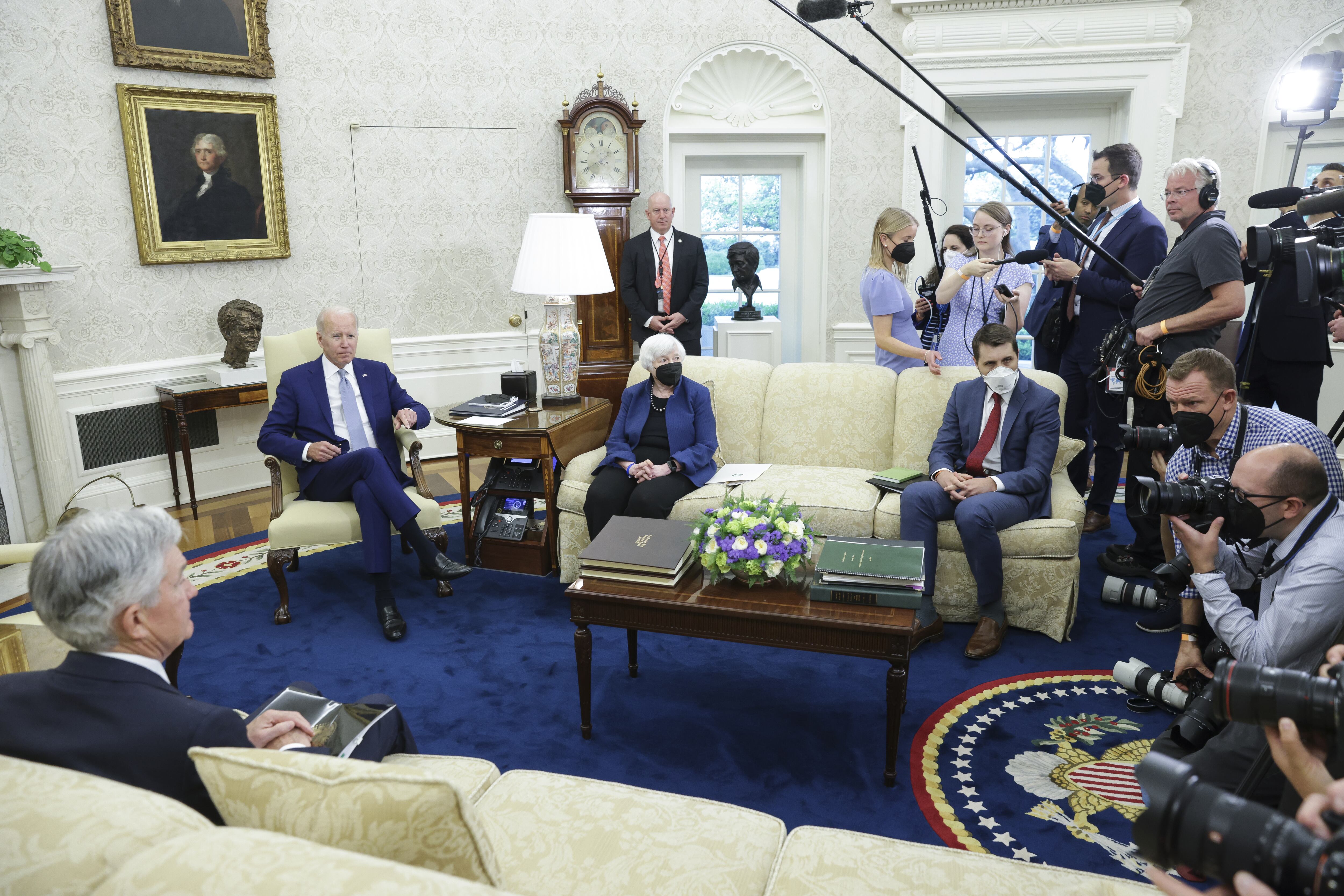
Republicans have no clear idea who will be the next U.S. House speaker, leaving an unprecedented power vacuum in Congress and severely limiting America's ability to quickly respond to the crisis in Israel — or any number of other problems at home and abroad.
On Monday, the ousted former speaker, Kevin McCarthy, quickly jumped into the void, bitterly criticizing President Joe Biden's administration over the strength of its defense of Israel and positioning himself as a de facto Republican leader even though his colleagues toppled him from power.
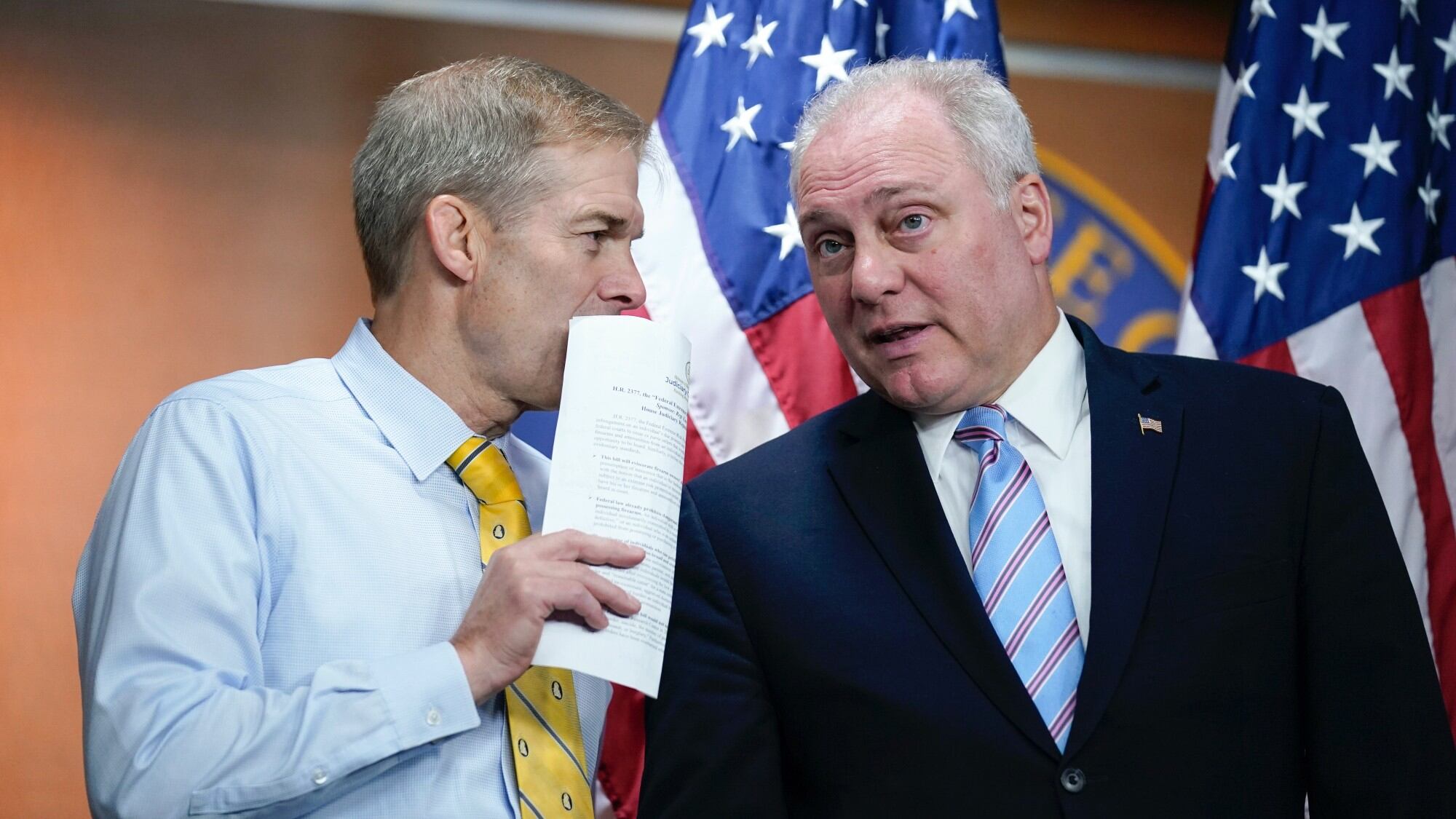
But it's not at all clear if McCarthy could seriously make a comeback — or if one of the other Republicans seeking the gavel, Steve Scalise or Jim Jordan, can be elected speaker as their majority stumbles into infighting. House Republicans met behind closed doors for hours Monday evening as anger and blame spilled out, with no clear path forward.
“Whether I'm speaker or not ... I can lead in any position I’m in,” McCarthy, R-Calif., said earlier at the Capitol.
The upheaval in the House puts the U.S. Congress at a crossroads during a moment of crisis, the first time in history it has booted a speaker from power, operating without a constitutional officer, second in line to the presidency. House business, and with it most congressional action, has come to a standstill.
There are unanswered questions about what, if anything, the Congress can do with only an interim speaker pro tempore, a position created to ensure the continuity of government after the Sept. 11, 2001, terrorist attacks. At risk is immediate aid to Israel along with passage of a resolution that would show U.S. support for Israel and condemnation of Hamas for the attack as the region is now engulfed in war.
And there are broader demands on Congress, including Ukraine's requests for aid as it fights Russia and the need to fund the U.S. government again by Nov. 17 or risk a federal shutdown. The Senate meanwhile is also out of session, on recess until next week.
“The world is watching,” Rep. Michael McCaul, a Texas Republican who chairs the House Foreign Relations, said he told the meeting. “They are seeing a dysfunctional democracy.”
Republicans are planning to vote as soon as Wednesday, first in private balloting and later on the House floor, where a majority would be needed to choose the next speaker after McCarthy's historic ouster by a handful of hardline Republicans led by Rep. Matt Gaetz, R-Fla.
Asked if McCarthy could make a comeback, Gaetz said, “I wouldn’t bet on it.”
Any speaker's vote by midweek seems aspirational rather than realistic. Neither Scalise, the majority leader who is the second-ranking Republican in the House, nor Jordan, who is the chairman of the Judiciary Committee and backed by Donald Trump, appears to have the votes needed to secure the majority vote.
“Does anybody have the votes? No,” said Rep. Mike Lawler of New York, a centrist Republican pushing for McCarthy to be reinstated as speaker.
Both Scalise and Jordan have eyed the speaker's gavel for some time and come with political strengths, but also baggage that leaves colleagues split and skeptical.
Scalise is battling blood cancer, and is seen by a hero among colleagues for having survived severe injuries from a mass shooting during a congressional baseball game practice in 2017. But the Louisiana Republican had apologized in 2014after he was found to have addressed a white supremacist group in 2002 founded by a former Ku Klux Klan leader. Scalise said he didn’t know of the group’s racial views.
"The House needs to get back to work,” Scalise said he told his colleagues.
Jordan is a high-profile political firebrand known for his close alliance with Trump, particularly when the then-president was working to overturn the results of the 2020 election, leading to the Jan. 6, 2021, attack on the Capitol.
Some years ago, Jordan and his office denied allegations from former wrestlers during his time as an assistant wrestling coach at Ohio State University who accused him of knowing about claims they were inappropriately groped by an Ohio doctor. Jordan and his office have said he was never aware of any abuse.
The House Republicans hold just a slim majority and they are considering rules changes to avoid another spectacle electing a new speaker, like the 15 rounds it took McCarthy in January to seize the gavel.
While the full House, including Democrats and Republicans, ultimately votes on the new speaker, the position usually falls to a person from the party with the House majority.
One idea is to require the candidate for House speaker to reach the 218 majority threshold during internal voting behind closed doors before the Republicans bring the vote up publicly on the House floor.
Another idea is to change the rule that allows a single lawmaker to make a “motion to vacate” the office — which is the rare procedural tool Gaetz used to force a vote that ousted McCarthy. In previous years, it required more the one lawmaker to make the motion.
But lawmakers exiting the evening meeting came to the understanding that such changes might not be achievable in time for a speaker's vote as Republicans try to move on from the chaos that has thrown their majority into turmoil.
Republican Rep. Max Miller of Ohio said he is for Jordan, but he wants to take another week to sort through all the leadership positions, adding there were a lot of “broken” personalities in the room.
“People are going to be upset,” he said. “We will find a way forward.”
Democrats so far reject both Scalise and Jordan, and are almost certain to vote against either Republican. McCarthy’s ouster came with the help of Democrats, who voiced their disdain for the speaker and joined with eight Republicans to oust him.
For now, no consensus candidate who could bridge both parties seems at all within reach.
Meantime, Rep. Patrick McHenry, R-N.C., has been named as speaker pro tempore, and brushed back questions late Monday about staying in the job longer.
Asked about a House vote Wednesday on a new speaker, he said, “That's my goal.”
The rules around the temporary speaker position have been untested before, though they appear to indicate the main power in the role is to ensure the election of a new speaker.
But if House Republicans are unable to quickly agree on a speaker, McHenry could be in the position for some time. Any moves McHenry makes in the temporary position have the potential to become precedent-setting for the House.
McHenry is viewed as a serious legislator, with nearly 20 years in office, even though his first act was to boot Speaker Emerita Nancy Pelosi from her private office at the Capitol.
Associated Press writers Farnoush Amiri and Stephen Groves contributed to this report.