Apple on Tuesday unveiled its next generation of iPhones — a line-up that will boast better cameras, faster processors, a new charging system and a price hike for the fanciest model.
The showcase at Apple's headquarters in Cupertino, Calif., comes as the company tries to reverse a mild slump that has seen its sales drop from last year in three consecutive quarters. The malaise is a key reason Apple's stock price has dipped by nearly 10% since mid-July, dropping the company's market value below the $3 trillion threshold it reached for the first time earlier this summer.
Investors apparently were not impressed with what Apple rolled out Tuesday. The company's shares were down by nearly 2% during afternoon trading.
As has been the case with Apple and other smartphone makers, the four types of iPhone 15 models aren't making any major leaps in technology. But Apple added enough new bells and whistles to the top-of-the-line model — the iPhone 15 Pro Max — to boost its price by $100, or 9%, from last year's version to $1,200.
Apple is holding the line on prices for the rest of the line-up, with the basic iPhone 15 selling for $800, the iPhone 15 Plus for $900 and the iPhone 15 Pro for $1,000.
All the new models will be available in stores Sept. 22, with pre-orders beginning this Friday.
One of the biggest changes that Apple announced is a new way to charge the iPhone 15 models and future generations. The company is switching over to the USB-C standard that is already widely used on many devices, including its Mac computers and many of its iPads.
Apple is being forced to phase out the Lightning port cables it rolled out in 2012 because of a mandate that European regulators plan to impose in 2024.
Although consumers often don't like change, the transition to USB-C ports may not be that inconvenient. That’s because the standard is already widely used on a range of computers, smartphones and other devices people already own. The shift to USB-C may even be a popular move since that standard typically charges devices more quickly and also offers faster data transfer speeds.
The basic iPhone 15 models have been redesigned to include a shape-shifting cutout on the display screen that Apple calls its “Dynamic Island” for app notifications — a look that was introduced with last year's Pro and Pro Max devices. The basic models are also getting a faster chip used in last year's Pro and Pro Max models, while the next generation of the premium iPhone 15s will run on an even more advanced processor.
The iPhone 15 Pro and Pro Max also will be equipped with what Apple maintains is the equivalent of seven camera lenses. They will include a periscope-style telephoto lens that will improve the quality of photos taken from far distances. The telephoto lens boasts a 5x optical zoom, which lags the 10x optical zoom on Samsung's premium Galaxy S22 Ultra, but represents an upgrade from the 3x optical zoom on the iPhone 14 Pro and Pro Max.
Apple is encasing the premium models in titanium that the company says is the same alloy used on some spaceships.
Besides its new iPhones, Apple also announced its next generation of smartwatches — a product that made its debut nearly a decade ago. The Series 9 Apple Watch, available in stores September 22, will include a new gesture control that will enable users to control alarms and answer phone calls by double snapping their thumbs with a finger.
A new report from CNBC says Instagram recently reached a new milestone -- 2 billion monthly active users. It comes amid a year of controversy for the photo-sharing app and its parent company, Meta. SocialFlow CEO Jim Anderson joins Cheddar News' Closing Bell to discuss.
MotorTrend named the Rivian R1T as the 2022 truck of the year - a prestigious title given by the publication as a way for automakers to tout third-party validation. Rivian beat out traditional, legacy truck favorites like Ford and General Motors.
MotorTrend said the company earned high marks for safety, efficiency, value, advanced design, engineering excellence, and performance of intended function. MotorTend head of editorial Ed Loh joins Cheddar News' Closing Bell to discuss.
There is a new way for investors to bet on cannabis - the AdvisorShares Poseidon Dynamic Cannabis ETF targets about 20 of the biggest names in U.S. cannabis. It comes at a time when it's still difficult for investors to access the space. Cheddar News cannabis reporter Chloe Aiello spoke with co-founder and managing director for Poseidon Investment Management, Emily Paxhia.
Danvas is a new company that aims to bring NFTs and digital artwork into the real world through an interactive, museum-quality display. The company says its product is the first premium, luxury digital art canvas, which it hopes will accelerate the world's appreciation of digital artists and their work, and empower collectors to acquire more NFT art. Danvas also just announced its launch this week, with a $7 million seed round from some big-name backers. Danvas co-founder and CEO Jeanne Anderson joins Cheddar News' Closing Bell to discuss.
The California-based tech company specializing in enterprise cloud-based data analysis of connected internet of things (IoT) has gone public on the NYSE, and Samsara's CFO Dominic Phillips told Cheddar's Kristen Scholer that the timing was right for the public offering for the firm's next phase of growth. "We're going to continue to add to our go-to-market motion, we'll continue to build out our international presence, we'll continue to add more selling capacity specifically as we look to penetrate larger enterprise customers, and we'll look to continue to deploy money in R&D," he said.
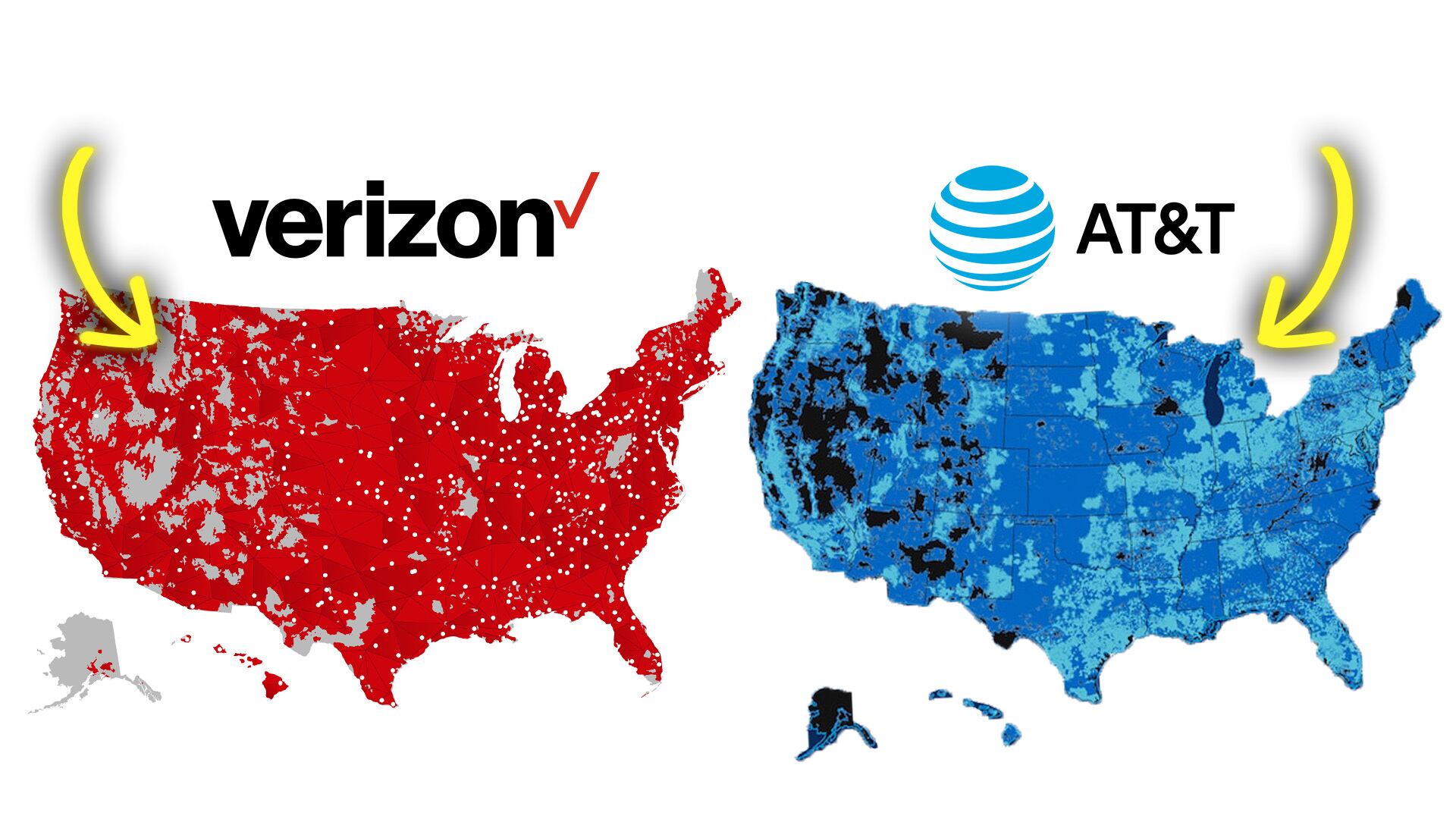
If you’ve ever struggled with a slow home internet connection or mobile data download in the United States, you’re not alone. Despite mobile and internet companies claiming to have “the best nationwide coverage,” or whatever it is they say in those ads, millions of Americans still lack access to reliable, high-speed internet. But you may be surprised to learn who the real culprit behind this ongoing issue is: flawed, overly-optimistic government maps.
VR/AR collaboration platform Spatial is diving head first into the Metaverse. The company is switching up its image--now branding itself as 'the metaverse for cultural events,' aiming to become the new virtual hub for NFT galleries, brand experiences, and large-scale conferences. Jacob Loewenstein, Head of Business, Spatial, joined Cheddar's Opening Bell to discuss the company's pivot.
The past year has been huge for delivery services as people largely stayed home during the pandemic. Getir, an Istanbul-based company delivering goods in just 10 minutes, is officially launching in NYC. It comes as the company continues its international expansion. Nazim Salur, Founder, Getir, joined Cheddar's Opening Bell to discuss the opportunities in the new market.
Another successful spaceflight is in the books for Jeff Bezos' Blue Origin. The company's third human spaceflight blasted off from Van Horn, TX. on Saturday, lasting about ten minutes from takeoff to landing. The crew, which included former NFL star and current GMA host Michael Strahan, traveled to the edge of space and experienced a few minutes of weightlessness before the capsule descended back to earth. Andrew Chanin, CEO of ProcureAM, joined Cheddar's Opening Bell to discuss the significance of the launch.
After nearly two years of the pandemic, U.S. consumers are ready to spend big this holiday season. However, shoppers may be faced with limited inventory as the U.S. continues to face shortages of key products and extended order backlogs. Per Hong, partner at consulting firm Kearney, joined Cheddar's Opening Bell to discuss the country's path forward.