Apple on Tuesday unveiled its next generation of iPhones — a line-up that will boast better cameras, faster processors, a new charging system and a price hike for the fanciest model.
The showcase at Apple's headquarters in Cupertino, Calif., comes as the company tries to reverse a mild slump that has seen its sales drop from last year in three consecutive quarters. The malaise is a key reason Apple's stock price has dipped by nearly 10% since mid-July, dropping the company's market value below the $3 trillion threshold it reached for the first time earlier this summer.
Investors apparently were not impressed with what Apple rolled out Tuesday. The company's shares were down by nearly 2% during afternoon trading.
As has been the case with Apple and other smartphone makers, the four types of iPhone 15 models aren't making any major leaps in technology. But Apple added enough new bells and whistles to the top-of-the-line model — the iPhone 15 Pro Max — to boost its price by $100, or 9%, from last year's version to $1,200.
Apple is holding the line on prices for the rest of the line-up, with the basic iPhone 15 selling for $800, the iPhone 15 Plus for $900 and the iPhone 15 Pro for $1,000.
All the new models will be available in stores Sept. 22, with pre-orders beginning this Friday.
One of the biggest changes that Apple announced is a new way to charge the iPhone 15 models and future generations. The company is switching over to the USB-C standard that is already widely used on many devices, including its Mac computers and many of its iPads.
Apple is being forced to phase out the Lightning port cables it rolled out in 2012 because of a mandate that European regulators plan to impose in 2024.
Although consumers often don't like change, the transition to USB-C ports may not be that inconvenient. That’s because the standard is already widely used on a range of computers, smartphones and other devices people already own. The shift to USB-C may even be a popular move since that standard typically charges devices more quickly and also offers faster data transfer speeds.
The basic iPhone 15 models have been redesigned to include a shape-shifting cutout on the display screen that Apple calls its “Dynamic Island” for app notifications — a look that was introduced with last year's Pro and Pro Max devices. The basic models are also getting a faster chip used in last year's Pro and Pro Max models, while the next generation of the premium iPhone 15s will run on an even more advanced processor.
The iPhone 15 Pro and Pro Max also will be equipped with what Apple maintains is the equivalent of seven camera lenses. They will include a periscope-style telephoto lens that will improve the quality of photos taken from far distances. The telephoto lens boasts a 5x optical zoom, which lags the 10x optical zoom on Samsung's premium Galaxy S22 Ultra, but represents an upgrade from the 3x optical zoom on the iPhone 14 Pro and Pro Max.
Apple is encasing the premium models in titanium that the company says is the same alloy used on some spaceships.
Besides its new iPhones, Apple also announced its next generation of smartwatches — a product that made its debut nearly a decade ago. The Series 9 Apple Watch, available in stores September 22, will include a new gesture control that will enable users to control alarms and answer phone calls by double snapping their thumbs with a finger.
Supply chain issues have become one of the biggest roadblocks for the U.S. EV market, with production woes likely to stunt the industry's growth in 2022. Rich Steinberg, electric vehicle expert and industry advisor, told Cheddar that the Biden administration investing in domestic mining for essential minerals used in battery manufacturing — such as lithium — could help alleviate the bottlenecks. "Some of those same materials are available domestically, they just haven't been prioritized," he said, noting the paradox between green tech and "dirty" mining. "The good news is that there are ways to extract those materials cleanly."
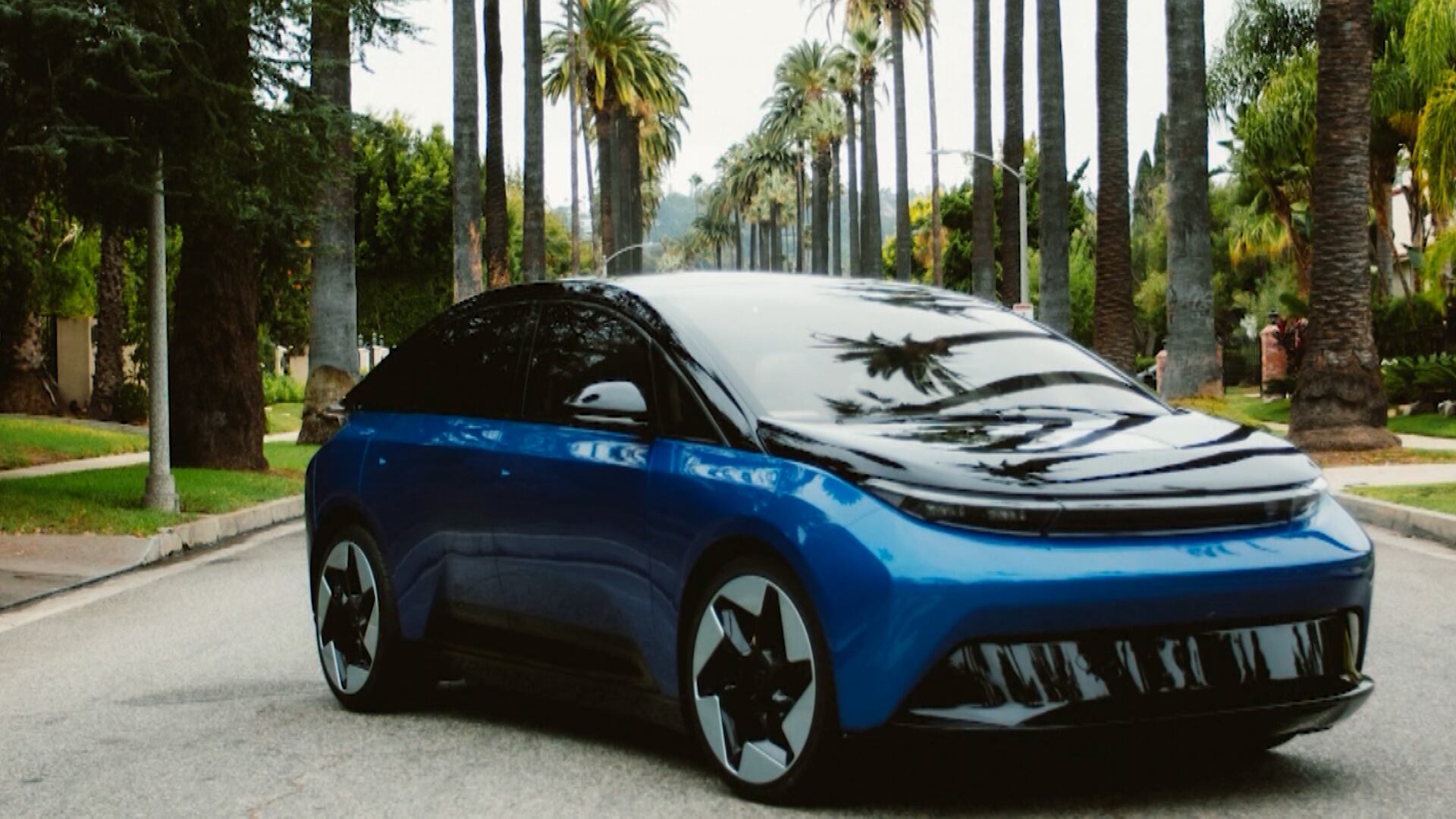
California-based startup Indi EV is gearing up to release its first crossover vehicle incorporating a supercomputer that will allow, among other things, gaming. Andre Hudson, head of design at Indi EV, joined Cheddar to talk about the launch of the Indi One and how the company is distinguishing itself from leaders in the EV space like Tesla. He also talked about the tech behind the Indi One and noted that the car's computer system will enable people to run applications and even create their own. "As a company, we fundamentally saw a major disconnect between how people transition into their cars using the digital devices in their life," Hudson said
Cheddar is looking back at the 12 biggest buzzwords of the year leading up to Christmas. The term for Day 12 is Web3. Definition: (noun) Also known as Web 3.0, a version of the internet where data is decentralized and based on peer-to-peer technologies.
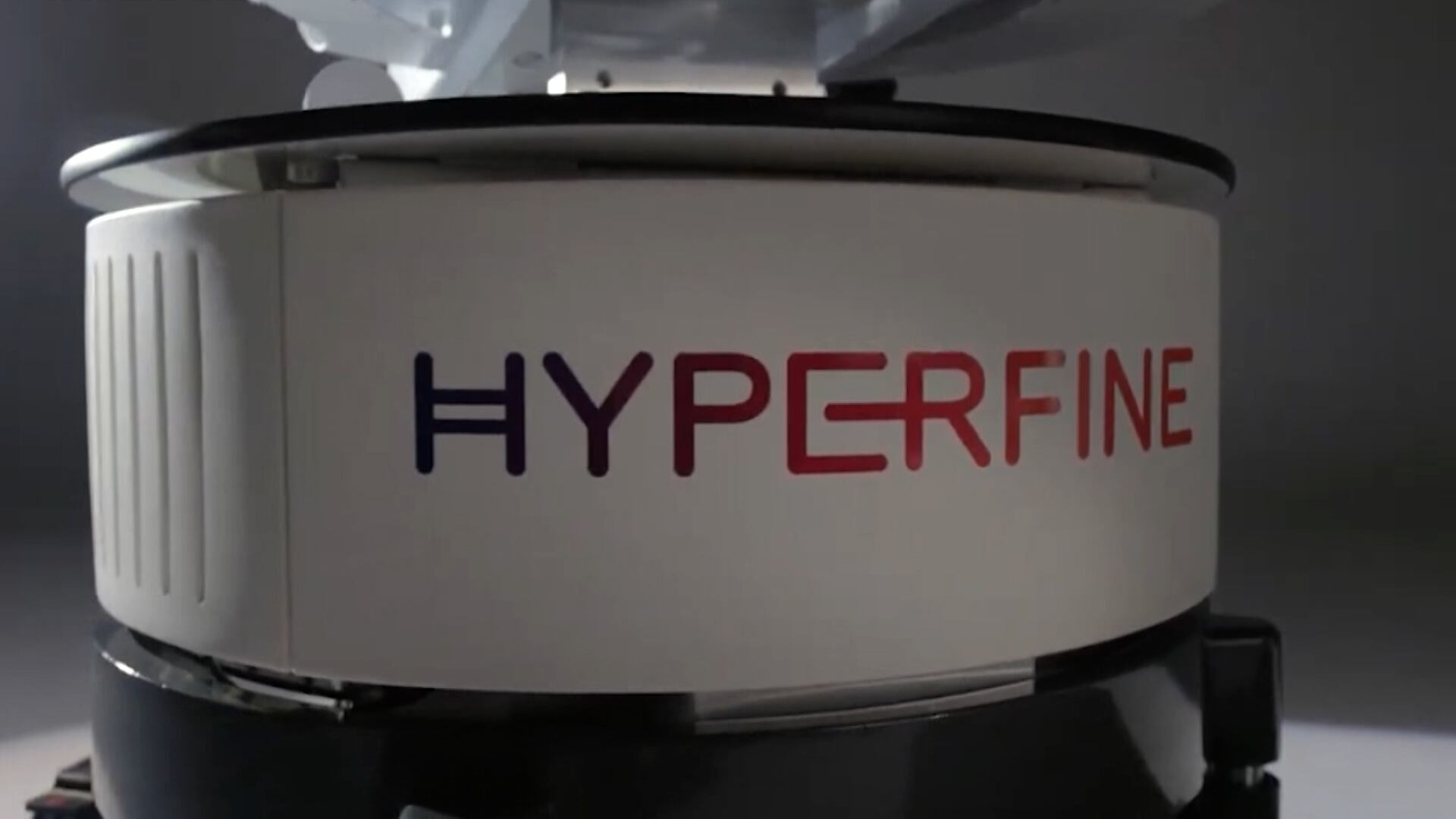
Hyperfine, the pioneer of the very first FDA-approved portable MRI device, made its public debut on the Nasdaq via a SPAC merger. CEO Dave Scott joined Cheddar's "Opening Bell" to discuss the IPO launch, the company's valuation at $580 million, and the impact of its machine called Swoop. "We can roll an MRI system, our MRI Swoop system, right into the room where you are, right up to your patient bedside, and scan you right there and get an image in less than an hour," he explained.
Social media platform TikTok was the most visited website in 2021, topping Google, Facebook, Microsoft, and Apple, according to IT security company Cloudflare.
AdTheorent just the latest company to go public via a SPAC. The company specializes in digital advertising, using AI and machine learning as a tool to move marketing forward. AdTheorent to close its SPAC merger with MCAP Acquisition today and will trade on the Nasdaq under the ticker symbol ADTH. CEO Jim Lawson spoke with Cheddar ahead of the move.
Although still early in development, blockchain technology, Web3, also known as Web 3.0 has been getting a lot of attention from some top tech names lately. Web3 is based on blockchain technology, which powers NFT’s and cryptocurrencies such as bitcoin. With Web3, users would ideally control their own data, rather than have it be controlled by a few large companies. But, Tesla CEO Elon musk isn't buying into Web3 just yet, tweeting over the weekend that the decentralized iteration of the internet seems more like a marketing "buzzword" right now than reality. Twitter co-founder Jack Dorsey also chiming in to the conversation, expressing doubt over whether or not Web3 would actually be decentralized if ownership still belonged to venture capital firms. Parker McCurley, co-founder & CEO of Decent Labs explains the significance of Web3 catching the eye of the tech giants, and what Web3 could mean for the future of the internet.
Carlo and Baker cover the heartening news on the Covid front ahead of the holiday, plus President Biden punting student loan repayments again, a new space telescope and Love, Hate, Ate: Christmas Eve Eve Edition!