*By Alisha Haridasani*
Apple plans to introduce software that will reportedly help habitual iPhone users spend less time glued to their smartphones, a shift away from the company’s efforts to keep people more reliant on its hardware.
The company is expected to unveil its Digital Health initiative at the annual Worldwide Developers Conference next week in San Jose, [Bloomberg reported](https://www.bloomberg.com/news/articles/2018-05-31/apple-to-tout-digital-health-ar-features-at-software-conference). The tools, bundled with the new iOS mobile operating system, help monitor how much time people spend on their phones.
The Digital Health tools are likely a response to concerns raised by two of the company's shareholders in January about the possibly addictive nature of some smartphone apps, particularly among children. “We believe there is a clear need for Apple to offer parents more choices and tools to help them ensure that young consumers are using their products in an optimal manner,” the shareholders said in an [open letter](https://thinkdifferentlyaboutkids.com/).
Apple’s decision to encourage people to put down the company’s most popular product may seem counterintuitive, but it may also point towards a future business strategy for Apple that is more reliant on its services business, which includes Apple Music and iCloud.
The iPhone accounted for more than 60 percent of Apple's revenue in [Q2](https://www.apple.com/newsroom/pdfs/Q2_FY18_Data_Summary.pdf), but growth in sales have slowed in the past few years. Apple’s services, however, are starting to generate more revenue, surpassing revenue from iPads, Macs, and other accessories, such as Apple Watch and Apple TV.
Apple has tried to boost subscriptions for its Music service and has invested in producing original content, as competition with Spotify and Netflix heats up.
Sam Thapaliya, Founder of Zebec, explains the two major problems associated with paying public figures in crypto, and how his firm is best-suited to help facilitate payments within the growing industry.
Wes Fulford, CEO of Viridi Funds, breaks down how several key headlines, include President Biden's executive order on crypto and rising inflation, are impacting the price of major cryptocurrencies during a volatile period.
Volvo electric vehicles will soon be able to charge at Starbucks ChargePoint locations. Anders Gustafsson, head of the Americas for Volvo Cars, Michael Kobori, Starbucks chief sustainability officer, and Pasquale Romano, president and CEO of ChargePoint, joined Cheddar News Wrap to talk about their joint effort to provide more accessibility for electric vehicle charging. “When you pull into the Starbucks, you pull into the parking lot and the chargers will be set up right there so you can pull in, plug in your car, walk into the Starbucks," said Kobori. "And it's a safe location to recharge, to connect to the Internet while you're charging."
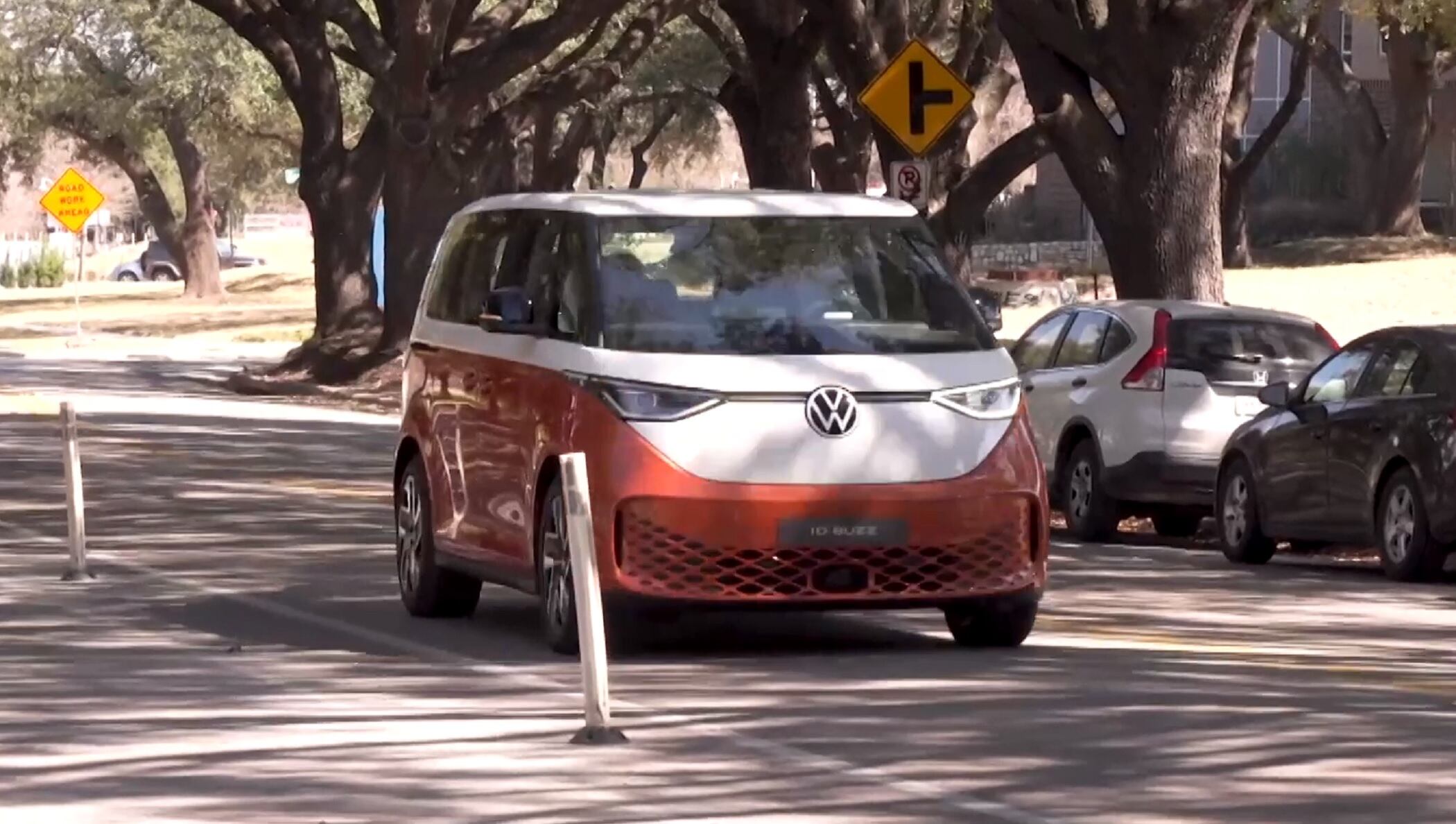
Cheddar News senior reporter, Michelle Castillo joined Scott Keogh, CEO of Volkswagen Group of America, for a ride in the new ID.Buzz electric van at South by Southwest. Keogh touched on issues from the auto giant's commitment to electrification and achieving carbon neutrality to the need for more charging infrastructure to support the electric vehicle wave. "We made a commitment to be CO2 neutral, and I think the reason it is, simplistically is, we're the world's largest car company. We're responsible for 1 percent of global CO2 emissions, and frankly, leaders have to lead and so that's what we want to do," he said.