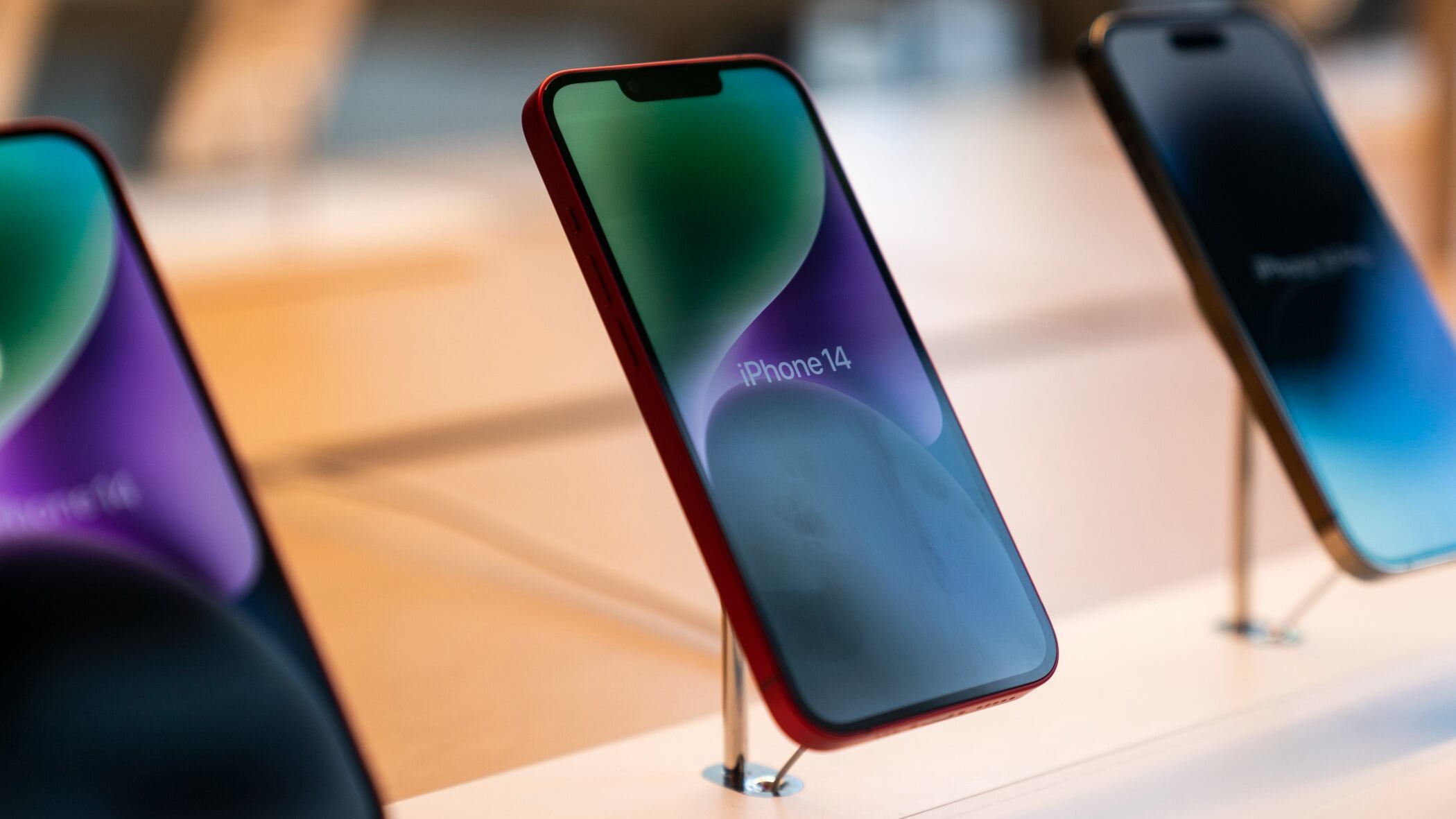
The new iPhone 14 smartphones are on display at an Apple Store at The Grove in Los Angeles, Friday, Sept. 16, 2022. (AP Photo/Jae C. Hong)
On March 1, Apple will start charging an extra $20 for battery replacements on out-of-warranty iPhones, according to an update on the AppleCare+ webpage.
The new price will be $99 for the iPhone 14, and while these models are currently under warranty, they won't be after the one-year anniversary of their release in September 2023.
At that point, the higher price point could encourage customers with broken batteries to simply buy a new phone rather than shell out nearly $100 for a replacement part.
Apple has adjusted prices multiple times in recent years, as supply chain issues have raised production costs. Just last month, labor unrest at an iPhone supplier in China led to a production shortfall. The company struggled with similar disruptions throughout the pandemic.
There is also a history of consumers pushing back against Apple's practices around batteries. The company in 2020 was forced to pay $113 million in fines to settle consumer fraud lawsuits around a controversy known as "batterygate," in which iPhone users discovered that Apple installed new software that made devices with older batteries operate slower.
In addition, CEO Tim Cook in 2019 wrote in a letter to investors that "some customers taking advantage of significantly reduced pricing for iPhone battery replacements" was partly behind a lower-than-expected iPhone sales.
As the Russian invasion of Ukraine continues, social media giant Meta said that it's using its technology to help the beleaguered nation Erin Egan, chief privacy officer, and Andrew Schroeder, vice president of research and analysis for direct relief, joined Cheddar News to discuss using data towards humanitarian relief. "Our goal with the program is to help organizations on the ground by sharing privacy-protected data sets to enable them to respond to crisis," Egan explained.
SpaceX launched its first all commercial-crew mission to the International Space Station on Friday. Cheddar News speaks with Jim Cantrell, CEO and President of Phantom Space Corporation why this launch is a big leap for space tourism.
Nautilus Labs closed $34 million in funding from investors including the Microsoft Climate Innovation Fund. The company plans to use its funding to improve shipping industry efficiency with its software. Nautilus CEO Matt Heider joined Cheddar News to talk about how it tackles the carbon emissions in the global supply chain. "We've seen on 10-day voyages saving $60,000 worth of fuel just by managing speed with greater confidence around the future. The environmental impact of that is also huge," he said. "Saving that amount of fuel is a kind of taking over 1000 cars off the road this year."